Most people don’t think much about retina until something go wrong with their eye. This thin layer of tissue at the back of your eye actually allows you to see, converting light into signals your brain can understand. When the retina is healthy, vision feels effortless. When it’s damaged or diseased, the effects can be swift and serious. Conditions like retina, diabetic retinopathy, and macular degeneration don’t always comes with pain, but they can threaten vision permanently if not treated. Knowing what the retina does, recognizing warning signs, and understanding when to seek help are essential for protecting long-term eye health.
Retina: How Your Eye Processes Light
The eye retina is basically a paper-thin layer lining the inside back part of your eyeball. Think of old cameras that used film. It’s kind of like that, except it’s alive and honestly way more impressive than anything we’ve invented. Light bounces off stuff you’re looking at, enters your eye, and lands on this tissue. Your retina then flips that light into electrical signals your brain can read.
What gets me is how ridiculously thin it is, thinner than regular paper but it’s absolutely packed with millions of tiny cells all firing constantly.
Retina Anatomy: Key Components and Their Functions
Your retina’s got different sections handling specific tasks:
Photoreceptor Cells: Two types here. You’ve got around 120 million rods that let you see in dim conditions and catch movement at the edges. Then about 6 million cones grab colors and fine details when there’s plenty of light. These are what actually catch the light rays.
The Macula: This small central patch handles your straight-ahead sharp vision. Reading street signs, texting, spotting your friend across a crowded room that’s macula work.
The Fovea: Picture a tiny dent right in your macula’s middle. Absolutely crammed with cone cells. Gives you the sharpest vision you’ve got.
The Optic Disc: Where your optic nerve connects to your retina. Every signal from millions of cells squeezes through here heading toward your brain.
How Vision Works: The Retina’s Role in Processing Light
This whole process happens insanely fast. Light shoots into your eye, gets focused by your lens onto your retina, and those photoreceptor cells flip it into electrical pulses immediately. These pulses zip through some nerve layers, race down your optic nerve, and hit your brain. Your brain figures it out and suddenly you’re seeing your phone or your dog or whatever’s in front of you. It takes maybe a tenth of a second.
Common Retinal Conditions and Warning Signs
The eye retina’s delicate, so problems happen:
Retinal Detachment: Your retina peels away from where it should sit. You’ll see sudden flashes, a bunch of floaters, or a shadow creeping across your vision. This is a “drop everything and go” situation. Getting to a retina speciality hospital immediately waiting even a day can cost you your sight.
Diabetic Retinopathy: High blood sugar wrecks those tiny vessels feeding your retina. They leak, they grow in weird patterns. If you’re diabetic, regular eye appointments aren’t optional.
Age-Related Macular Degeneration: Your macula breaks down over time, killing central vision. A big reason older people lose their sight.
Retinal Vein Occlusion: A vein draining blood from your retina clogs up. Vision tanks suddenly.
Macular Holes: Little tears pop up in your macula. Makes everything blurry or distorted in the center.
Retinal Treatment Options: From Laser to Surgery
Medicine’s gotten really good at tackling this stuff:
Laser Retina Treatment: Doctors aim focused laser beams to seal leaky vessels, zap bad tissue, or create controlled burns keeping your retina in place. Most laser retina procedures happen right in the office pretty quick, not too painful.
Anti-VEGF Injections: They actually inject medication into your eyeball. Sounds terrifying but stops abnormal blood vessel growth cold.
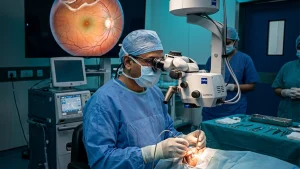
Vitrectomy: Surgeons remove the gel inside your eye to reach and repair your retina directly.
Pneumatic Retinopexy: They inject a gas bubble that pushes a detached retina back into position.
Retina Health: Prevention and Protective Measures
Get comprehensive eye exams regularly. Over 40? Got diabetes or high blood pressure? Not negotiable.
Actually control your diabetes or blood pressure. Medicine, diet, exercise all of it matters.
Wear decent sunglasses blocking UV rays. Your retina will thank you later.
Eat real food. Leafy greens, fatty fish, colorful fruits and vegetables.
Quit smoking if you haven’t. Smoking cranks up your risk for basically every retinal disease.
Ask family about their eye problems. Genetics plays a role here.
Emergency Retinal Symptoms: When to Seek Immediate Care
Don’t ignore sudden vision weirdness. Sudden floaters? Light flashes? Blurry patches? Shadows creeping in? Call an eye doctor right away. Getting to a retina speciality hospital fast makes all the difference between keeping your sight and losing it permanently. “I’ll wait and see if it gets better” is how people end up with permanent damage they could’ve avoided.
Specialized Retinal Care at ASG Eye Hospital
Your retinas handle one of your most critical senses. They need specialists with proper training and equipment, not just whoever’s available.
ASG Eye Hospital has retinal experts at locations across India, dealing with these conditions daily. We’ve got modern diagnostic equipment and treatment options, including cutting-edge laser retina procedures, for whatever retinal issue you’re facing.
Find us in Ahmedabad, Amritsar, Bhopal, Indore, Jaipur, Jodhpur, Kolkata, Lucknow, Mumbai, Noida, and Vadodara.
Frequently Asked Questions
1. Can you feel retinal problems when they start?
Usually not. Most retinal conditions develop without pain. You might notice visual changes: floaters, flashes, shadows, or blurred spots, but there’s rarely any physical discomfort. That’s what makes regular eye exams so important.
2. What’s the difference between a retinal tear and retinal detachment?
A retinal tear is a small break in the tissue. Retinal detachment happens when fluid seeps through that tear and separates the retina from the back of the eye. Tears can often be treated before they progress to detachment, which is why catching them early matters.
3. What causes retinal detachment?
Several things: aging changes in the eye’s gel (vitreous), severe nearsightedness, eye injuries, previous eye surgery, or family history. Sometimes it happens without any obvious trigger. Symptoms require immediate medical attention.
4. Can retinal problems cause sudden blindness?
Some can. Central retinal artery occlusion (an “eye stroke”) can cause sudden, painless vision loss. Severe retinal detachment can also dramatically reduce vision quickly. Any sudden vision change is an emergency.