
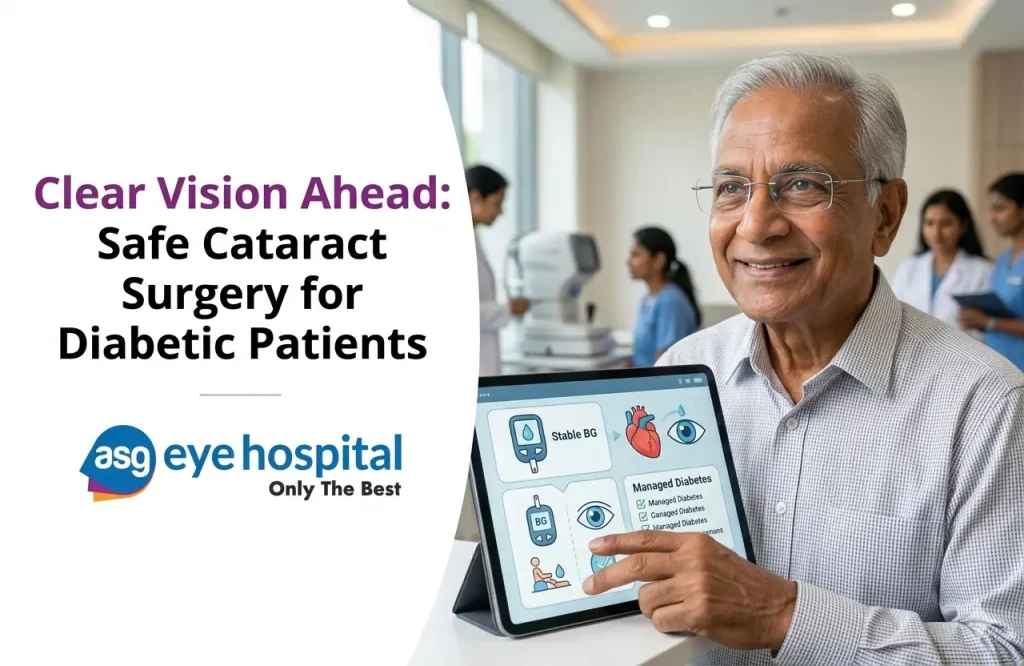
For people living with diabetes, vision problems like cataracts often appear earlier and progress faster. Blurry vision, glare while driving, or difficulty reading can gradually affect daily life.
The good news? With proper planning and expert care, cataract surgery for diabetic patients is safe, effective, and life-changing.
In this guide, we explain everything you need to know—from preparation to recovery—so you can move forward with confidence.
Why Diabetes Increases Cataract Risk
Diabetes affects how your body processes sugar, and high blood glucose levels can impact the eye’s natural lens. Over time, this leads to clouding, also known as cataracts.
Common symptoms include:
- Blurred or cloudy vision
- Increased glare, especially at night
- Faded or yellowish colors
- Frequent changes in eyeglass prescription
Is Cataract Surgery Safe for Diabetics?
Yes, cataract surgery is generally safe for diabetic patients, but it requires careful management.
Diabetes can:
- Slow healing
- Increase infection risk
- Affect retinal health
That’s why pre-surgery preparation and post-operative care are crucial for the best outcomes.
Ideal Blood Sugar Levels Before Surgery
Doctors usually recommend:
- Fasting blood sugar: Below 140 mg/dL
- Post-meal levels: Below 200 mg/dL
Maintaining stable sugar levels reduces complications and supports faster healing.
Choosing the Right Intraocular Lens (IOL)
Lens selection plays a key role in visual outcomes, especially for diabetic patients.
Common options include:
- Monofocal lenses – Clear vision at one distance
- Multifocal lenses – Multiple focus ranges (not always suitable for retinal issues)
- Accommodating lenses – Flexible focus adjustment
👉 If you have conditions like diabetic retinopathy or macular edema, your doctor will recommend the safest and most effective lens for your eyes.
How to Prepare for Cataract Surgery
1. Eye Health Evaluation
A detailed eye exam is essential to check for:
- Diabetic retinopathy
- Macular edema
These conditions may need treatment before surgery.
2. Blood Sugar Control
Work closely with your doctor to stabilise glucose levels. Even short-term control improves surgical outcomes.
3. Medication Review
Some diabetes medications may need adjustment before and after surgery.
4. Understand Post-Surgery Care
Following instructions after surgery is critical for recovery and long-term vision health.
What to Expect After Surgery
Most patients notice significant improvement within a few days:
- Clearer vision
- Brighter colors
- Reduced glare
Post-surgery tips:
- Use prescribed eye drops regularly
- Avoid touching or rubbing eyes
- Keep blood sugar levels stable
- Attend all follow-up appointments
👉 Diabetic patients have a slightly higher risk of macular swelling, but early detection ensures effective treatment.
Benefits of Cataract Surgery for Diabetics
Cataract surgery doesn’t just restore vision—it improves quality of life.
Patients often experience:
- Better mobility and confidence
- Easier reading and screen use
- Improved independence in daily activities
Final Thoughts
Cataract surgery for diabetics is highly successful when approached with proper planning and expert care. With advancements in technology and specialised treatment, patients can achieve excellent visual outcomes.
At ASG Eye Hospital, experienced ophthalmologists provide personalised diabetic eye care, advanced surgical techniques, and complete post-operative support to ensure safe and effective treatment.
👉 Take the first step toward clearer vision—schedule your consultation today.
Frequently Asked Questions (FAQs)
1. Can diabetic patients undergo cataract surgery safely?
Yes, with controlled blood sugar levels and proper evaluation, the procedure is safe and effective.
2. What is the ideal sugar level before surgery?
Fasting below 140 mg/dL and post-meal below 200 mg/dL is generally recommended.
3. Do diabetics need special lenses?
Not always, but lens choice depends on retinal health and overall eye condition.
4. Does diabetes delay recovery after cataract surgery?
Healing may be slightly slower, but proper care ensures good recovery.