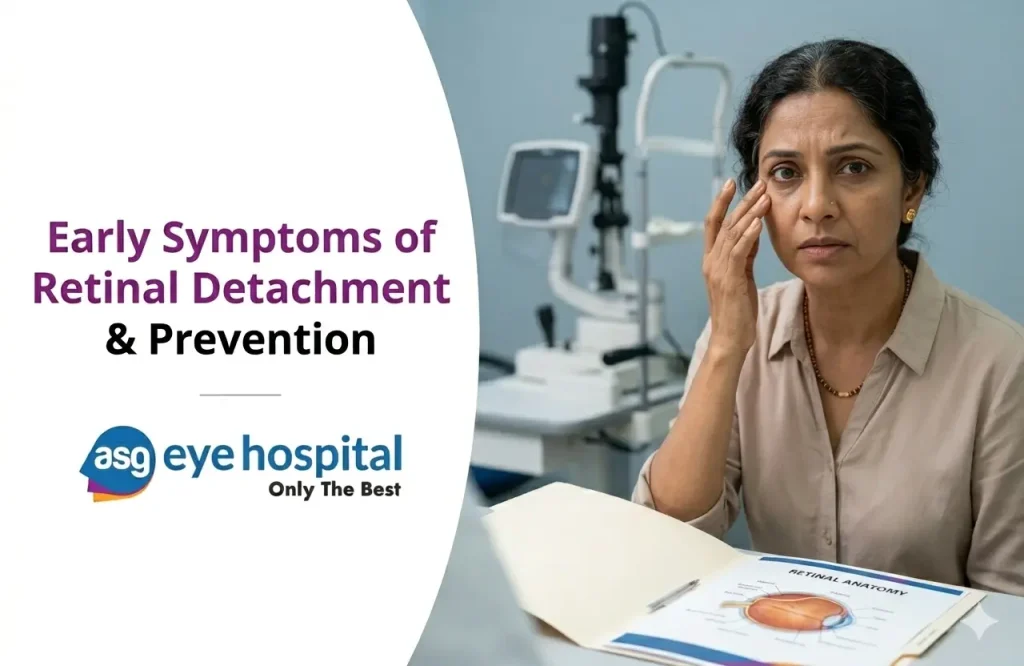
Retinal detachment is a serious eye condition that requires immediate medical attention. It occurs when the retina, a thin layer at the back of the eye, separates from its supporting tissue. If not treated on time, it can lead to permanent vision loss.
Understanding the early symptoms of retinal detachment is crucial for timely diagnosis and effective treatment.
What is Retinal Detachment?
The retina plays a key role in vision by converting light into signals that the brain understands. When it detaches, this process is disrupted, affecting vision.
Types of Retinal Detachment:
- Rhegmatogenous – caused by a tear or break in the retina
- Tractional – caused by scar tissue pulling on the retina
- Exudative – caused by fluid buildup under the retina
Each type requires prompt medical evaluation.
Early Symptoms of Retinal Detachment
Recognising symptoms early can help save vision.
🔹 Sudden Floaters
Small dark spots, threads, or cobweb-like shapes in vision. A sudden increase may indicate retinal damage.
🔹 Flashes of Light
Brief flashes in peripheral vision caused by retinal pulling.
🔹 Blurred or Distorted Vision
Straight lines may appear curved, and vision becomes unclear.
🔹 Shadow or Curtain Effect
A dark shadow moving across your field of vision is a serious warning sign.
🔹 Sudden Vision Loss
Partial or complete loss of vision in advanced stages.
👉 These signs should never be ignored and need immediate consultation.
Common Causes of Retinal Detachment
🔸 Ageing
The vitreous gel shrinks over time, increasing risk.
🔸 High Myopia (Nearsightedness)
Thinner retina increases chances of tears.
🔸 Eye Injury
Trauma can directly damage the retina.
🔸 Previous Eye Surgery
Certain surgeries may increase risk.
🔸 Diabetic Retinopathy
Abnormal blood vessels and scar tissue pull the retina.
🔸 Family History
Genetics can play a role.
Why Early Detection is Important
Retinal detachment progresses quickly. Delayed treatment can lead to:
- Permanent vision loss
- Retinal scarring
- Reduced visual quality
Early diagnosis ensures better treatment outcomes and vision recovery.
Retinal Detachment Treatment Options
Treatment depends on severity and type:
🔹 Laser Surgery (Photocoagulation)
Seals small retinal tears.
🔹 Cryopexy
Freezing technique to secure the retina.
🔹 Pneumatic Retinopexy
Gas bubble used to reposition retina.
🔹 Scleral Buckling
Silicone band supports the retina.
🔹 Vitrectomy
Removes vitreous gel and replaces it with gas or oil.
👉 Early treatment significantly increases success rate.
Prevention Tips for Retinal Health
- Regular Eye Check-ups
Especially for high-risk individuals - Monitor Vision Changes
Report floaters or flashes immediately - Protect Your Eyes
Use protective eyewear during risky activities - Manage Health Conditions
Control diabetes and blood pressure - Follow Post-Surgery Care
Prevent complications after eye procedures
Importance of Timely Care
Timely treatment can prevent permanent vision damage. Advanced technology and expert care at hospitals like ASG Eye Hospital ensure early diagnosis and effective treatment.
Conclusion
Retinal detachment is a medical emergency that can lead to vision loss if ignored. Recognising early symptoms and seeking immediate care is the key to protecting eyesight.
Stay aware, act quickly, and prioritise your eye health.
Frequently Asked Questions (FAQs)
1. What are early symptoms of retinal detachment?
Floaters, flashes, blurred vision, and shadow or curtain effect.
2. What causes retinal detachment?
Ageing, high myopia, eye injury, diabetes, and genetics.
3. Can retinal detachment be prevented?
Regular check-ups and early detection reduce risk.
4. What are treatment options?
Laser, cryopexy, pneumatic retinopexy, scleral buckling, and vitrectomy.
5. When should I see a doctor?
Immediately if you notice floaters, flashes, or vision loss.