Glaucoma stands as a long-lasting, progressive optic nerve disease that causes permanent vision impairment if doctors fail to detect and treat it during its initial phase. The condition stands as one of the top reasons that result in blindness that could be avoided throughout the globe. The condition primarily affects the optic nerve due to elevated intraocular pressure (IOP), although normal-tension variants also exist. A medical team requires complete knowledge about what glaucoma eye disease is, along with its early signs, fundamental causes and treatment methods for effective patient management.
What is Glaucoma?
Glaucoma describes multiple eye disorders that cause optic nerve damage, which transmits visual information from the retina to the brain. The damage occurs because increased intraocular pressure results from the eye’s defective drainage system, which prevents proper aqueous outflow.
The two main types of glaucoma that occur most frequently are primary open-angle glaucoma and angle-closure glaucoma. Open-angle glaucoma develops at a gradual pace while its initial symptoms remain hidden, but angle-closure glaucoma can show itself through a sudden rise in eye pressure, which requires urgent medical attention.
Glaucoma Symptoms and Early Signs
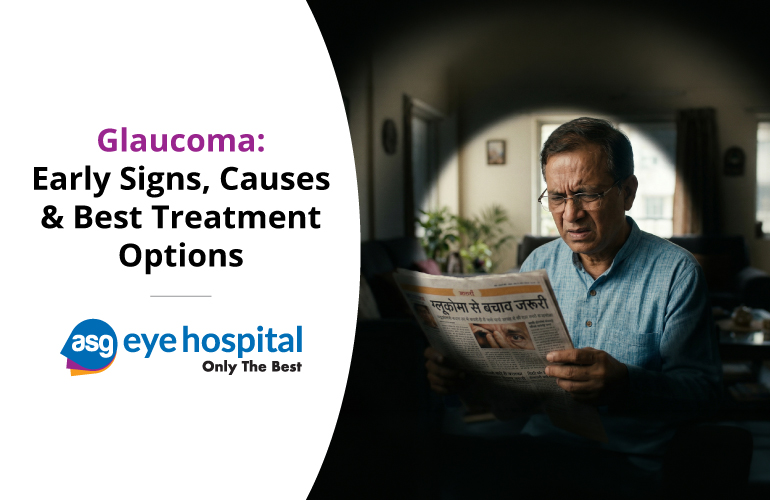
The first step to avoiding permanent vision loss requires early detection. The most alarming feature of glaucoma is its silent development during its first stages.
Common glaucoma symptoms & early signs include the following:
- The gradual loss of peripheral vision starts with unmoving eyes and becomes noticeable later
- People experience challenges when they need to see in dim light
- Advanced stages of the disease result in patients experiencing blurred or hazy vision
- Patients see halos around lights, especially when they look at them at night
- People experience eye discomfort, which they perceive as a mild pressure sensation
In cases of acute angle-closure glaucoma, symptoms may be more pronounced and include the following:
- Severe eye pain
- Sudden vision loss
- Nausea and vomiting
- Redness of the eye
Due to the subtle nature of glaucoma symptoms, routine eye examinations remain the most effective method for early diagnosis.
Glaucoma Causes and Risk Factors
Understanding glaucoma causes and risk factors is essential for identifying individuals at higher risk and initiating preventive screening protocols.
The main glaucoma causes and risk factors include the following elements:
Elevation of intraocular pressure serves as the primary factor that contributes to the development of glaucoma.
The risk of glaucoma increases with each passing year after a person reaches their 40th birthday.
A family member who has been diagnosed with glaucoma
- The combination of diabetes mellitus and hypertension
- The risk of glaucoma increases in patients who use corticosteroids for an extended period.
- Individuals with thin corneal thickness face an increased risk of developing glaucoma.
- Previous incidents of eye trauma or surgical procedures
- High myopia or hyperopia
Different population groups show greater vulnerability to glaucoma, which requires them to undergo regular eye examinations.
Diagnostic Evaluation
The process of diagnosing glaucoma needs an ophthalmologist to conduct a thorough eye examination. The evaluation typically includes:
- Measurement of intraocular pressure (tonometry)
- Optic nerve assessment (ophthalmoscopy)
- Visual field testing (perimetry)
- Corneal thickness measurement (pachymetry)
- Gonioscopy to examine the drainage angle
Doctors in India can begin glaucoma treatment after they identify the disease during its early phase because this approach minimizes the risk of permanent vision loss to patients.
Glaucoma Treatment Options
The primary goal of glaucoma treatment in India achieves two objectives. The choice of treatment depends on the type and severity of glaucoma.
1. Medical Management
Initial management often involves prescription eye drops that reduce intraocular pressure by either decreasing aqueous humor production or improving its outflow. The doctor may prescribe oral medications for specific medical situations.
The process requires ongoing monitoring to determine how well treatments work and how the disease develops.
2. Laser Therapy
Laser procedures are commonly used when medications are insufficient or not well-tolerated. These include:
- Laser trabeculoplasty for open-angle glaucoma
- Laser peripheral iridotomy for angle-closure glaucoma
Laser therapy is minimally invasive and can significantly improve fluid drainage within the eye.
3. Surgical Management
Surgical intervention is recommended in advanced or uncontrolled cases. The standard surgical procedures include:
- Trabeculectomy
- Glaucoma drainage implants
- Minimally invasive glaucoma surgery (MIGS)
Patients often enquire about glaucoma surgery costs in India, which vary based on the procedure type, hospital infrastructure, surgeon expertise, and geographical location. Surgical intervention needs to happen within appropriate times because it protects against permanent vision loss, according to the different costs of procedures.
Importance of Choosing the Right Specialist
Glaucoma treatment needs continuous patient assessment and personalized therapy strategies. The selection of the doctor for glaucoma leads to a correct diagnosis and suitable treatment, which results in effective disease management.
An experienced ophthalmologist studies the development of eye diseases through modern diagnostic equipment, which he uses to change treatment methods. When doctors possess expert knowledge of medical and surgical glaucoma treatment, they can deliver better results for their patients.
Preventive Measures and Long-Term Care
People who need to prevent glaucoma progression must use these three medical methods. The first method requires people to schedule regular complete eye tests. The second method requires patients to follow their medication schedule without any deviations. Doctors use the third method to check eye pressure through their patients’ intraocular pressure measurements. The fourth method requires patients to control their diabetes and hypertension through medical treatment. People should not use self-medication methods for steroid-based treatments.
The combination of early detection for glaucoma causes and risk factors with prompt treatment leads to reduced chances of permanent vision loss.
The ASG Eye Hospital system delivers complete glaucoma treatment services from its various facilities throughout India. The various ASG Eye Hospital in Parel, Dadar, Jaipur, Jodhpur, Ahmedabad and Udaipur, offer patients specialized medical advice together with cutting-edge testing facilities.
The combination of regular screening tests with prompt treatment represents the most effective method for protecting vision in people who face glaucoma dangers.
Frequently Asked Questions
1. What is glaucoma? Why is it possible for it to be dangerous?
Glaucoma describes damage to the optic nerve, often caused by high pressure on the eye, which, if left untreated, may result in permanent vision loss.
2. What are the common symptoms of glaucoma?
Common early signs of glaucoma are loss of peripheral vision, blurry vision, and seeing ‘halos’ when looking at lights.
3. Who has an increased risk for developing glaucoma?
Factors that can increase a person’s risk factor for developing glaucoma include being over the age of 40, family history, diabetes, and long-term use of steroids.
4. What treatments are available for someone with glaucoma?
Glaucoma treatment options in India include medications/drops, laser treatments, and surgical procedures, depending on the severity of the disease.
5. What is the cost of glaucoma surgery in India?
There are different costs associated with glaucoma surgery depending on how severe the disease is and the type of procedure performed. The cost is dependent on the doctor’s or hospital’s expertise; early treatment usually avoids surgery.