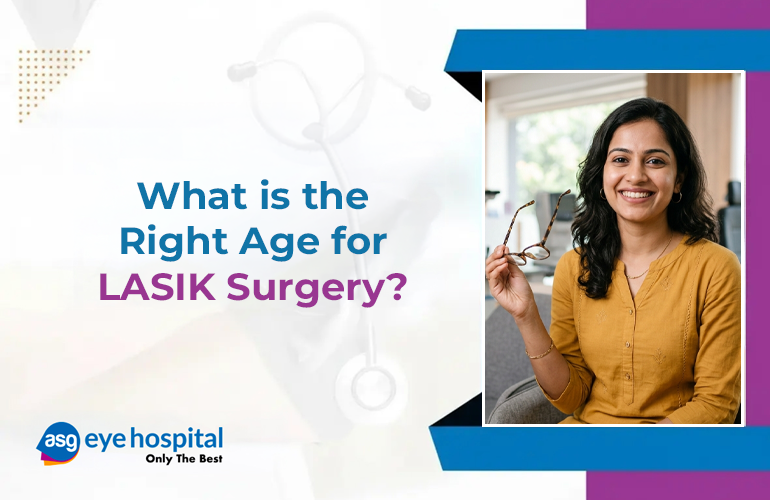
Laser vision correction has become a widely accepted solution for refractive errors, which include myopia, hyperopia and astigmatism. The medical community considers LASIK (Laser-Assisted In Situ Keratomileusis) to be one of the most popular surgical procedures because it delivers accurate results and dependable treatment outcomes.
The medical profession needs to establish an appropriate age limit that determines when patients can receive the treatment. Eye specialists evaluate multiple medical factors before recommending surgery, including corneal stability, refractive stability, and overall ocular health. The research on the best LASIK surgery age and the maximum age limit for LASIK surgery provides essential information to help people select their vision correction method.
Understanding LASIK Surgery
LASIK is a surgical procedure that uses an excimer laser to change the shape of the cornea for refractive correction. The process of reshaping the cornea enables better light entry into the eye, which results in improved focus on the retina. The surgery improves visual clarity through corneal curvature correction, which decreases the need for corrective lenses like glasses or contact lenses.
The procedure requires less than five minutes, which doctors perform while the patient remains awake because they use topical anaesthesia. Most patients experience significant visual improvement within a short recovery period. The advantages of the treatment exist for patients who meet specific eligibility criteria, which include their age and current eye conditions and their eye conditions that require a stable refractive status.
The process of determining who qualifies for LASIK surgery requires doctors to conduct complete eye tests and thorough health assessments.
What is the minimum age required for LASIK surgery?
The most frequent inquiry during refractive surgery consultations concerns the eligibility of younger patients for LASIK treatment. The procedure requires patients to reach a minimum age of 18 according to ophthalmologists who evaluate candidates for the treatment.
The primary reason for this requirement is refractive stability. The eye undergoes continuous development during adolescence, which results in frequent changes to its refractive power. Surgery performed before vision reaches its final state will cause the refractive error to increase, which will decrease the future success rate of the operation.
Specialists recommend that patients postpone their vision assessment until they reach their early twenties because this stage provides their most accurate vision results. This process establishes the optimal LASIK surgery age while creating better predictability for surgical results.
Can teenagers get LASIK eye surgery?
Parents and young patients often ask, ‘Can teenagers get LASIK eye surgery?’
In most cases, ophthalmologists do not recommend LASIK for teenagers. Individuals under 18 typically experience ongoing vision changes, particularly in cases of progressive myopia. The performance of refractive surgery before the eye condition reaches its stable state results in the return of refractive errors. The medical field has established standard treatments for most cases, but exceptions exist for patients with severe anisometropia and other complicated refractive problems.
A qualified ophthalmologist must conduct thorough clinical assessments before making treatment decisions in these situations. Medical guidelines advise healthcare professionals to use caution when assessing LASIK eye surgery eligibility for teenagers because they should wait until adulthood and their refractive condition has stabilised.
What is the ideal age range for LASIK surgery?
The legal minimum age for LASIK surgery starts at 18 years, yet most ophthalmologists recommend the procedure for patients between their early twenties and mid-thirties. The age group demonstrates stable vision prescriptions and maintains healthy corneal thickness while experiencing fewer age-related eye conditions. Surgical outcomes achieve high predictability because the results remain stable over extended periods. Specialists evaluate multiple factors to establish who qualifies for LASIK surgery through their assessment process.
The patient needs to maintain a stable eyeglass prescription, which should last for at least 12 months. The patient needs to have proper corneal thickness. The patient needs to have a normal tear film and ocular surface. The patient must not have any corneal diseases, which include keratoconus. The patient needs to have all medical conditions under control without any exceptional health issues. The medical factors create an ideal situation for LASIK Surgery because patients within this age range represent the optimal age for the procedure.
LASIK Surgery in the 30s and 40s
People in their thirties and early forties can undergo LASIK surgery when their eye condition allows them to qualify for the operation. The main factors that determine success are corneal health and refractive stability.
Ophthalmologists use their expertise to assess patients who show early indications of presbyopia, which develops as a natural age-related condition that causes near vision loss. The onset of presbyopia typically occurs at age 40 which impacts the capacity to see nearby objects.
Patients often ask whether LASIK is safe after the age of 40. If a person’s eyes remain healthy for LASIK surgery, then the procedure can be done safely. Custom surgical methods and blended vision approaches will help some people who need special visual assistance. The clinical assessment process establishes whether a person over 40 years old can safely undergo LASIK.
Is there an upper age limit for LASIK surgery?
There is no strict upper LASIK surgery age limit. Patients in their forties and fifties may still be eligible for the procedure if they meet all clinical criteria.
However, ophthalmologists must carefully evaluate age-related eye conditions that may affect surgical outcomes. These include:
- Presbyopia
- Cataracts
- Glaucoma
- Dry eye syndrome
- Retinal disorders
If cataracts are already developing, cataract surgery with intraocular lens implantation may be a more appropriate treatment option than LASIK. Therefore, while there is technically no fixed LASIK surgery age limit, careful medical evaluation is essential to determine the most suitable vision correction procedure.
Medical Factors That Determine LASIK Eligibility
LASIK eligibility requirements need more than just age as their assessment criterion. The surgical assessment process evaluates multiple clinical parameters during its initial evaluation phase.
1. Refractive Stability
Patients must demonstrate stable vision for at least one year. The need for multiple prescription updates shows that patients experience either ongoing eye development or their eyesight remains unstable.
2. Corneal Thickness
The LASIK procedure requires sufficient corneal thickness to maintain corneal structure after the procedure because it involves reshaping the cornea.
3. Eye Health
Active eye infections, severe dry eye disease, corneal dystrophies and progressive corneal disorders must not exist in patients.
4. General Health
Certain systemic conditions, such as uncontrolled diabetes or autoimmune diseases, may influence surgical eligibility.
These evaluations help determine who can get LASIK surgery safely and effectively.
Why is pre-LASIK evaluation important before surgery?
Ophthalmologists need to execute a full eye assessment before they can recommend LASIK surgery to their patients. The evaluation process requires four tests, which include corneal topography and pachymetry, tear film analysis and detailed retinal examination.
The tests exist to assess surgical safety while creating forecasts for patient recovery results. Preoperative screening also helps identify patients who may benefit more from alternative procedures such as PRK, SMILE, or refractive lens exchange. The diagnostic procedures confirm that medical evidence determines the best age for a LASIK surgery decision instead of using age as the only criterion.
When LASIK May Not Be Recommended
Certain situations may make LASIK unsuitable regardless of age. These include:
- Progressive corneal diseases such as keratoconus
- Severe dry eye syndrome
- Thin corneas
- Active ocular infections
- Uncontrolled systemic diseases
In such cases, ophthalmologists may recommend alternative vision correction options.
Conclusion
Determining the appropriate age for LASIK surgery requires careful clinical assessment rather than relying on age alone. While individuals above 18 years may technically qualify, ophthalmologists generally recommend waiting until vision stabilizes to achieve optimal results. The early twenties to mid-thirties often represent the most suitable period for the procedure, although eligibility varies based on individual eye health.
Patients frequently enquire about the LASIK surgery age limit, whether teenagers can get LASIK eye surgery, or if LASIK is safe after 40 years of age. The questions demonstrate how personalized medical assessments must occur before patients proceed with refractive surgery.
A qualified ophthalmologist conducts a complete eye assessment to establish who meets the LASIK surgery requirements and to determine the suitable treatment period for the patient.
People who want expert advice can go to ASG Eye Hospital locations throughout India, which include ASG Eye Hospital in Parel, ASG Eye Hospital in Dadar, ASG Eye Hospital in Jaipur, ASG Eye Hospital in Jodhpur and ASG Eye Hospital in Udaipur. The most effective vision correction method and permanent eye health solution requires an eye assessment and expert evaluation to be conducted at the right time.
Frequently Asked Questions
1. What is the minimum age required for LASIK surgery?
Most ophthalmologists recommend a minimum age of 18 years because vision should remain stable before undergoing the procedure.
2. Can vision change after LASIK surgery if done at a younger age?
Yes. The surgical procedure will create refractive alterations until the eyes reach complete maturity, which will impact results that last throughout someone’s life.
3. Is LASIK surgery painful?
The procedure for LASIK surgery remains painless because eye drops which block feeling are applied during the surgery. The patient experiences only mild pressure which lasts for a few seconds.
4. How long does it take to recover from LASIK surgery?
Most patients notice improved vision within 24 to 48 hours whereas complete healing and visual stabilization require several weeks to achieve.