
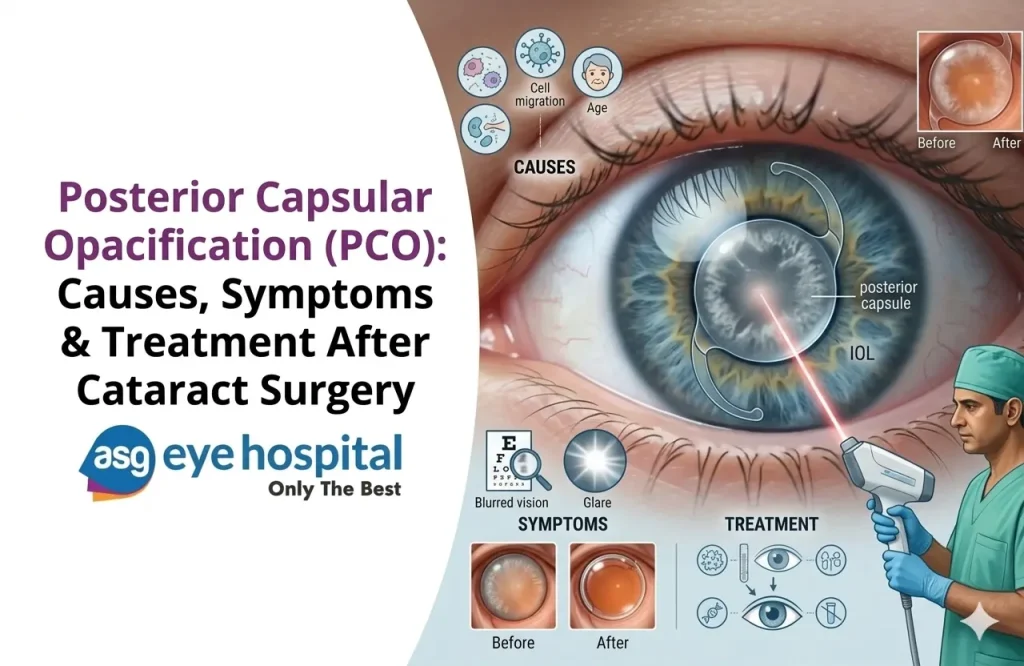
Cataract surgery is one of the most successful eye procedures, helping patients regain clear vision. However, some patients may experience blurred vision months or even years after surgery. This condition is known as Posterior Capsular Opacification (PCO), often referred to as a secondary cataract.
PCO does not mean that the cataract has returned. Instead, it occurs when the thin capsule that holds the artificial lens becomes cloudy over time. This clouding can affect vision clarity and cause symptoms similar to cataracts.
What is Posterior Capsular Opacification?
During cataract surgery, the natural cloudy lens is replaced with an artificial intraocular lens (IOL). The back portion of the capsule is left intact to support this lens. Over time, residual lens cells may grow on this capsule, making it cloudy and affecting vision.
Causes of PCO
PCO develops due to natural healing processes after surgery. The main causes include:
- Growth of leftover lens epithelial cells
- Post-surgery inflammation
- Type and design of intraocular lens (IOL)
- Surgical technique
These cells form a thin layer that blocks light from passing clearly through the lens.
Symptoms of Posterior Capsular Opacification
Patients with PCO may experience:
- Blurry or cloudy vision
- Glare and halos around lights
- Difficulty seeing at night
- Reduced contrast sensitivity
- Double vision in one eye
These symptoms often feel similar to the original cataract, which is why many patients think the cataract has come back.
How is PCO Diagnosed?
An eye specialist can easily diagnose PCO through:
- Vision testing
- Slit-lamp examination
- Dilated eye exam
These tests help identify the cloudy capsule behind the artificial lens.
Treatment: YAG Laser Capsulotomy
The most effective treatment for PCO is YAG Laser Capsulotomy.
- A quick, painless outpatient procedure
- Takes only a few minutes
- Creates a small opening in the cloudy capsule
- Restores clear vision almost immediately
Most patients notice improvement within a day after the procedure.
Is PCO Dangerous?
PCO is not a serious condition, but it can affect your daily activities if left untreated. In rare cases, complications like increased eye pressure or retinal issues may occur after treatment, but these are uncommon.
Can PCO Be Prevented?
While PCO cannot always be completely prevented, the risk can be reduced by:
- Using advanced intraocular lenses
- Choosing experienced eye surgeons
- Following proper post-surgery care
When Should You See a Doctor?
If you notice blurred vision after cataract surgery, consult an eye specialist immediately. Early diagnosis ensures quick and effective treatment.
Conclusion
Posterior Capsular Opacification is a common and treatable condition after cataract surgery. With advanced laser technology, it can be corrected quickly and safely, restoring your clear vision.
If you’re experiencing vision problems after cataract surgery, visit ASG Eye Hospital for expert diagnosis and advanced treatment options.
Frequently Asked Questions (FAQs)
1. What is Posterior Capsular Opacification (PCO)?
Posterior Capsular Opacification (PCO) is a common condition that can occur after cataract surgery, where the lens capsule becomes cloudy, leading to blurred vision.
2. How long after cataract surgery can PCO develop?
PCO can develop within a few months or even years after cataract surgery. The timing varies depending on individual healing and other factors.
3. What are the main symptoms of PCO?
Common symptoms include:
- Blurry or cloudy vision
- Glare and halos around lights
- Poor night vision
- Reduced clarity and contrast
4. What is YAG laser capsulotomy?
YAG laser capsulotomy is a quick and painless laser procedure used to treat PCO. It creates a small opening in the cloudy capsule to restore clear vision.
5. Is YAG laser treatment safe?
Yes, YAG laser capsulotomy is a safe and commonly performed procedure with minimal risks and a high success rate.
6. How long does it take to recover after YAG laser treatment?
Most patients notice improved vision within 24 hours. Normal activities can usually be resumed immediately after the procedure.