The eye depends on a clear natural lens to form sharp images. When this lens gradually turns fully opaque and blocks light from reaching the retina, the condition is described as a mature cataract. Many people live with early cataracts for years without realizing how far the condition can progress. Moreover, when vision becomes mature, not only does it become blurry, but it is significantly impaired, which may affect one’s independence and comfort.
What Is a Mature Cataract?
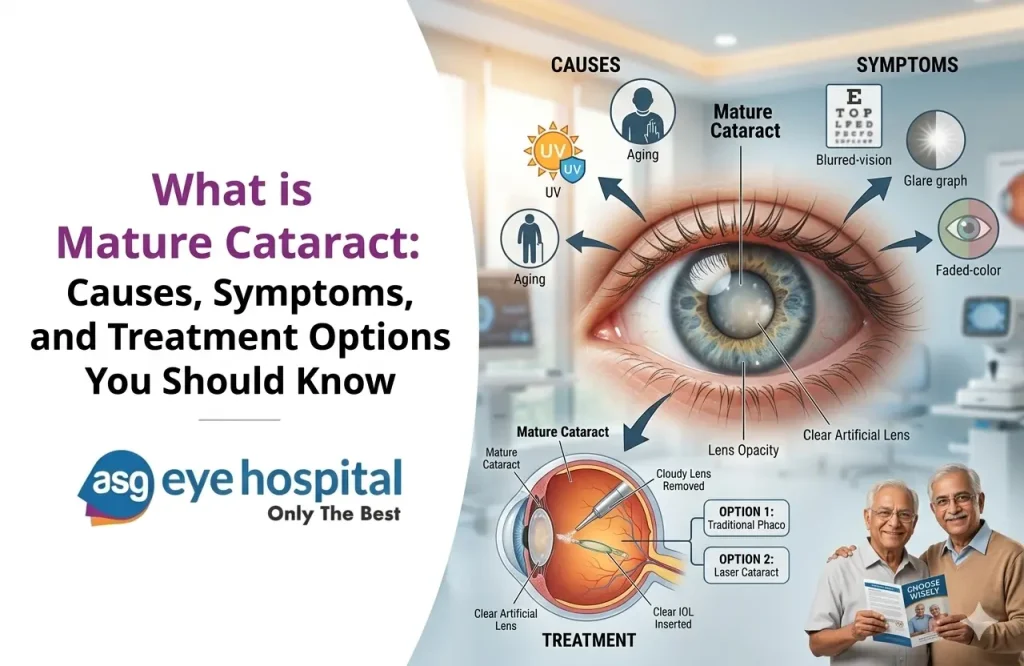
‘Mature cataract’ is a term used to describe a situation where the lens is completely opaque, i.e., it is either dense or white in color. In earlier phases, people may adjust to minor visual changes, but at this point, the loss of clarity becomes difficult to ignore. Reading, recognising faces, or even moving around safely can become challenging.
This stage develops slowly. When a cataract is left untreated, the internal structure of the lens continues to change. Eventually, these proteins start to clump together, causing complete clouding and a significant reduction in vision.
Causes of Mature Cataract
There are no specific causes for the formation of a mature cataract. It happens when a mixture of natural ageing, along with a few other factors, takes place.
Common causes include:
- Growing age, which gradually affects the clarity of vision through the lens.
- Prolonged exposure to the sun without adequate eye protection.
- Conditions such as diabetes, which affect eyesight.
- Previous injuries or inflammation in the eye.
- Prolonged use of certain medications, such as steroids.
- Family history of early onset of cataracts.
These factors work together over time, leading to complete opacity of the lens.
Symptoms That Signal Progression
By the time mature cataract symptoms are quite noticeable and often interfere with routine life. People usually report that their vision keeps worsening despite using glasses.
Typical symptoms include:
- Persistent blurring that affects both near and distant vision
- A whitish appearance seen in the centre of the eye
- Sensitivity to bright light and glare discomfort
- Difficulty reading or identifying people clearly
- Reduced clarity in low-light conditions
- Colours appearing dull or less vibrant than before
Such changes tend to progress steadily and can make everyday tasks difficult.
Diagnosis and Examination
An eye specialist diagnoses a mature cataract through a detailed check-up. The process requires examination of vision and lenses with the help of special equipment. Further tests may be necessary to examine the retina if the cataract is very dense.
In certain advanced cases, understanding the difference between a hypermature cataract vs mature cataract becomes essential for determining the right diagnostic approach and surgical timing.
Treatment Options for Mature Cataract
At this point, it is not possible to correct vision with medicine or glasses. The only solution for restoring vision is surgery.
Surgical Methods –
- Phacoemulsification, where the cloudy lens is broken and removed in small pieces
- Small incision cataract surgery is used when the lens has become very dense.
- Placement of an artificial lens to help the eye focus again
These surgeries are usually performed and have good outcomes when performed at the right time.
Overview of Symptoms and Treatment
| Aspect | Details |
| Condition Stage | Advanced cataract with complete lens opacity |
| Main Symptoms | Severe blurred vision, glare sensitivity, and white pupil appearance |
| Diagnosis | Clinical eye examination with slit-lamp evaluation |
| Treatment | Surgical removal with artificial lens implantation |
| Recovery | Generally favourable with timely treatment |
Why Timely Treatment Is Important?
Delaying the procedure can complicate cataract surgery. If a lens becomes harder than normal, it will present additional difficulties; also, an eye with a mature cataract may now have increased pressure or inflammation. It becomes essential to understand the timing of surgery for mature cataract, with delays leading to an increase in surgery complexity and related complications.
Patients looking for professional medical care can consider the ASG Eye Hospital in Parel, Dadar, Jaipur, Jodhpur, Ahmedabad and Udaipur. Specialists will be available at these hospitals to provide treatment for mature cataracts.
Preventive Steps
Even though cataracts are said to be age-related, there are some habits that can help in slowing the process.
- Regular eye check-ups for early detection
- Use of sunglasses to protect from ultraviolet rays
- Proper control of conditions like diabetes
- Avoiding unnecessary long-term medication use
These measures support better eye health and timely management.
Do Not Delay Care
A mature cataract is a serious form of vision loss. With timely surgery and proper medical guidance, most people can regain useful vision. Paying attention to early signs and seeking care without delay can make a meaningful difference in outcomes. Understanding how serious is a mature cataract helps patients recognise the urgency of timely intervention and avoid further complications.
Frequently Asked Questions
Q. 1. What is a mature cataract?
Ans. It is a stage where the eye lens becomes fully opaque.
Q. 2. What causes mature cataract?
Ans. Ageing, diabetes, sunlight exposure, and untreated cataracts are common reasons.
Q. 3. Can it be treated?
Ans. Yes, surgery can remove the cloudy lens and restore clear vision.
Q. 4. Is surgery necessary?
Ans. Yes, it is the only effective way to treat mature cataracts.
Q. 5. Can it lead to blindness?
Ans. Yes, if untreated, it can cause severe and lasting vision loss.