Eye Injections Treatment (Anti‑VEGF): Uses, Procedure & Recovery
Who Is at Risk?
Those who are at a greater risk of needing eye injections include:
• Diabetic retinopathy patients
• Diabetic macular edema patients
• Elderly macular degeneration patients
• Retinal vein occlusion patients
• Uncontrolled diabetes patients
• Retinal swelling or bleeding patients
• Those experiencing blurred or distorted vision
If you have symptoms of blurred vision, distorted central vision, floaters, and vision changes, visit a retina specialist to receive appropriate retina treatment, retinal disease treatment, and eye injection treatment.
ASG Eye Hospital Treatment Options
Medication and Retina Check-Up
In early stages of retinal diseases, medication and retina checks can be used to manage swelling and monitor the progress of the condition.
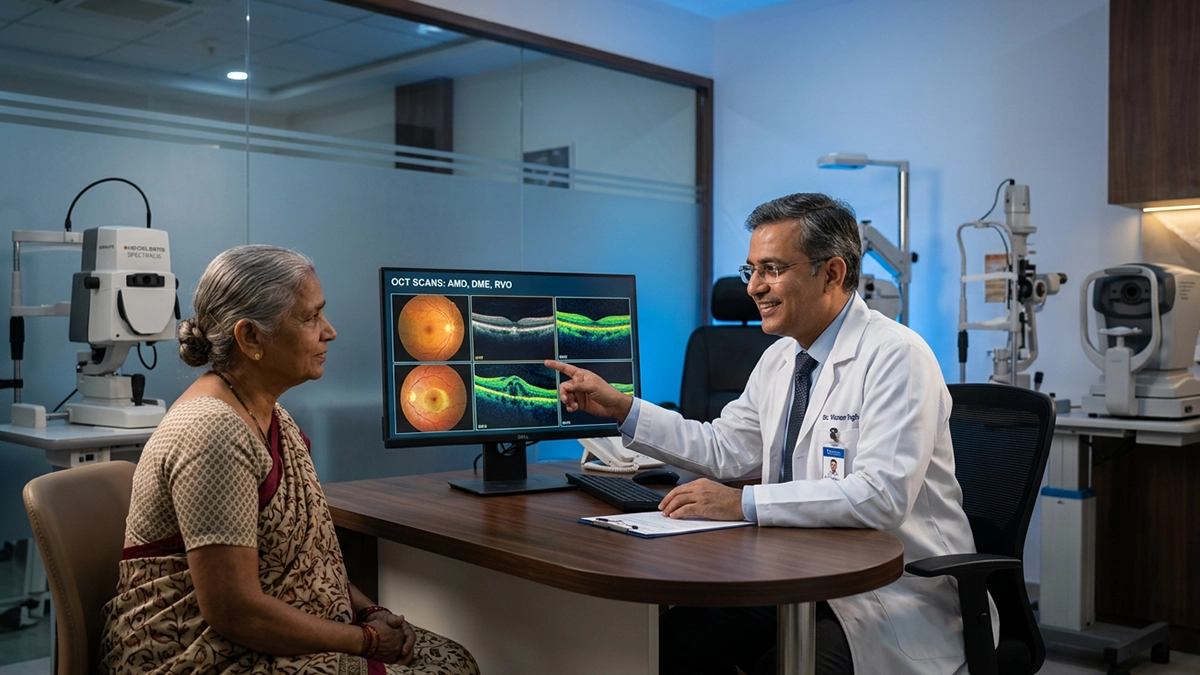
Advanced retina scans and retinal imaging aid doctors in determining when to give Anti-VEGF injections. Modern retina scans, OCT eye scans, and retinal imaging technology help diagnose retinal conditions accurately.
Who Is At Risk?
The people at risk of requiring eye injections are those:
• Suffering from diabetic retinopathy
• Having diabetic macular edema
• Elderly macular degeneration patients
• Retinal vein occlusion patients
• Uncontrolled diabetes patients
• Retinal swelling/bleeding patients
• People having blurry or distorted vision
If you have symptoms of blurry vision, distorted vision, floaters, and changes in your vision, consult a retina doctor to get proper retina treatment in India and advanced retinal care.
Treatment Options at ASG Eye Hospital
Medication and Retina Exam
For the early stages of retina disease, medication and retinal exams may be performed in order to treat swelling and assess the progression of the problem.
Retinal scanning and retinal images help the doctors decide on Anti-VEGF injections. Advanced retina diagnosis, retina imaging, and eye care treatment ensure effective management of retinal diseases.
Which Eye Injections Treatment (Anti‑VEGF) is Best for You?
Eye Injections (Anti‑VEGF) Treatment Cost in India
The cost of Eye Injections Treatment (Anti‑VEGF) in India is determined by the type of retinal disease, number of injections needed, and the type of drug.
Various factors that influence the cost of eye injection treatment are:
• Retinal disease type
• Number of injections needed
• Retina diagnostics
• Type of Anti-VEGF drug
• Hospital facilities
• Retina doctor’s expertise
Advanced treatment of diabetic retinopathy and macular degeneration will necessitate several injections. The cost of retina treatment in India, macular degeneration treatment, and diabetic retinopathy treatment may vary depending on the severity of the condition.
Advantages of Eye Injections Treatment (Anti‑VEGF)
- Vision preservation
- Retina swelling reduction
- Enhancement of central vision
- Abnormal blood vessel development control
- Retina stabilization
- Enhanced quality of life
- Long-lasting retina protection
- Effective retinal disease management and improved visual outcomes
Who are Suitable Candidates?
Anti-VEGF eye injections are recommended for patients with:
- Diabetic retinopathy
- Diabetic macular edema
- Wet age-related macular degeneration (AMD)
- Retinal vein occlusion
- Retinal swelling/bleeding
- Blurred/distorted central vision
- Progressive retinal conditions
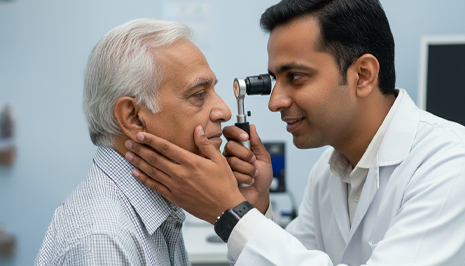
Your retina specialist or retina doctor will examine your retina and prescribe the best retina eye treatment for your retinal condition.
Typical Recovery Period
Routine Recovery Period:
- Retina evaluation: A few days
- Anti-VEGF injection: 1-2 days
- Laser treatment: 1-2 weeks
- Retina management: Continuous follow-ups
Post-procedure recovery involves:
- Not rubbing eyes
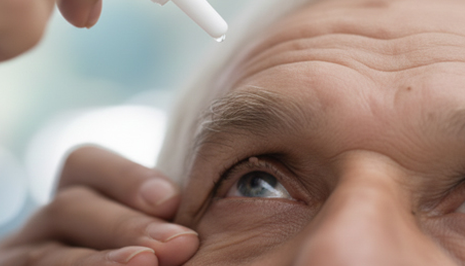
- Applying prescribed eye drops
- Practicing good eye hygiene
- Retina follow-ups
- Regular vision observation
Proper aftercare following eye injection treatment and retina treatment helps improve recovery and protects long-term vision.
Risks & Safety
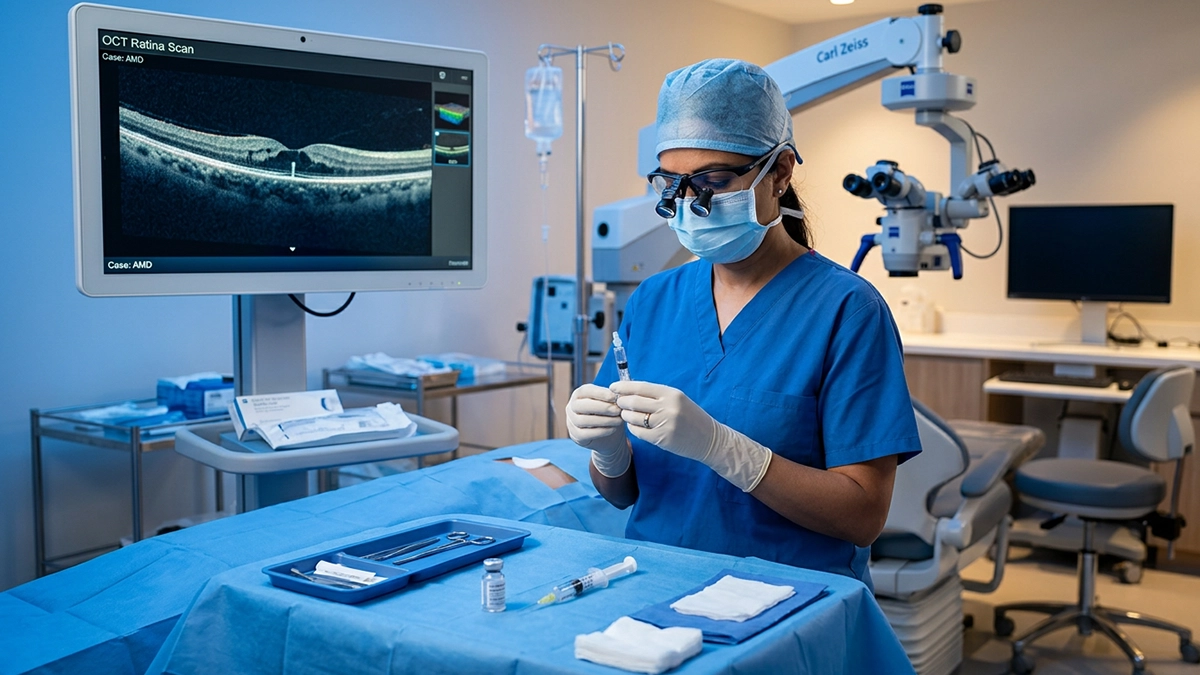
Anti-VEGF eye injections are considered to be safe procedures done by experienced retina specialists and eye doctors.
The possible risks may include:
- Eye redness
- Irritation
- Eye watering
- Discomfort
- Blurred vision
- Risk of infection or increased eye pressure
Use of advanced sterile technique and modern retina technology has made the procedure much safer and more effective for retinal disease treatment.
Why Choose ASG Eye Hospital for Eye Injections Treatment (Anti‑VEGF)?
Technology
ASG Eye Hospital utilizes advanced retina imaging systems, OCT scans and advanced retinal diagnosis technology for precise retina treatment in India and retina eye care.
Experienced Specialists
We have highly skilled retina specialists who specialize in Anti-VEGF injections, treatment for diabetic retinopathy, macular degeneration and advanced retinal treatments.
Trusted Name
ASG Eye Hospital is a reputable center for advanced retina eye treatment in India, diabetic retinopathy treatment, and macular degeneration treatment.