
Advanced Retinal Detachment Treatment to Restore Vision and Prevent Permanent Vision Loss

20
Years
180+
Hospitals

700+
Eye Specialists

3
Crore+ Eyes



What is Retinal Detachment?
Retinal detachment is an eye disease related to the retina that involves separation of the retina from the back layer of the eye. This causes improper transmission of oxygen and nutrients to the retina, resulting in sudden vision loss. Symptoms include flashes of light, floaters, blurring of vision, and appearance of shadow or curtain over vision.
The significance of immediate treatment of retinal detachment or retinal detachment surgery cannot be stressed enough as it prevents permanent blindness. Early retina treatment, retinal eye surgery, and advanced retina care are essential for protecting vision.
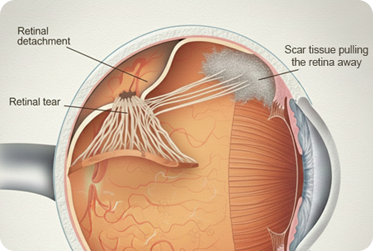
Retinal Detachment: Symptoms, Causes & Treatment
Who is at Risk?
Those who are more likely to suffer from retinal detachment are:
• Those with extreme cases of myopia or high eye power
• Older people
• Patients with diabetes
• People who have suffered any kind of eye injury or trauma before
• Those who have a family history of retinal detachment
• Those who have undergone any surgery in the eye
• Patients with retinal tear or lattice degeneration
In case you experience any of the symptoms mentioned above, immediately contact a retina specialist for proper retina treatment, retinal tear treatment, and advanced retinal detachment treatment.
Treatment Options at ASG
Retina Laser Surgery for Retinal Tears
In initial cases of retinal tears or weak retina, laser retina treatment can be considered to prevent detachment.
Laser retina treatment is done by creating small burns around retinal tears to close the retina and prevent any fluid leaks. This retina laser surgery is quick and very effective for retinal tear treatment and retinal stabilization.
Pneumatic Retinopexy
Pneumatic retinopexy is a non-surgical retinal detachment procedure involving injection of gas bubbles into the eye to push retina into its place.
This is usually the case in selected retinal detachments, which require minimal surgical intervention. This advanced retina treatment helps restore proper retinal positioning and vision protection.
Scleral Buckle Surgery
Scleral buckle surgery refers to placement of silicone bands around the eye to make the wall of the eye move towards the detached retina.
This is a conventional retina surgery that has proven to be very effective in treating retinal detachment and preventing vision loss.
Retinal Detachment Surgery Through Vitrectomy
Vitrectomy surgery is carried out in difficult cases by removing the vitreous gel and correcting the problem through laser surgery, silicone oil, or gases.
Vitrectomy surgery is advanced retinal surgery which effectively treats serious cases of retinal detachment and helps restore vision. Modern vitrectomy eye surgery and retina microsurgery offer improved outcomes for complex retinal conditions.
Which Retinal Detachment Treatment is Best for You?
| Feature | Laser Treatment | Pneumatic Retinopexy | Scleral Buckle Surgery | Vitrectomy Surgery |
|---|---|---|---|---|
| Best For | Retinal tears | Small retinal detachments | Moderate retinal detachment | Complex retinal detachment |
| Procedure Type | Laser sealing | Gas bubble injection | Silicone band placement | Vitreous removal & retina repair |
| Recovery Time | Few days | 1–2 days | 2–6 weeks | 4–8 weeks |
| Pain / Discomfort | Minimal | Mild | Moderate | Moderate |
| Suitability for Severe Cases | ❌ Limited | ❌ Moderate | ✅ Good | ✅ Best option |
| Vision Improvement | Prevents worsening | Moderate improvement | Significant improvement | Major improvement |
| Technology Used | Retina laser system | Gas injection technique | Scleral buckle implant | Vitrectomy & laser systems |
| Hospital Stay | Same day | Same day | Same day | Short stay |
| Best Advantage | Prevents retinal detachment | Minimally invasive | Long-term retinal support | Best for complex retinal disease |
| Limitations | Limited effectiveness | Multiple injections may be needed | Combined treatment required | Requires regular follow-up |
Cost of Retinal Detachment Surgery in India
The cost of retinal detachment surgery in India is determined by the degree of retinal damage, treatment procedure, and surgical technique used.
Retinal surgery cost factors include:
• Degree of retinal detachment
• Diagnostic retina tests
• Type of retinal surgery
• Laser, gas, or silicone oil techniques used
• Hospital facilities
• Expertise of the retinal surgeon
Complex retina eye surgeries, vitrectomy surgery, and advanced retina treatment in India can be expensive due to the complexity involved.
Advantages of Retinal Detachment Surgery
- Return of retinal functionality
- Avoidance of permanent blindness
- Vision improvement
- Fixation of retinal tears and detachment
- Decreased incidence of flashes and floaters
- Enhanced retinal stability
- Quality of life improvement
- Long-term protection through advanced retina eye treatment
Ideal Candidates
You should consider retinal detachment surgery in case of:
• Sudden flashes and floaters
• Visual shadow or curtain
• Blurred vision
• Presence of retinal tear
• Eye trauma or injury
• Diabetic retinopathy
• Extreme retinal damage
A retina doctor or retina specialist will assess your retina and suggest an effective retinal detachment surgery technique and personalized retina treatment.
Recovery Period
Normal Recovery Period:
- Lasers: A few days
- Retinopexy: 1-2 weeks
- Scleral buckling: 2-6 weeks
- Vitrectomy: 4-8 weeks
Recovery involves:
• Application of prescribed eye drops
• Proper positioning of the head
• Refraining from strenuous exercises
• Wearing eye shields
• Attending retina examinations
Following proper post-operative care after retina surgery and vitrectomy surgery improves recovery and vision outcomes.
Risks & Safety
Modern retina surgeries are relatively safe procedures when conducted by qualified retina surgeons and eye specialists.
Risks may include:
• Blurry vision for a short period of time
• Red and swollen eyes
• High pressure in the eye
• Formation of cataracts
• Re-detachment of the retina
• Infection and bleeding in rare cases
Advances in retina technology, microsurgery, and modern retina treatment techniques make retina surgeries safer and more successful.
Why ChooseASG for Retinal Detachment Surgery?
State-of-the-Art Retina Technology
The ASG Eye Hospital has the latest retina imaging machine, retina laser, vitrectomy, and microsurgical technology for precise retina treatments in India and advanced retina eye surgery.
Expert Retina Surgeons
Our retina specialists are experts at retinal detachment surgery, vitrectomy surgery, diabetic retinas, and other retinal surgeries.
Leading Eye Hospital
The ASG Eye Hospital is one of the best facilities offering advanced retina eye surgery in India, retina treatment, and comprehensive eye care services.

Book Your Appointment

Submit Your Request
Get a Call from Our Team
Meet Your Specialist
Begin Your Eye Care Journey
Please wait...
Self Booking
Get A Call Back

Vision for All.
Not Just for Some
ASG is growing its network with 200 Vision Centres, delivering affordable eye care to over 4 million people.
Or

Every Angle of Vision.
Every Kind of Care.

Cataract
What do you understand by Cataract? A cataract is an eye condition characterized by the clouding of the natural lens in the eye, leading to vision

Diabetic Retinopathy
What Do You Understand by Diabetic Retinopathy? Diabetic retinopathy is an eye condition, it is caused by diabetes

Cornea
Cornea and Associated Diseases The cornea is the transparent front part of the eye that covers the iris, pupil, and anterior parts of an eye.
Glaucoma
Glaucoma: A Silent Thief of Sight Glaucoma is an eye condition that directly damages the optic nerve (the bundle of nerve fibers that carries..

Neuro-Ophthalmology
What is Neuro-Ophthalmology? Neuro ophthalmology is a combination of super specialty of both neurology and ..
Clear Answers for Better Vision
What is retinal detachment?
It is the separation of the retina from the back of the eye that causes visual problems and requires urgent retina treatment.
Is retinal detachment a medical emergency?
Yes, retinal detachment is an eye disease that needs urgent medical care to avoid losing sight and permanent vision damage.
Is retinal detachment surgery painful?
No, retina surgery is not painful since anesthetic drugs are administered during the process.
How long does retinal detachment surgery take?
A typical retinal detachment surgery takes about 1–3 hours depending on the severity of the condition.
Can one get their vision back after retinal detachment surgery?
Yes, many people recover their vision after undergoing retinal detachment surgery and advanced retina eye treatment.
When should I seek a retina specialist's help?
Seeking a retina specialist is necessary when experiencing flashes, floaters, blurring of vision, or curtain over vision.