
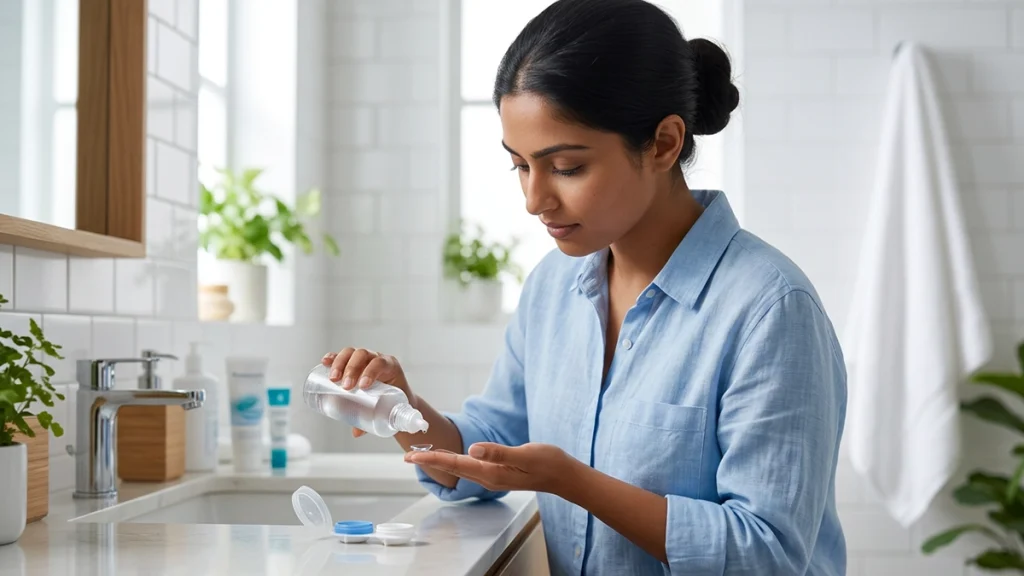
Contact in fact what many people prefer is that which is out of the ordinary like contact lenses as a choice to glasses’ daily wear. They improve vision, they are a health choice for an active lifestyle, they are great for work, travel, sports and going about your daily business. But what you may not know is that contacts which rest directly on the eye require very proper hygiene. By following the right Contact Lens Hygiene Tips you can avoid irritation, dryness, redness and also serious infections.
At ASG Eye Care we see many patients who experience eye discomfort due to what may seem like small issues in lens care which they perform. Things like wearing contacts while asleep, use of tap water, reuse of old solutions or not properly cleaning the lens case play into this. But the good news is that most of these issues can be avoided through some easy, consistent and safe practices. This guide we put out goes over Practical Contact Lens Hygiene Tips, how to clean your lenses properly and at what point you should seek out an eye doctor.
Why Contact Lens Hygiene Matters
Contact lenses are classified as medical devices which do not fall into the category of cosmetic accessories. If they are not cleaned, stored or replaced as directed by a health care professional, bacteria, fungi and other pathogens may grow on the lens surface or within the lens case. These pathogens can enter the eye and cause an infection. This is so with the Contact Lens Hygiene Tips which while improving comfort also play a large role in protecting your vision.
Poor sanitation is a cause of redness, watering, burning, blurred vision, light sensitivity, and in severe cases corneal ulcers. A corneal infection will become serious if left untreated. Daily practice of safe lens care reduces the risk of these issues and also helps to keep your eyes healthy.
Basic Contact Lens Hygiene Rules
First thing in the Contact Lens Hygiene Tips is to always wash and dry your hands before you touch your lenses. Hands out which is bacteria, oil, dust and other particles that can easily get onto the lens and then the eye. Use soap and water which is clean, rinse well and dry your hands with a lint free towel before you handle the lenses.
The key second rule is to use only what your eye doctor recommends for your solution. Tap water, saliva, home made saline, or plain water should not be used for lens care at any time. These may harbor organisms which in turn may cause serious eye infections. What we do for contact lens infection prevention is use the right solution at all times.
The third rule is out of schedule replacement of your lenses and case. Even if a lens looks clean to the eye it may still have deposits or microorganisms. Following your replacement schedule is one of the most practical Contact Lens Hygiene Tips for long-term comfort and eye safety.
| Contact Lens Habit | Safe Practice |
| Handling lenses | Wash and dry hands before touching lenses |
| Cleaning lenses | Use fresh prescribed contact lens solution |
| Storing lenses | Store lenses in a clean case with fresh solution |
| Reusing solution | Never top up or reuse old solution |
| Wearing lenses | Follow the wearing schedule given by your doctor |
| Sleeping with lenses | Avoid unless specifically prescribed |
| Water exposure | Remove lenses before swimming, bathing, or showering |
How to Clean Contact Lenses Safely
Many patients ask how to clean contact lenses at home without damaging them. The answer depends on the type of lens and solution prescribed, but the basic principle remains the same: clean hands, fresh solution, and a clean lens case.
As for proper Contact Lens Hygiene Tips, put the lens in your clean palm, add a few drops of the recommended solution, and gently rub the lens with your finger if that is what the solution instructions say. Then rinse the lens with a fresh solution before putting it in the case. Do not use the solution from the previous wear. Always use fresh solutions for best results which is key for effective disinfection.
If you are using daily disposables you should throw them out after each use they aren’t intended for cleaning and rewear. With monthly or biweekly lenses the issue of How to clean contact lenses properly comes into play as you will be reusing the same pair. For some patients’ hydrogen peroxide based cleaning systems may be recommended especially if they are sensitive to preservatives. But these systems have to be used exactly as directed. The lenses should stay in the special care solution for the time it is recommended before they are safe lens care.
Common Mistakes That Increase Infection Risk
One of the greatest errors that contact lens wearers make is putting in their lenses for the night. Unless your ophthalmologist has given the go ahead for extended wear which we are aware of the risks do not sleep in your contacts. During sleep the eye gets less oxygen and also lenses reduce that even more which in turn increases the risk of infection.
Also we see a high rate of what people do at the pool or in the shower while wearing their contacts which is a no. This is why Contact Lens Hygiene Tips always include keeping lenses away from water.
Many also report they forget to clean the lens case. We empty it, rinse with fresh contact solution and allow to air dry. Also replace them regularly which is important as old cases may develop biofilm and become a source of infection. For strong contact lens infection prevention we must pay attention to the health of both the lenses and the case.
| Mistake | Why It Is Risky | Better Practice |
| Sleeping in lenses | Increases infection risk | Remove lenses before sleep unless advised |
| Using tap water | May contain harmful organisms | Use only contact lens solution |
| Reusing old solution | Reduces disinfection quality | Use fresh solution every time |
| Wearing lenses too long | Causes dryness and irritation | Follow the prescribed wear time |
| Ignoring redness | May delay infection treatment | Visit an eye doctor promptly |
| Sharing lenses | Transfers germs and infections | Never share contact lenses |
Eye Safety Tips for Contact Lens Users
Simple eye care tips which do a great job for wearers. At all times carry a back up pair, especially when traveling. If you notice your eyes are red, painful, watery, or sensitive to light remove your lenses right away and till your eye care provider checks out your eyes do not put them back in. Do not purchase contact lenses without a valid prescription even if they are just for color or decoration. Decorative lenses which also sit on the cornea may cause issues if they don’t fit right. Professional fit and follow up are key parts of Contact Lens Hygiene Tips.
Makeup users should insert lenses before applying makeup and remove lenses before cleaning makeup at night. Avoid applying kajal, eyeliner, or cosmetic products too close to the inner lid margin, as particles may enter the eye and stick to the lens.
Another key eye safety tips are that you should stop wearing lenses when you notice dryness or irritation. Dryness causes friction between the lens and eye surface. In which case your doctor may recommend lubricating eye drops which are safe for use with contacts.
Contact Lens Infection Prevention
Good contact lens infection prevention starts with consistency. Wearing them safely for a day and then neglecting proper hygiene the next puts you at risk. Proper contact lens care should be a routine practice in your daily regimen like brushing your teeth.
If you see persistent redness, pain, discharge, sudden blurred vision, or light sensitivity do not delay. Remove the lenses and see an ophthalmologist. Early intervention can prevent complications and protect your vision.
Patients which have diabetes, dry eye, allergies, or frequent eye infections should be very careful. We may see that they require more frequent check-ups and tailored lens advice. For these patients we should pay even more attention to the Contact Lens Hygiene Tips.
When Should You Avoid Wearing Contact Lenses?
You should steer clear of contact lenses if your eyes are red, infected, painful, or very sensitive to light. Also do without them during active eye allergy, severe dryness or after certain eye procedures which your doctor has not said it is ok for you to do. If you have a cold, fever, or an active infection, play it safe with hand hygiene. Avoid touching your eyes needlessly. Safe lens care is in part about knowing when not to wear them at all as much as how to wear them.
Contact Lens Care at ASG Eye Care
At ASG Eye Care we work with each patient to determine the best contact lens choice for them based on their eye power, corneal health, tear film quality, lifestyle and comfort requirements. Also we at ASG Eye Care inform each patient about our Contact Lens Hygiene Tips because safe use is just as important as getting the right prescription.
Our specialists guide patients on How to clean contact lenses, how long they should be worn, how often to replace them, and which solution is best. If a patient reports redness, irritation, or repeat infections we do an evaluation of the cornea, eyelids, tear film, and lens fit to determine the cause.
Contact lenses are very safe when used properly. With good Contact Lens Hygiene Tips, regular eye exams, and timely care we see that for most people they may enjoy clear and comfortable vision at no greater risk.
Key Takeaway
Contact lenses may be helpful yet they also require responsibility. In terms of Contact Lens Hygiene Tips, do use a clean set of hands when handling your lenses, use only fresh solution, keep away from water, change out your lenses as per the schedule, clean your case regularly, and take out your lenses if you notice your eye is red or in pain. Also, good hygiene, proper follow up, and seeking medical help at the first sign of an issue are the best ways to care for your eyes.
Frequently Asked Questions
1. What are the most important Contact Lens Hygiene Tips?
The primary Contact Lens Hygiene Tips are that you wash and dry your hands before handling lenses, use only as prescribed contact lens solution, do not use tap water, replace lenses at the scheduled time, keep the lens case clean, and remove lenses right away if the eyes become red or painful.
2. How to clean contact lenses properly?
How to clean contact lenses depends on the type of lens and solution which is prescribed. In general we recommend you use fresh solution, gently rub and rinse the lens if that is what is advised, store it in a clean case, and do not reuse old solution. Daily disposables should be thrown away after a single use.
3. Can poor lens hygiene cause eye infections?
Yes. Poor sanitation is a factor which increases the risk of corneal infections, ulcers, redness, irritation and blurred vision. We put out proper Contact Lens Hygiene Tips and also recommend regular eye check ups which in turn will reduce this risk
4. Is it safe to sleep with contact lenses?
In most cases no, sleeping with them is not recommended unless your eye doctor has prescribed extended wear lenses. While you sleep your eyes’ access to oxygen is reduced which in turn puts your cornea at a greater infection risk.
5. Can I wash contact lenses with water?
No. Contact lenses should not be cleaned with tap or bottled water, or saliva. Also always to go as per the solution which is recommended by the eye care professional.
6. When should I visit an eye doctor?
In case of redness, pain, discharge, abrupt blurry vision, light sensitivity, puffiness, or discomfort which doesn’t go away after lens removal you should see the eye doctor at once. These may be signs of infection or corneal issue.