
A red eye is a sign you may be coming out of a dusty commute, spent a long time in front of a screen, had an allergy attack or are fighting off an infection. In most cases of redness it is short term from which your eyes will recover with basic at home care, but at other times it is a sign of a more serious issue which requires urgent attention. We put out what we know on Red Eye causes, recognizing Eye Redness Symptoms and getting appropriate Red Eye treatment which in turn will protect your comfort and vision.
Redness is a result of small blood vessels on or around the eye which become enlarged or inflamed. Also in the mirror different issues may present similarly which is why color by itself can’t determine a diagnosis. The best Red Eye Treatment will depend on the redness pattern, associated symptoms, contact lens use, recent injury and what we find in the eye exam.
What Does a Red Eye Mean?
The white of the eye is covered with a thin clear membrane called the conjunctiva. If arteries in the layer dilate your eyes may look pink, bloodshot or dark red. Also, as per MedlinePlus eye redness is a result very often of swelled or dilated blood vessels although pain and visual changes are more to look out for in terms of severity than the redness alone. Always when there is a red eye. Dry eye, allergy, blepharitis, a foreign body, a corneal abrasion, contact lens problems, uveitis and high eye pressure also present themselves as red. Thus it is in the best interest of the patient to identify What is causing Red Eye Causes to going into Red Eye Treatment.
Common Red Eye Causes
Conjunctivitis is a very common cause of Red Eye Causes. Viral conjunctivitis may present with a cold which can pass on via infected hands, towels, or personal items. Bacteria may present in larger amounts in cases of bacterial conjunctivitis also causing a more sticky discharge and gluey eyelids. In the case of Allergic conjunctivitis there is a predilection for both eyes to be affected which also reports very intense itching and watering. The CDC notes that viral and bacterial conjunctivitis are contagious but that allergic and irritant are not. another primary cause.
Also, tears may be insufficient, evaporate too soon, or not lube the surface enough. Screen use, age, air conditioning, smoke, some medications and certain health issues may play a role. The National Eye Institute reports that insufficient tear production, rapid evaporation and poor tear quality are key in dry eye syndrome. also may see the lid margins go red, become itchy and develop a crust. Dust, chlorine, shampoo, smoke and chemical fumes may also irritate the eye. A well defined bright red spot may be a subconjunctival hemorrhage from a small broken blood vessel. It is usually painless and may present after a cough, sneeze, strain or rub. This variety of Red Eye Causes is what makes self diagnosis a poor idea.
| Possible condition | Common pattern | Additional clues | Usual approach |
| Viral conjunctivitis | Often starts in one eye | Watery discharge, irritation, recent cold | Hygiene, supportive care and review if severe or persistent |
| Bacterial conjunctivitis | One or both eyes | Thick discharge, sticky eyelids | Examination to decide whether antibiotics are needed |
| Allergic conjunctivitis | Usually both eyes | Strong itching, watering, trigger exposure | Allergen control and suitable anti-allergy care |
| Dry eye | Often both eyes | Burning, grittiness, fluctuating blur | Lubrication and management of contributing factors |
| Corneal injury or infection | Usually one eye | Pain, light sensitivity, blurred vision | Prompt ophthalmic assessment |
| Subconjunctival haemorrhage | Localised red patch | Usually painless with normal vision | Observation when uncomplicated |
Understanding Eye Redness Symptoms
The full picture of symptoms gives more info than redness by itself. Common Eye Redness Symptoms include itching, burning, grittiness, watering, discharge, eyelid swelling, pain, light sensitivity and blurred vision. Itch is a strong indicator of allergy, burn and grittiness may be a sign of dry eye or surface irritation. Watering is very present in viral conjunctivitis; we note also that thicker discharge may point to a bacterial infection.
Pain is a primary concern. With mild soreness which comes with surface irritation we are at the mild end of the scale but if we see deep and severe pain that is a different story which may point to corneal disease, uveitis, injury or acute glaucoma. Also note that in the case of significant light sensitivity which is also known as photophobia that is a warning sign. Eye Redness Symptoms symptoms like halos around lights, headache, nausea or a sudden change in vision do not treat those with only cosmetic “whitening” drops.
The pattern offers clues. Redness in both eyes with itching may suggest allergy, while redness beginning in one eye after a cold may be viral. A painful red eye in a contact lens wearer raises concern for corneal infection. Because Eye Redness Symptoms can overlap, an examination may still be necessary.
When Does a Red Eye Need Urgent Care?
Urgent care is required for Red Eye Treatment which presents with sudden blurred or reduced vision, severe pain, light sensitivity, chemical exposure, a penetrating injury, foreign body in the eye, irregular pupil, severe headache, nausea or vomiting. The National Eye Institute says go get help for intense eye pain, vision changes, very red watery eye, trapped foreign object or serious trauma. Also glaucoma which causes a quick rise in eye pressure. Symptoms may include severe pain, redness, blurred vision, halos, headache and nausea. MedlinePlus says to seek care immediately for that set of symptoms. pain, redness, light sensitivity and vision loss. Delaying Red Eye Treatment in either condition puts sight at risk.
| Warning sign | Why it matters | Recommended action |
| Sudden blurred or reduced vision | May involve the cornea, internal inflammation or high eye pressure | Seek urgent ophthalmic care |
| Severe pain or strong light sensitivity | Not typical of simple tiredness or mild allergy | Arrange same-day assessment |
| Chemical splash | Ongoing surface damage may occur | Rinse immediately with clean water and obtain emergency care |
| Painful red eye with contact lens use | Corneal infection can progress rapidly | Remove lenses and seek prompt examination |
| Injury or embedded object | A scratch, penetration or infection may be present | Do not rub or attempt unsafe removal |
| Worsening redness after eye surgery | May indicate a postoperative complication | Contact the treating surgeon immediately |
How Is the Cause Diagnosed?
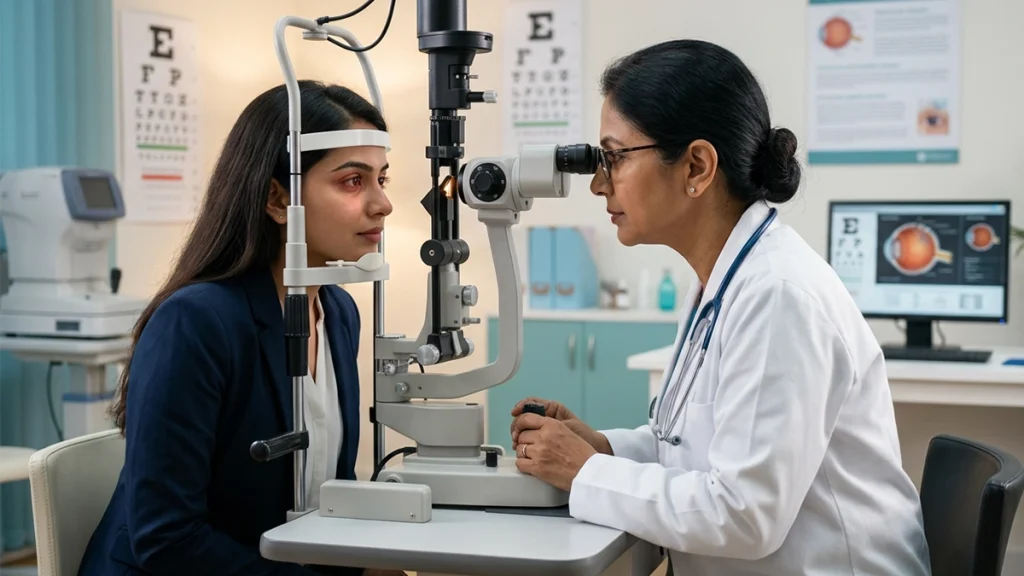
The ophthalmologist will ask at what point the redness started, which eyes are affected, if there is any itching, discharge, pain, injury or contact lens use. Also of note is recent surgery, past episodes and what medicines are being used. The exam may include a vision test, use of a slit lamp, fluorescein dye and measurement of eye pressure. These tests in turn will connect Eye Redness Symptoms to the actual cause. Choosing Red Eye Treatment after examination helps separate minor irritation from conditions needing targeted care.
Red Eye Treatment According to the Cause
Viral conjunctivitis does better with time, good hygiene practices, cool clean compresses and lubricating drops. We don’t use antibiotics for viruses. The CDC says to use cold compresses and artificial tears for symptoms and to stop contact lens wear until symptoms go away or an eye doctor says it is ok to put in lenses again. In some cases of ivitis antibiotic drops or ointment may be required based on the exam and how severe it is. Leftover medication should not be used as it may be out-dated or contaminated. For allergic redness we may do better with avoiding what triggered it, cool compresses, lubricants and as your doctor prescribes anti allergy medicine. MedlinePlus reports we also may use lubricating drops and cool compresses in allergic conjunctivitis. Also due to which it is caused, treatment should always be different.
For dry eye Red Eye Treatment may include preservative free tears, warm compresses, better lid hygiene and break from the screen. Blepharitis does very well with regular lid care. Corneal abrasions, ulcers, glaucoma and uveitis require management specific to their condition.
A simple case of subconjunctival hemorrhage which has no pain, injury or visual change will go away on its own. For recurrent events we may have to look at blood pressure, other meds or a bleeding issue. Steroids should never be started without supervision as they may worsen some infections, delay healing and raise eye pressure. Safe Red Eye Treatment does not support a hit or miss approach to which potent drops to use.
Safe Home Care for Mild Redness
A cool clean compress may do for allergy or conjunctivitis, we also see that a warm compress helps some cases of eyelid issues. For dryness and grittiness we have found preservative free artificial tears to be very helpful. Also do not rub the eye, share towels, use eye make up or wear contact lenses while the eye is red.
Do not use another person’s drops, old prescriptions or repeat “get the red out” products. Honey, rose water, breast milk, saliva and herbal remedies are not sterile eye medicines. Home care is only a temporary part of Red Eye Treatment. Safe Red Eye Treatment should be sought when pain, light sensitivity or visual change is present.
Contact Lenses and Red Eyes
Contact lens users need extra caution. Sleeping in lenses, swimming with them, using tap water, extending replacement schedules or handling them with unwashed hands can raise the risk of corneal infection. Pain, blurred vision, discharge or light sensitivity in a lens wearer requires prompt assessment, even when other Eye Redness Symptoms seem mild.
Remove the lenses and do not reinsert them until an ophthalmologist says it is safe. The case and solution may also need replacement.Also the case and solution may require to be changed. While prompt red eye treatment is key don’t go running to a different brand of lenses or back to wear they are. This makes for better, safer, more effective red eye treatment.
Practical Red Eye Prevention
Good to go for Red Eye Prevention is practices of hand washing and out of the habit of touching your eyes. Don’t share towels, pillow cases, make up, eye drops or contact lens accessories. The CDC says it is a habit of frequent hand washing, to use fresh clean material for discharge and to keep infection between affected and unaffected eyes at bay. also for Red Eye Prevention. Regular breaks, conscious blinking and- which in turn may reduce dryness. Protective eyewear during dust at work, sports and chemical handling is a must for Red Eye Prevention.
For allergy sufferers we include in Red Eye Prevention the practices of identifying and reducing your exposure to triggers, a post out door exposure face wash and not rub your eyes. Also do only what is recommended for your contact lenses which is to use the right solution and to replace them at the proper time. These tips will improve Red Eye Prevention and also put a stop to what causes Red Eye before it begins.
We do regular eye exams which support Red Eye Prevention for people with recurrent redness, diabetes, autoimmune disease, chronic dry eye, contact lens use or past eye surgery. Don’t write off repeat episodes as routine; the base issue may require ongoing care.
How Long Does Redness Take to Improve?
Recovery from these conditions is based on the diagnosis. With removal of the trigger minor irritation may improve in a short while. Viral conjunctivitis may last for several days to weeks, at the same time allergy may continue as long as exposure is present. Dry eye and blepharitis often require ongoing management as a one time cure is not usual. A simple subconjunctival hemorrhage usually fades out over the space of 1 to 2 weeks.
Arrange reassessment when Eye Redness Symptoms worsen, repeatedly return, spread or fail to improve as expected. Persistent redness may mean the diagnosis needs review. Timely follow-up allows the ophthalmologist to adjust Red Eye Treatment safely.
Why Timely Eye Evaluation Matters
Most Red Eye Causes are out there, but we see mild and serious conditions which present the same. We have developed a guide to Eye Redness Symptoms which helps patients to recognize what is serious and what is not which in turn stops them from rushing to the emergency room for every red eye. Also by being aware of the main Red Eye Causes we hope to see which self medication is inappropriate.
At ASG Eye Care, during an ophthalmic exam we determine what is causing your redness. It could be from an infection, allergy, dryness, eyelid disease, injury, corneal issue or internal eye inflammation. We will create a custom Red Eye Treatment plan which in turn will put to use random self medication. Also we will follow up to see that your healing is along the right track and that your vision is protected. This supports our Red Eye Prevention and Timely Red Eye Treatment.
Frequently Asked Questions
1. What are the most common reasons for red eyes?
Frequent causes of Red Eye Causes are dry eye, conjunctivitis, allergy, blepharitis, dust, smoke and prolonged screen use. The diagnosis is likely to be based on associated itching, discharge, pain, dryness, injury or visual change.
2. Can a red eye be treated at home?
Mild irritation may settle with rest, a clean compress and lubricating drops. Professional Red Eye Treatment is advisable when redness is painful, persistent, recurrent or accompanied by blurred vision, light sensitivity, injury or contact lens use.
3. Which drops are suitable for eye redness?
The proper drops are for the diagnosis. For dry eye we have lubricants, for allergies we use anti-allergy drops and antibiotics which are for select bacterial infections. Because Red Eye Causes vary, it is advised that you see an eye specialist before using steroid or antibiotic drops.
4. Is a red eye contagious?
Redness itself is not always contagious. Viral and bacterial conjunctivitis can spread, while allergy, dry eye and subconjunctival haemorrhage do not. Hygiene remains an important part of Red Eye Prevention whenever infection is suspected.
5. When should I see an eye specialist immediately?
Seek urgent care when Eye Redness Symptoms include severe pain, sudden blurred or lost vision, strong light sensitivity, chemical exposure, injury, nausea, an irregular pupil or a painful red eye in a contact lens wearer.
6. How can repeated redness be prevented?
Effective Red Eye Prevention includes handwashing, avoiding eye rubbing, contact lens hygiene, screen breaks and protective eyewear. When redness returns, professional Red Eye Treatment can identify and manage the underlying condition.