In the first year babies go through great changes which include better focus, tracking of movement, face recognition, and reaching for objects. As new parents you aren’t required to have complicated routines or special products for baby eye care. It is a matter of keeping the eye area clean, encouraging safe visual play, in attendance at health checks, and to act when something doesn’t look right. Also by understanding newborn vision development families may avoid putting one child into strict comparison with another, because visual skills mature at different rates.
A proper care routine for an infant eye care includes clean hands, safe toys, adequate lighting which is comfortable, protection from smoke and direct sunlight, and that we turn to the doctor at the first sign of something amiss. This also serves to identify which changes in baby eyesight development require a visit to the doctor.
Understanding Vision During the First Year
Babies are born with the ability to see but at birth their vision is not clear. The NHS reports that visual development is a gradual process which takes the first few months. Also they note that it is not uncommon for a new born’s eyes to misalign which in most cases will sort itself out by the time the baby is 4 months old. Newborn vision is a team effort of the eyes and brain as they learn to work together.
By the time they are two months old many babies will be looking at their caregivers’ faces, watching movement, and studying a toy. At four months they will be interested in their own hands and following a brightly colored toy. By six months we see that they are improving in their visual coordination which is noted in their reach for an object they want. Also at nine months they display better visual memory which they use in searching for a dropped item. These are large scale indicators which are not to be taken as hard and fast rules.
| Approximate stage | What parents may notice | Helpful response |
| Birth to 2 months | Brief attention to nearby faces, light, and movement | Hold the baby comfortably and use calm face-to-face interaction as part of baby eye care |
| Around 2 to 4 months | Watching a moving person or toy and looking at the hands | Move one safe toy slowly and allow time for the baby to respond |
| Around 4 to 6 months | Better reaching and stronger interest in faces, mirrors, and colour | Support infant eye care with supervised floor play and age-appropriate objects |
| Around 6 to 12 months | Looking for dropped items and using sight to guide movement | Keep the play area safe and observe progress in baby eyesight development |
Clean the Eyes Gently
Parents should avoid putting breast milk, rose water, kajal, surma, honey, saliva, herbal remedies, or non-prescribed drops into a baby’s eyes. What may seem like traditional care may in fact introduce infection or irritation. For infant eye care we advise you to seek professional advice before using any medication. Also the Indian National Health Mission reports that routine use of kajal and routine eye drops for babies is to be avoided.
New at birth signs of redness, swelling, or abnormal discharge are reasons to seek care right away. The National Eye Institute says to report to the baby’s doctor immediately if you see unusual discharge or puffy red eyelids in a newborn. Also they put forth that hand washing is to be done before and after handling the baby’s eyes.
Use Comfortable Light and Limit Screens
In normal indoor lighting you can do routine baby eye care. Also avoid the use of bright lamps, flash from cameras, or direct sunlight into the eyes. Use shade, a pram canopy, and a wide brimmed hat which will help with outdoor glare. Also do not get the baby to look at the sun.
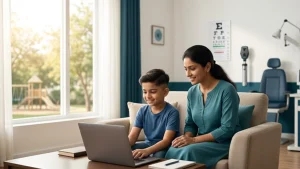
Screens are out of the picture for baby eyesight development. CDC reports that for kids under two years of age they do not recommend screen time which also includes video calling except with family. Babies do better with natural learning which is through faces, voices, touch, books, movement, and play.
Encourage Sight Through Everyday Play
Play which supports baby eye care development as it grows along with their attention, movement, and social interaction. At a close range for easy viewing, smile at them and speak at a slow pace, also giving the baby time to respond. For tummy time which is supervised, put out one simple toy at eye level and move it slowly instead of many at once.
For newborn vision, which is what we are talking about here, simple things do the trick. Babies are into faces, bold patterns, infant safe mirrors, and clear shapes. We should stop when the baby looks away, closes eyes, gets fussy, or seems tired. We do responsive play for baby eyesight development without overstimulation.
Choose age appropriate toys which are large enough to prevent them from being put in the child’s mouth, which do not have sharp elements and which do not break easily. Also out of the play area should be put pointed objects, sprays, cosmetics, cleaning products and button batteries. Injury prevention is a key element of infant eye care.
Support General Health
Healthy vision is related to overall growth. We may start complementary foods at the time of your health care provider\’s advice. For care of the newborn vision high dose vitamins, supplements, or herbal preparations are not supported except when prescribed.
Sleep also plays a role in attention. A tired baby may look away, push at his face, or lose out on play time with toys which may not be related to a vision issue. In terms of baby eye care we look for trends over time instead of jumping to conclusions from a single sleepy episode.
Tell the doctor up on issues of prematurity, low birth weight, oxygen treatment, infections which occurred in the womb, a history of childhood cataract in the family, or anything that came up in the newborn screening. This background may change the timing of infant eye care reviews.
Attend Screening and Eye Examinations
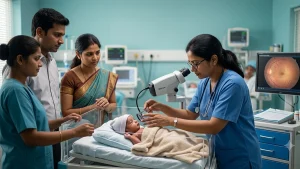
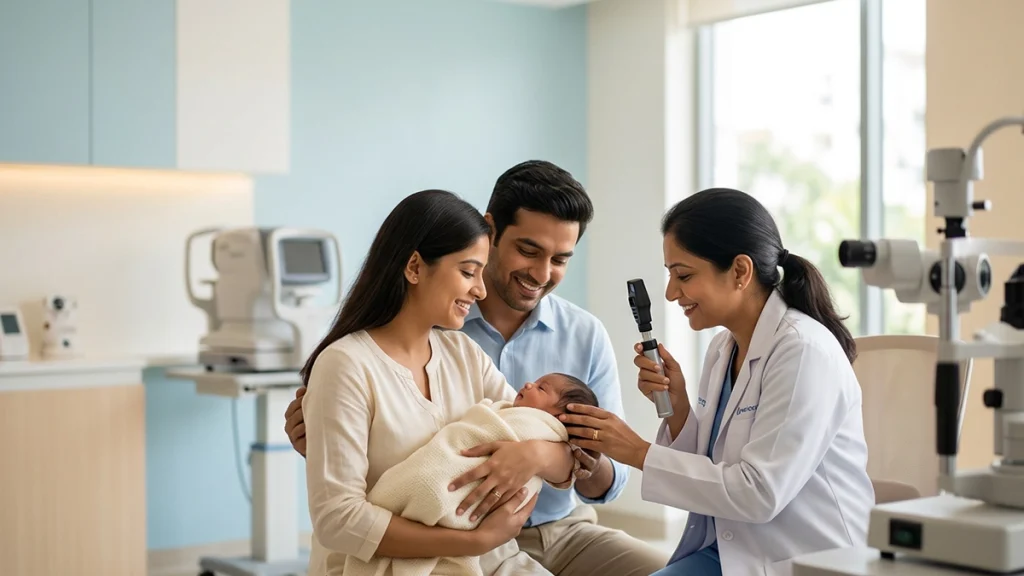
Routine of eye checkups is at the core of baby eye care. A pediatrician may do the inspection of the eyes, assessment of the red reflex, evaluation of alignment, and study of visual behavior. The CDC reports that screening for vision does that of identifying kids which require more care, also a full exam by an eye doctor which in turn may diagnose health or vision issues.
GOV. UK guidelines report that congenital cataract is a treatable condition which has early detection and quick referral as key elements to avoid a lifetime of visual impairment.
Screening does not equal a full eye exam. When screening results are abnormal, the eyes appear different, visual behavior is a concern, or risk factors are present an ophthalmologist may be called in. It is a part of responsible baby eye care to keep recommended appointments even when the baby eye care seems to do fine.
Warning Signs Parents Should Not Ignore
Parents do not require a torch or an online vision test. Note the baby’s natural reactions during feed, play, and in social interaction. What you see in these situations is important to newborn vision. See a professional if a sign is persistent, one sided, getting worse or at that is also accompanied by pain, injury, swelling, or reduced response.
| Sign noticed | Why it matters | Recommended action |
| White, grey, or unusual glow in the pupil | It may indicate an abnormal reflex or a problem behind the pupil | Arrange an urgent examination rather than waiting for the next baby eye care visit |
| Constant inward or outward turning of one eye | Persistent misalignment may affect coordinated vision | Discuss it promptly, especially when it continues around or beyond four months |
| Red, swollen eyelids with discharge in a newborn | Infection, irritation, or a blocked tear duct may be involved | Contact the baby’s doctor and avoid unprescribed drops |
| Not watching faces or movement, or losing a skill previously seen | An eye, neurological, hearing, or developmental issue may need assessment | Request professional review rather than relying only on milestone comparison |
| Shaking eye movements, marked light sensitivity, cloudiness, injury, or obvious pain | These signs may need urgent diagnosis | Seek timely ophthalmic care and avoid home treatment |
A white appearance, chemical exposure, large scale injury, very great swelling, a hazy eye, or a lot of pain requires immediate assessment. After chemical exposure, continue to rinse the eye out with clean water at the same time that you are getting emergency medical care.
Extra Care for Premature Babies
A white appearance, chemical exposure, large scale injury, very great swelling, a hazy eye, or a lot of pain requires immediate assessment. After chemical exposure, continue to rinse the eye out with clean water at the same time that you are getting emergency medical care.
For these families, baby eye care practice is to keep neonatal records, perform that next retinal exam, and to follow up even when the baby’s response to light is minimal. Newborn vision also is reported at corrected age. CDC milestone guidelines which report on corrected age do so for a baby that was born more than 3 weeks preterm.
Common Concerns at Home
Watery eyes may be due to a narrow or blocked tear drainage path. However it is not always the case when water is mixed with redness, sensitivity to light, cloudiness, or a large looking eye that we are dealing with a simple blocked duct.
Occasionally we see crossing in the very young newborn but continuous deviation, one eye which is out of alignment and does play that game, or misalignment that persists should be evaluated. For effective infant eye care we stress early observation which is better than waiting until a child is able to read an eye chart.
Eye rubbing often means tiredness, but frequent rubbing with redness, discharge, swelling, light avoidance, or poor attention deserves review. Tracking newborn vision and baby eyesight development means watching the overall pattern: the baby should gradually show more interest in faces, movement, toys, and the surroundings.
A Simple Home Routine
This basic baby eye care checkup may include taking in a short video at the point when unusual eye movement happens only somewhat. Note when it began, which eye it affects if it is in one or both, also note if it appears with tiredness, fever, feeding, or bright light. This can make an infant eye care consultation more useful without attempting a home diagnosis.
Parents may see early signs which then grow into more obvious issues. At the very beginning of the evaluation we have a chance to spot problems as visual systems are developing.
When to Consult ASG Eye Care
Consider at the eye care professional when screening results are atypical, alignment is out of the ordinary, the pupil is white, there is persistent discharge or swelling, your baby doesn’t respond to faces or movement, or that which may be related to prematurity or family history. At ASG Eye Care, early baby eye care assessment can distinguish normal variation from a condition requiring monitoring or treatment.
Bring forward birth certificates, screening reports, family health history, and in case of images use those. We put professional advice at the top of the list over internet home remedies which may not be safe for your baby eyesight development.
Conclusion
Good baby eye care is through observation, cleanliness, safe play, routine screening, and prompt advice. Parents don’t require gadgets or aggressive visual exercises. By paying attention to newborn vision, practicing wise infant eye care, and supporting natural baby eyesight development growth through faces, movement, conversation, and play, families may give a healthy start to a developing visual system.
Frequently Asked Questions
1. When should parents start baby eye care?
At birth it is through gentle hygiene, newborn checks, safe surroundings, observation, and routine pediatrics visits that care begins. Also a separate ophthalmology visit may be recommended after an abnormal screening result, visible symptom, premature birth, family history, or other risk factor.
2. What can a newborn see?
Newborn vision is immature at birth. A baby sees but has limited focus which improves over the coming months. Babies gradually show more interest in faces, movement, hands, toys, and distant objects.
3. Is occasional eye crossing normal?
In the first few weeks after birth what we see may be of a misaligned nature as the baby’s body is still catching up. By 4 months if the misalignment is still present or if there is constant turning of the head and one eye is repeatedly drifting that is a reason to bring it to the attention of a health care professional.
4. How should parents clean a baby’s eyes?
For everyday baby eye care, wash your hands and use clean soft cloths which are dampened in lukewarm water. Gently wipe and use a different part of the cloth for each eye. Do not use kajal, honey, breast milk, herbal solutions, or medicine unless they are prescribed.
5. Can videos improve baby eyesight development?
Screens are not needed for visual learning. Faces, talking, books, and supervised play provide which is of value. CDC guidance reports to not recommend screen time for under two’s except video calls with loved ones.
6. When is discharge concerning?
Thick and persistent discharge, red and puffy eyelids, fever, discomfort, or any atypical symptoms in a newborn are reasons to seek medical attention right away. The NEI says to call the baby’s doctor as soon as you see unusual discharge or puffy red eyelids in a newborn.
7. Does a premature baby need different infant eye care?
Possibly. Babies who are at risk of retinopathy of prematurity will require to follow the neonatal team’s schedule for retinal exams. Do not delay the appointments as early disease may present with no symptoms.
8. Which signs require urgent help?
A white or atypical eye reflex, chemical burn, serious injury, cloudy cornea, severe swelling, great pain, or a sudden change in visual behavior requires prompt evaluation. Quick action is a key element of baby eye care.