Searching for the best eye hospital in India is not as simple as reading a list. Hospital quality varies considerably, not just between cities but between facilities in the same city. A hospital that is well-regarded for cataract surgery may not have the same depth of expertise in retinal disease or paediatric ophthalmology. The right eye treatment hospital for one person’s condition may not be the right choice for another’s.
Rather than naming hospitals, this guide explains what to actually look for. These are the criteria that separate a genuinely capable eye hospital from one that simply has good marketing.
Subspecialty Depth, Not Just General Capability
A strong general ophthalmology department handles routine conditions well. But many eye conditions require subspecialist expertise: corneal disease and keratoconus require a cornea specialist; retinal detachment and diabetic retinopathy require a vitreoretinal surgeon; paediatric conditions, including amblyopia and congenital cataract, require a paediatric ophthalmologist. The best eye hospital in India for serious conditions is one where each subspecialty is handled by a dedicated specialist, not a general ophthalmologist rotating through.
When evaluating any top eye hospital, ask whether the subspecialty you need, refractive, cornea, retina, glaucoma, oculoplastics, paediatrics, has a dedicated consultant with documented experience in that area. General credentials alone are not sufficient.
Technology and Diagnostic Equipment
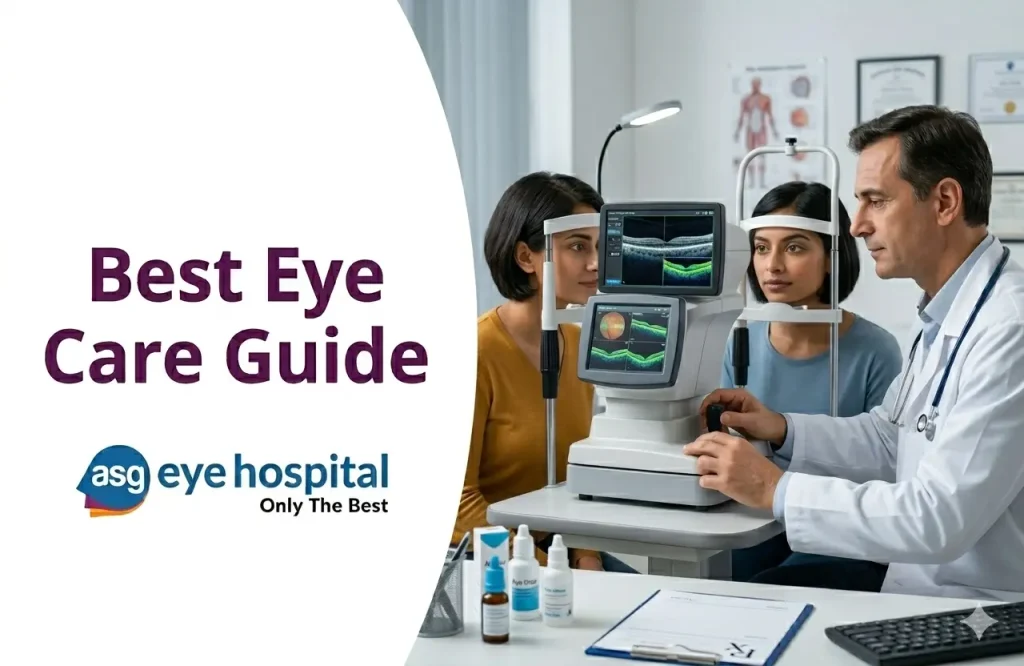
The quality of a diagnosis is limited by the equipment used to make it. A well-equipped eye clinic near me should have optical coherence tomography (OCT) for retinal and optic nerve imaging, corneal topography for refractive assessments and keratoconus diagnosis, automated visual field testing for glaucoma monitoring, and a laser platform that is current-generation for LASIK and cataract procedures.
Technology matters most at the diagnostic end rather than the surgical end. The surgical outcome depends on the surgeon’s skill. The accuracy of the diagnosis, which determines whether the right procedure is performed in the first place, depends on the equipment available.
Surgeon Experience and Surgical Volume
Surgical outcomes in ophthalmology correlate with surgical volume. A surgeon who performs 500 cataract procedures annually is more likely to handle complications confidently than one who performs 50. When looking for the best eye doctor for a planned procedure, ask specifically about the surgeon’s annual volume in that procedure, not the hospital’s overall caseload.
Does a senior surgeon’s title guarantee better outcomes than a less senior one?
No. Title reflects seniority, not necessarily recent surgical skill or volume. Ask about the specific surgeon who will perform your procedure, how many similar cases they handle annually, and whether they have managed complications of the type that can arise.
What To Check Before Choosing an Eye Hospital Near Me
Before committing to an eye hospital for a planned procedure, a few practical steps are worth taking:
- Confirm the subspecialist for your condition is available at that facility, not referred out to a partner hospital
- Ask about the equipment used specifically for your diagnosis and procedure -not just what the hospital “has”
- Ask about post-operative follow-up protocols and who you contact if problems arise between appointments
- For surgical procedures, ask whether the procedure is done at that facility or at a separate surgical centre
- Check whether the hospital has a 24-hour emergency ophthalmology service if you have a condition that may need urgent intervention
What Best Eye Hospital in India Actually Mean in Practice
The best eye hospital in India for any individual is the one that combines subspecialty expertise in their specific condition with accessible follow-up care. A hospital with a strong national reputation that is three cities away is not more useful than a well-equipped regional eye treatment hospital with experienced specialists where consistent follow-up is practical.
Top eye hospitals are also those with structured processes: clear referral pathways between subspecialties, reliable documentation, and the ability to manage complications internally. A hospital that refers out for every complication is not truly a comprehensive eye care centre, regardless of how it markets itself.
Final Thoughts on Choosing the Right Eye Hospital
The right approach is to evaluate the hospital against the specific condition you need assessed or treated, not against a general ranking. Ask the questions listed above. A hospital confident in its quality will answer them directly.
ASG Eye Hospital is among India’s largest eye care networks, with centres in Mumbai, Delhi, Pune, Jaipur, Noida, and more. Each centre offers dedicated subspecialty consultants, current-generation diagnostic technology, and the full range of eye surgeries from routine LASIK surgery and cataract surgery to complex retinal and corneal cases. If you are searching for an eye hospital near me or an eye clinic near me across these cities, ASG provides the same standard of care across its network.
FAQs
1. What should I look for in the best eye hospital in India?
Subspecialty depth for your specific condition, current diagnostic equipment, a surgeon with documented volume in your required procedure, clear post-operative follow-up protocols, and the ability to manage complications internally.
2. How do I find a good eye doctor near me?
Look for a specialist in the subspecialty relevant to your condition, not just a general ophthalmologist. Ask about their experience with your specific diagnosis and their annual surgical volume for any planned procedure.
3. Are top eye hospitals in India only in metro cities?
No. Several strong eye care networks operate across Tier 2 and Tier 3 cities. Proximity and consistent follow-up access matter as much as reputation for most conditions.
4. What makes an eye clinic near me worth choosing over a larger hospital?
If it has the right subspecialist, appropriate equipment, and a reliable referral pathway for complex cases it cannot handle in-house, a well-run regional eye clinic often provides better continuity of care than a large hospital where you see a different doctor each visit.
5. How important is technology when choosing an eye treatment hospital?
Very, particularly at the diagnostic level. Accurate diagnosis of conditions like glaucoma, keratoconus, or macular disease depends on equipment like OCT and corneal topography. Without these, conditions are easily missed or misclassified.