Most people walk into a cataract surgery consultation feeling fine. They walk out holding a sheet of paper covered in medical terms, lens names, and price tiers — and they have absolutely no idea what just happened. It may be a familiar sound and you are not alone. There is no one who is brought up knowing about intraocular lenses. It is not exactly dinner table conversation. So this is in fact what you actually need to know written in a manner in which a knowledgeable friend would explain it over a cup of coffee.
So What Even Is an IOL?
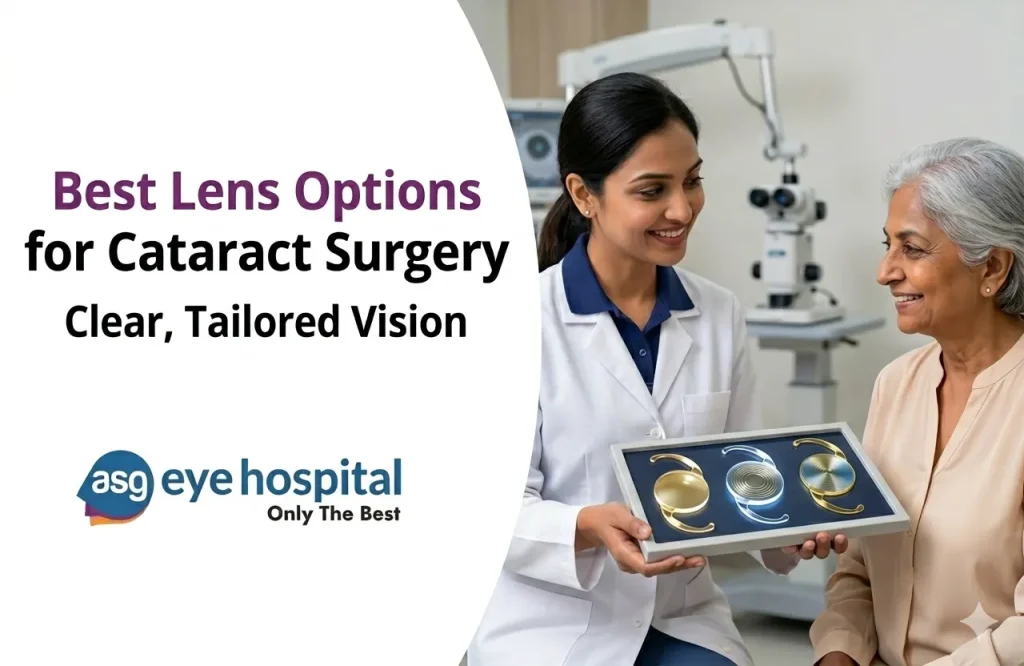
When a surgeon performs cataract surgery, the cloudy natural lens inside your eye gets removed and replaced with a small artificial one. That replacement is called an IOL — an intraocular lens. It stays inside your eye permanently. You will never feel it shifting around, never need to clean it, and never have to remove it at night like a contact lens. It simply becomes part of your eye and gets on with the job.
The section that confuses individuals is the fact that these lenses are not identical. Vision is processed differently in different designs, and when the right design is chosen by an individual to fit his or her lifestyle, then the results will be ineffective, even after having technically perfect IOL surgery. This is why it is so much more important, than most patients may think, to know what you are getting into before you commit to it.
Monofocal Lenses — Simple, Reliable, Proven
The oldest and longest lensed lens surgeons have used is the monofocal lens that still prevails: it works remarkably well. It gives you sharp, clear vision at a single set distance. Most patients choose distance correction, which means driving, watching television, and recognizing faces across a parking lot all become effortless again.
The honest trade-off is that reading up close will require glasses. Your phone screen, a restaurant menu, a paperback novel — all of that will need readers. Plenty of people are completely unbothered by this. They stash cheap reading glasses in a few convenient spots and move on with life. Others find it irritating. Only you know which camp you fall into.
What monofocals have going for them beyond simplicity is predictability. Results are consistent, costs are lower than premium alternatives, and most insurance plans cover them as the standard option.
Multifocal Lenses — The Glasses-Free Promise
Multifocal lenses are an ambitious project: they strive to provide you with a clear vision in a variety of different distances. Far, intermediate and near – all in the same lens. The technology works by splitting incoming light across different focal zones built into the lens rings.
For people who desperately want to ditch glasses entirely, this sounds like the obvious answer. But a surgeon worth their reputation will tell you about the downsides upfront. Halos and glare around lights at night are a genuine issue for some patients. Streetlamps, Headlights and lit signs may seem to have rings around them, in the first few months after surgery. The majority of the patients adjust to it as time goes by; however, heavy drivers at night are known to be affected by it to a greater degree than anticipated.
Cost is also a factor. Multifocals carry a significant premium over monofocals, and insurance rarely covers the upgrade cost.
Toric Lenses — The Astigmatism Fix
Here is something that catches a surprising number of patients off guard: they discover during pre-surgical testing that they have astigmatism they never knew about. Astigmatism means the cornea curves unevenly — more oval than round — which scatters light and creates blur at every distance.
Standard lenses do nothing to correct this. A toric lens does. It is designed with additional corrective power in a specific orientation to counteract the irregular curve. Toric versions exist across all lens categories — monofocal toric, multifocal toric, and others. If your surgeon identifies astigmatism during your workup, a toric design is worth serious consideration. The difference in sharpness can be remarkable.
What a Good Surgical Team Actually Does
Before recommending any lens, a thorough Eye Hospital team will ask questions that have nothing to do with your prescription. How often do you drive at night? Is a computer central to your workday? Do you read for pleasure? Play sports? Have strong feelings about wearing glasses afterward?
These answers matter more than most people expect. The lens that transforms one person’s life might frustrate another person equally. Good surgeons use your habits and priorities to guide the recommendation — not the other way around.
The Bottom Line
No one type of lens can be said to be the best. The ideal IOL Lens is the one which corresponds to your lifestyle. Take a little time and ponder over how you really use your eyes. Talk to your Eye Care team honestly. And do not be afraid to ask questions. A good surgeon will provide you with an answer to each and every one without causing you to feel dumb.
Cataract Surgery is a life altering surgery. The type of lens that you select will be the way that life will appear. Take your time, pose the tough questions and choose the one that best suits you.
Frequently Asked Questions
1. What is an intraocular lens (IOL)?
An IOL is a small artificial lens implanted during cataract surgery to replace the cloudy natural lens. It stays permanently inside the eye and requires no maintenance.
2. What are monofocal lenses?
Monofocal lenses provide clear vision at one distance, usually far. They are reliable, predictable, and often covered by insurance, but reading glasses are needed for near tasks.
3. What are multifocal lenses?
Multifocal lenses allow vision at multiple distances, reducing dependence on glasses. Some patients may notice halos or glare at night, and they usually cost more than monofocals.
4. What are toric lenses?
Toric lenses correct astigmatism by compensating for irregular corneal curvature. They provide sharper vision and are available in monofocal and multifocal versions.
5. How do I choose the best lens for cataract surgery?
The best lens depends on lifestyle, vision needs, and whether you want to minimize glasses use. Your surgeon will guide you based on your daily habits and priorities.
6. Is cataract surgery safe and effective today?
Yes. Modern cataract surgery is quick, safe, and highly effective. It usually takes about 15 minutes, uses numbing drops instead of general anesthesia, and recovery is fast.