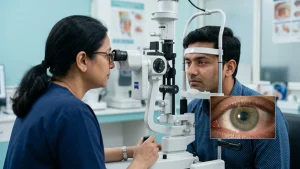
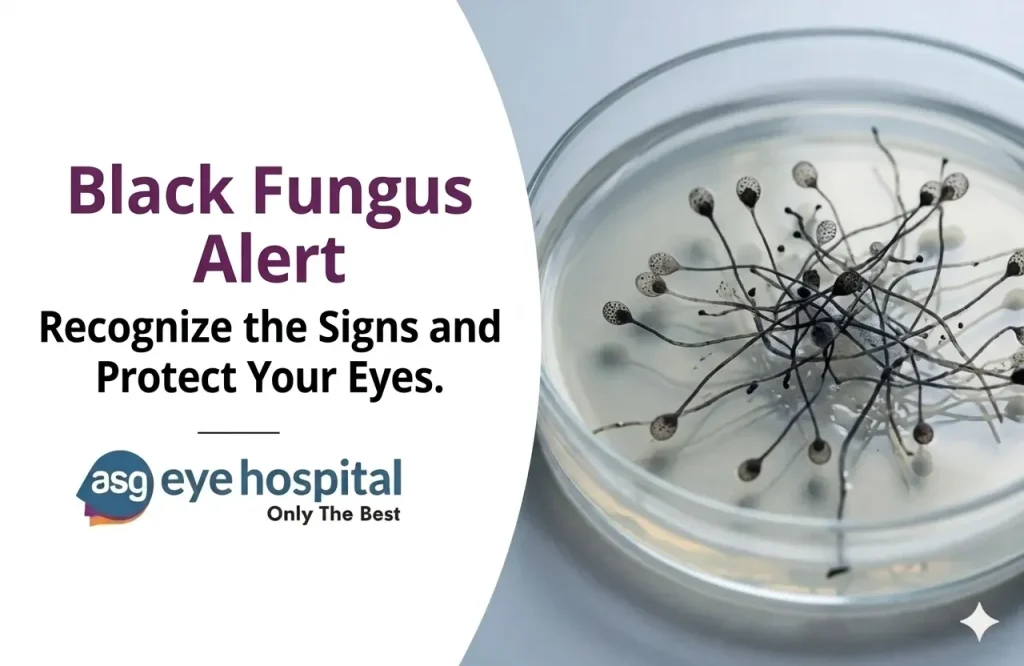
When a recently hospitalised patient walks in with swelling around the eye socket, an experienced eye doctor takes it seriously every time. Additionally, the specialist’s measure of suspicion quickly changes if the patient has uncontrollable diabetes or has just taken drugs. Black fungus is one of those diseases that punishes everyone, including the patient, when it is found too late and rewards the physician who sees it early.
Understanding What Black Fungus Actually Is
Black Fungus is the colloquial name for an infection medically known as Mucormycosis. The name comes from what the infection does to tissue — it invades blood vessels, blocks circulation, and causes the affected area to turn dark as tissue dies without blood supply. In someone with a healthy immune system, this almost never happens.
Black Fungal Infection does not discriminate between age groups or regions. It has been found in patients from all over India, in all social groups, and in all types of treatment settings. What it does discriminate between is immune status — which is why certain conditions create a risk profile that every treating physician and patient family should understand clearly.
What Makes Someone Vulnerable
The list of illnesses that are more common in urban India seems to be the risk factors for Black Fungal Infection. Poorly controlled or recently discovered Type 2 diabetes is at the top. Using steroids for long periods of time and high doses as part of the COVID-19 treatment is a known trigger. Treatment with immunosuppressive agents for organ transplants, haematological cancers and for diseases such as lupus also make people vulnerable.
In 2021, the link between COVID-19 and Black Fungus was clearly seen. Steroids that are used to treat cytokine storms depressed immune function and hyperglycaemia from infection increased blood sugar. Mucormycosis was able to establish itself and spread because of this mix of factors: a weakened immune system and high blood sugar levels.
Black Fungus Symptoms & Treatment Overview
| Factor | Details |
|---|---|
| Medical Name | Mucormycosis |
| Infection Type | Serious Fungal Infection |
| Common Risk Factors | Diabetes, Steroid Use, Low Immunity |
| Early Symptoms | Nasal congestion, headache, facial pain |
| Eye Symptoms | Swelling, double vision, drooping eyelid |
| Severe Complications | Vision loss, brain spread |
| Diagnosis Methods | Imaging, biopsy, specialist examination |
| Main Treatment | Amphotericin B + Surgery |
| Emergency Level | Medical Emergency |
| Prevention | Diabetes control & cautious steroid use |
Symptoms of Black Fungus That Should Not Be Ignored
Symptoms of Black Fungus in the early stage are genuinely easy to overlook. Nasal congestion, mild facial pain, a headache that does not resolve these are the kinds of complaints that get attributed to sinus issues or post-viral recovery symptoms. That is precisely where the danger lies.
As Black Fungal Infection advances, the signs of Black Fungus become more pronounced, and include dark discharge or bloody mucous from the nose, black crusting around the nostrils, one side of the face numb, toothache without tooth decay, and swelling which starts spreading towards the eyes. If the orbit is affected, the patient might have a drooping eyelid, impaired eye movements, double vision or sudden loss of vision clarity.
Any patient with these symptoms of Black Fungus — particularly one with a recent COVID-19 history or any of the established risk factors — needs specialist evaluation without delay. A visit to an eye hospital or emergency facility is not an overreaction. It is the right response.
Fungal Eye Infection — When the Orbit Becomes the Battleground
The rhino-orbital form of Fungal Eye Infection is where eye specialists become central to the treatment story. Mucormycosis travels along blood vessel pathways from the sinuses into the orbit with a consistency that makes ophthalmic assessment non-negotiable in any suspected case. At a well-equipped eye hospital, orbital involvement can be assessed with imaging, clinical examination, and direct specialist evaluation — all of which must happen fast.
It’s not just about vision when an experienced eye doctor is evaluating a possible case of Black Fungus. They are evaluating the severity of orbital involvement, if the optic nerve is at risk, and aiding in making a determination of whether surgical intervention is necessary now.
Black Fungus Treatment — What It Requires
Black Fungus Treatment is intensive and often prolonged. The antifungal backbone is intravenous liposomal amphotericin B, administered under close monitoring because of its effects on kidney function. This runs alongside surgical debridement — removal of infected tissue — which may need to be repeated more than once as the infection declares its true extent.
In advanced Fungal Eye Infection where the orbit is extensively involved, Black Fungus Treatment may require orbital exenteration. No eye care team recommends this lightly. It is a decision made when the alternative — spread to the brain — carries a higher mortality risk than the surgery itself.
Why Early Eye Care Changes Everything
Black Fungus does not pause. Between a patient first noticing orbital swelling and the infection reaching structures near the brain, the window for intervention can be as short as 48 hours. An eye clinic that recognises the presentation and escalates care immediately is not being overly cautious — it is functioning exactly as eye care should function when a life-threatening condition is in the room.
Early Mucormycosis diagnosis, early specialist involvement, and early Black Fungus Treatment — these three things together change outcomes in ways that no later intervention fully compensates for.
FAQ Section
1. What is Black Fungus?
Black Fungus, or Mucormycosis, is a rare but serious fungal infection that affects people with weakened immune systems.
2. What are the early symptoms of Black Fungus?
Early symptoms include nasal congestion, facial pain, headache, swelling around the eyes, and black or bloody nasal discharge.
3. Who is at high risk for Black Fungus?
People with uncontrolled diabetes, recent COVID-19 infection, steroid use, cancer treatment, or weakened immunity are at higher risk.
4. Can Black Fungus affect the eyes?
Yes. Black Fungus can spread from the sinuses to the eyes, causing swelling, double vision, drooping eyelids, and even vision loss.
5. Is Black Fungus contagious?
No. Black Fungus does not spread from person to person.
6. How is Black Fungus diagnosed?
Diagnosis involves clinical examination, imaging tests, nasal endoscopy, biopsy, and specialist evaluation.
7. What is the treatment for Black Fungus?
Treatment usually includes intravenous antifungal medicines like amphotericin B and surgical removal of infected tissue.
8. Why is early treatment important?
Black Fungus spreads quickly and can reach the brain within days. Early treatment significantly improves survival and recovery chances.