ASG Eye Hospital

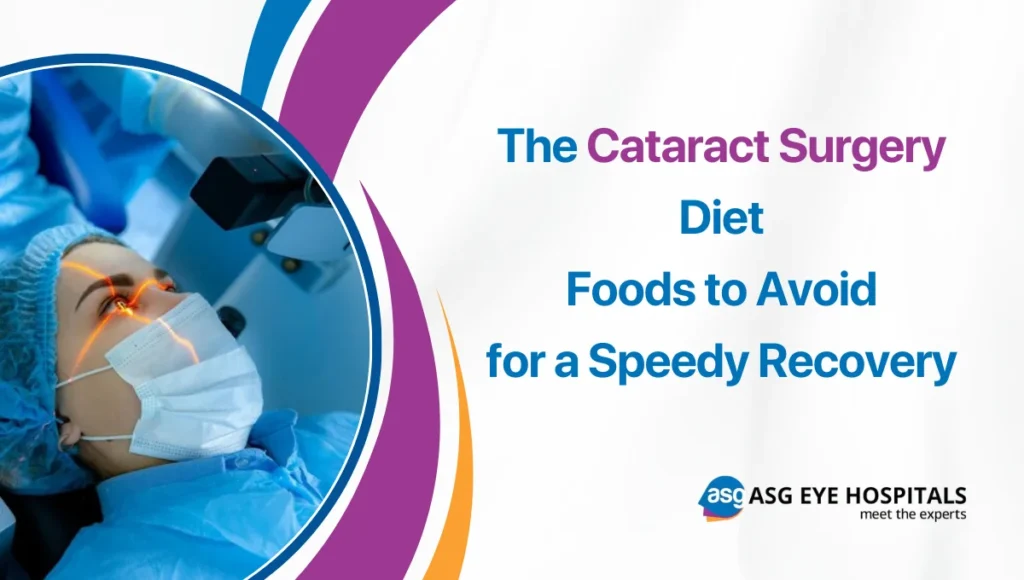
Speed Up Your Cataract Surgery Recovery: Top Foods to Avoid for Optimal Healing?

Cataract eye surgery is a common procedure that is safe and effective in its results, that can significantly improve vision and quality of life. However, the recovery process is pivotal to ensure the best possible results. Though the ophthalmologist will give you specific instructions regarding post-surgery care, and diet tips for cataract surgery, what you eat will also make a difference in your recovery. Some foods might inhibit your recovery or even make the level of inflammation worse, so you need to be keen when it comes to your diet. The following is a comprehensive overview of the top foods to avoid for optimal cataract surgery recovery.


What to Understand about Cataract Surgery Recovery

Cataract surgery is a procedure in which the hazy lens is subsequently replaced with an artificial clear lens. Healing and adapting to the new lens typically take several weeks. Recovery is a period for reducing complications and ensuring the best outcome for vision.


Foods to Avoid After Cataract Surgery

  1. High-Sodium Foods : High amounts of sodium will cause water retention and higher blood pressure which may exacerbate swelling and inflammation around the eyes. For effective recovery, it is essential to keep your sodium consumption controlled. Avoid processed foods, canned soups, salty snacks, or fast food. Instead, eat only fresh whole foods, which you can season with herbs and spices.
  2. Foods and Drinks with Sugar: Consuming too much sugar is also a method of boosting inflammation, it may mess up the healing process. Stable blood sugar is an important consideration for your recovery after cataract surgery. Sugary foods and drinks raise blood sugar levels and affect the healing process. Avoid sweets, sugary drinks, and baked goods. If you eat fruit, choose items with a lower glycemic index like berries and apples, and select whole grains instead of refined grains.
  3. Fried and Greasy Foods: Fried and greasy foods are those, which cause high systemic inflammation that might hamper the healing process of your body. Mainly, they are loaded with unhealthy fats, which add to your general inflammation or discomfort. Go for baking, steaming, and grilling instead of frying. It includes healthy and essential fatty acids by consuming avocados, nuts, and olive oil.
  4. The Overly Processed Foods: Highly processed foods have low nutrient value and high amounts of additives, preservatives, and unhealthy fats. Many of these substances may be irritating and slow down your recovery process. They are also rich in salt and sugar which causes side effects worse. Encourage a lot of fresh fruit, vegetables, lean proteins, and whole grains to help the healing.
  5. Alcohol: Alcohol can retard the body’s healing process and at the same time contribute to more inflammation. It will also adversely interact with some of the medications to be taken during the post-operative period. Avoid any alcoholic beverages until the healing process is complete. If you have questions and have concerns related to drinking alcohol, call your health provider.
  6. Caffeinated Drinks: High caffeine consumption is associated with dehydration, which could slow down the recovery process. While small or moderate amounts of caffeine are usually safe, one must drink lots of water and herbal teas. Reducing or moderating caffeine intake can help your body maintain optimal hydration levels and support recovery.
  7. Spicy Foods: Spicy foods might create irritation and enhance the symptoms of discomfort or dryness of the eyes, especially if you are already sensitive after surgery. If you have a weakness for spicy foods, try to reduce spicy food intake in the first few days of recovery. Choose milder flavors and a well-balanced diet that will, in turn, bring overall health to you.
  8. Foods High in Saturated Fats: Replace many of these pro-inflammatory saturated fat foods with healthier fat foods from fish, nuts, and seeds. Add omega-3 fatty acids from salmon and flaxseeds to your diet, to decrease inflammation and improve vision.


Best Foods for Cataract Surgery Recovery

While there are foods to avoid, there are some foods that can support your healing process:


  1. Anti-inflammatory Foods: Intake of foods known to be anti-inflammatory: such as leafy greens, berries, and fatty fish. The foods are going to help in reducing inflammation and promote fast healing.
  2. Foods with Vitamins and Minerals: Vitamins C and E and zinc are essential for the eye’s health. Citrus fruits, bell peppers, nuts, and seeds are all significant sources of the same and can be quite effective from there. They will help with the recovery by protecting the eyes from oxidative stress.
  3. Foods to Keep You Hydrated: Moisturizing foods like cucumbers, watermelon, oranges can help keep your body hydrated to support healing. Properly hydrating oneself is essential for overall eye health.
  4. Lean Proteins: Examples of lean proteins are chicken, turkey, tofu, and legumes. Protein is a vital nutrient needed for tissue repair and recovery, helping to speed up the healing process.


Final Thoughts

The period of recovery after cataract eye surgery is a time that requires a lot of effort to ensure the best possible visual outcome. Yes, your surgeon’s instructions are paramount, but your nutrient-rich diet also greatly affects how effectively and quickly you recover. During this time, you need to avoid foods that build up inflammation, cause dehydration, and create other problems in your health in limited ways, hence letting your body mend and recover as it can. Focus on a well-rounded, nutrient-rich diet to promote good eye and overall health. If you have specific dietary concerns or questions, don’t hesitate to consult with your healthcare provider or a registered dietitian.


By making mindful post-cataract surgery nutrition and food choices and adhering to the postoperative care instructions, you’ll be on your way to a smooth and successful cataract surgery recovery.
Overview

Job Title: Consultant Ophthalmologist

Location: Pan India
Job Category: Medical Healthcare

Work Employment:  Full time

What you work:

  • Diagnose and treat patients with a focus on Ophthalmologist.
  • Collaborate with senior doctors and multidisciplinary teams.
  • Ensure patient-centric care and follow clinical protocols.
  • Contribute to research, training, or hospital initiatives (if applicable).

Mandatory skills:

  • Relevant medical degree / certification.
  • Strong knowledge of ophthalmology practices / healthcare protocols.
  • Excellent communication and patient-handling skills.
  • Ability to work in fast-paced healthcare environments.

Preferred Qualifications:

  • Experience: 3 to 6 years of experience
  • Prior experience in eye care / multi-speciality hospitals.
  • Fellowship or advanced training in Ophthalmologist.
  • Familiarity with advanced diagnostic tools and surgical techniques.
  • Passion for innovation, patient care, and continuous learning.

Apply For This Positions

This will close in 0 seconds

Overview

Job Title: Optometrist

Location: Amritsar, Punjab 

Job Category: Optometry

Work Employment:  Full time

What you work:

  • Conduct comprehensive eye examinations and vision assessments for patients of all ages.
  • Prescribe and fit spectacles, contact lenses, and low-vision aids.
  • Perform diagnostic tests including refraction, tonometry, perimetry, and OCT imaging.
  • Support consultant ophthalmologists in pre-operative and post-operative patient workups.
  • Counsel patients on eye care, lens hygiene, and follow-up schedules.
  • Maintain accurate clinical records and adhere to hospital protocols.

Mandatory skills:

  • Bachelor’s or Master’s degree in Optometry (B.Optom / M.Optom) from a recognised institution.
  • Valid registration with the relevant state or national optometry council.
  • Proficiency in refraction, slit-lamp examination, and contact lens fitting.
  • Working knowledge of autorefractors, tonometers, fundus cameras, and OCT equipment.
  • Strong communication skills in English, Hindi, and Punjabi.
  • Ability to manage high patient volumes in a fast-paced clinical setting.

Preferred Qualifications:

  • Experience: 1 to 5 years of clinical optometry experience.
  • Prior experience in an eye care or multi-speciality hospital in Punjab.
  • Exposure to paediatric optometry, binocular vision, or low-vision rehabilitation.
  • Familiarity with advanced diagnostic imaging and dry-eye management.
  • Passion for patient care, community eye-health camps, and continuous learning.

Apply For This Positions

This will close in 0 seconds

Overview

Job Title: Optical In-charge 

Location: Panjim, Goa / Mumbai-Worli (Lower Parel) 

Job Category: Optical

Work Employment:  Full time

What you work:

  • Manage day-to-day operations of the optical outlet, including sales, dispensing, and inventory.
  • Guide customers on frame selection, lens options, and coatings based on their prescription and lifestyle.
  • Take accurate frame measurements and ensure precise fitting, adjustments, and after-sales service.
  • Drive optical sales targets and monitor daily, weekly, and monthly business performance.
  • Maintain optimum stock levels, coordinate with vendors, and control shrinkage through periodic audits.
  • Supervise and train optical staff on product knowledge, dispensing standards, and customer service.
  • Coordinate with optometrists and consultants to ensure smooth prescription-to-delivery flow.
  • Ensure visual merchandising, display hygiene, and adherence to brand and hospital standards.

Mandatory skills:

  • Diploma or Bachelor’s degree in Optometry (D.Optom / B.Optom) or equivalent optical dispensing qualification.
  • Minimum 3 years of experience in optical supervisory or in-charge role.
  • Sound knowledge of lens types, coatings, frame materials, and dispensing principles.
  • Hands-on experience with edging, fitting, and basic optical workshop equipment.
  • Proven ability to achieve sales targets and manage inventory and billing systems.
  • Strong communication and interpersonal skills in English, Hindi, and Konkani or Marathi.
  • Working knowledge of POS / retail software and MS Office.

Preferred Qualifications:

  • Experience: 3 to 7 years in optical retail or an eye care hospital optical division.
  • Prior experience managing an optical outlet in Goa or the western region.
  • Exposure to premium and progressive lens brands and specialty eyewear.
  • Familiarity with contact lens dispensing and after-care support.
  • Team leadership, customer relationship management, and continuous learning mindset.

Apply For This Positions

This will close in 0 seconds

Overview

Job Title: Optometrist

Location: Pan India 


Job Category: Optometry

Work Employment:  Full time

What you work:

  • Conduct comprehensive eye examinations and vision assessments for patients of all ages.
  • Prescribe and fit spectacles, contact lenses, and low-vision aids.
  • Perform diagnostic tests including refraction, tonometry, perimetry, and OCT imaging.
  • Support consultant ophthalmologists in pre-operative and post-operative patient workups.
  • Counsel patients on eye care, lens hygiene, and follow-up schedules.
  • Maintain accurate clinical records and adhere to hospital protocols.

Mandatory skills:

  • Diploma / Bachelor’s or Master’s degree in Optometry (D.Optom / B.Optom / M.Optom) from a recognised institution.
  • Valid registration with the relevant state or national optometry council.
  • Proficiency in refraction, slit-lamp examination, and contact lens fitting.
  • Working knowledge of autorefractors, tonometers, fundus cameras, and OCT equipment.
  • Ability to manage high patient volumes in a fast-paced clinical setting.

Preferred Qualifications:

  • Experience: 1 to 5 years of clinical optometry experience.
  • Exposure to paediatric optometry, binocular vision, or low-vision rehabilitation.
  • Passion for patient care, community eye-health camps, and continuous learning.

Apply For This Positions

This will close in 20 seconds