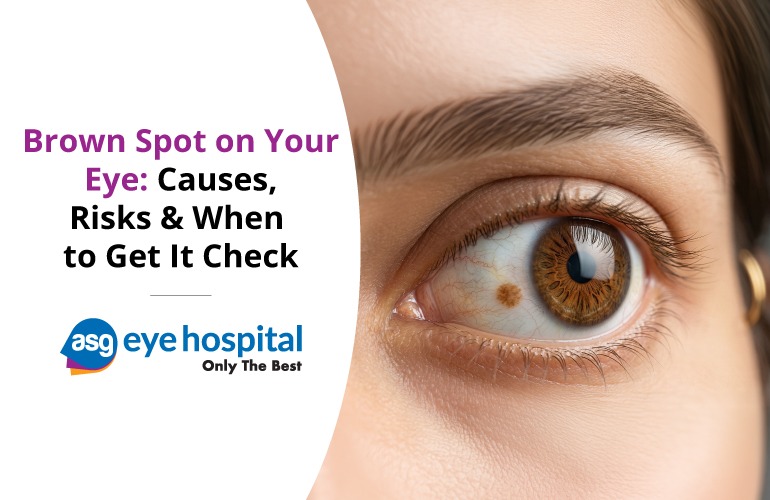
People become worried about eye problems when they notice changes in their eyes, especially when a visible mark or pigmentation develops on their eyes. The eye condition known as a brown spot on the eye involves this particular change. The majority of spots show natural pigmentation, yet specific types of spots need medical assessment because they show potential eye disease. People need to understand eye health because they must learn about the reasons, dangers and the times when they should see a doctor.
What Is a Brown Spot on the Eye?
A visible brown spot on the eye usually appears as a small pigmented area on the sclera (the white portion of the eye) or on the conjunctiva, the transparent membrane covering the eye. In many individuals, these spots are comparable to freckles on the skin and may be present from childhood or develop later in life.
The clinical interpretation of a brown spot on the white of the eye’s meaning depends on several factors, which include its size, its colour variations, its growth patterns and the symptoms which accompany it. Some pigmented spots remain stable and harmless throughout life, while others may require monitoring or treatment by an ophthalmologist.
These pigmented lesions begin from melanocytes, which exist as pigment-producing cells in the conjunctiva. The majority of cases do not result in vision impairment, but any size, colour or texture change needs to undergo assessment through a comprehensive eye examination.
Is an Eye Freckle Normal?
Patients commonly ask whether eye freckles are a normal condition. The answer typically confirms the existence of eye freckles. Eye freckles, which doctors call ‘conjunctival nevi’, belong to a category of harmless pigmented skin disorders. The lesions that develop on the eyes show a resemblance to both moles and freckles, which people have on their skin.
Children and teenagers typically develop conjunctival nevi, which will take years to show any changes. The spots on the eye can appear in three different colours, which include light brown, dark brown and slightly yellowish. Most people who develop such spots will experience no pain, and they will also have no problems seeing.
The answer to the question about eye freckle normalcy provides reassurance, but doctors should monitor their patients. Any noticeable enlargement, irregular borders, increased pigmentation or associated redness should prompt an ophthalmic consultation to rule out rare but serious conditions such as ocular melanoma.
Common Brown Spot on Eye Causes
There are several medically recognised brown spots on the eye. Identifying the exact cause requires a detailed clinical examination by an eye specialist.
1. Conjunctival Nevus
The conjunctival nevus represents the most common explanation for a brown spot on the eye’s appearance. The condition displays a non-cancerous pigmented skin mark that first shows itself during childhood or teenage years. The spots maintain their original size during an extended period but require scheduled assessments to check for any development.
2. Primary Acquired Melanosis (PAM)
The condition of primary acquired melanosis appears more frequently in people who are middle-aged or older. The condition shows itself through flat patches of discoloured skin on the conjunctiva. Certain forms of PAM carry a higher risk of developing into malignant melanoma, which is why medical assessment is essential when such pigmentation appears later in life.
3. Conjunctival Melanoma
The rare condition of conjunctival melanoma develops from abnormal pigment-producing cells, which create a serious health risk for affected individuals. The condition manifests as a dark brown, irregular spot on the eye that continues to grow throughout its progression. Early detection significantly improves treatment outcomes.
4. Complexion-Associated Melanosis
Some individuals develop natural conjunctival pigmentation, which occurs more frequently among people with darker skin tones. The condition known as complexion-associated melanosis usually remains harmless and only requires medical intervention when its symptoms show signs of change.
5. Foreign Body or Irritation
The eye surface may develop pigmentation after a person experiences prolonged eye-surface irritation or inflammation or recovers from an eye-surface injury. The pigmentation in these instances stays confined to one area and keeps its original state.
Understanding these brown spots on the eye helps differentiate between harmless pigmentation and conditions requiring medical attention.
Understanding Brown Spot on White of Eye Meaning
The clinical interpretation of a brown spot on the white of the eye’s meaning depends on the characteristics of the eye lesion. Most spots represent benign conjunctival naevi or natural pigmentation. Certain warning signs need to be investigated through more extensive assessment procedures.
Ophthalmologists assess two main aspects during their evaluation process:
- Size and shape of the spot
- Border regularity
- Changes in colour intensity
- Growth over time
- Associated blood vessels
- Symptoms such as irritation or redness
A complete eye examination includes slit-lamp testing and photographic monitoring, and in certain situations, biopsy procedures to identify the type of eye lesion.
When Should You Seek Medical Evaluation?
Many pigmented spots display harmless characteristics, yet certain changes require attention. Medical evaluation is recommended if a brown spot on the eye shows any of the following characteristics:
- Rapid increase in size
- Darkening or uneven pigmentation
- Irregular or raised borders
- Persistent redness or irritation
- Bleeding or discharge
- Sudden appearance in adulthood
The signs present progressive pigment lesions, which require immediate diagnosis and treatment.
Regular eye check-ups play an important role in the early detection of abnormal ocular pigmentation and other eye conditions.
Brown Spot on Eye Treatment Options
The approach to brown-spot-in-eye treatment depends entirely on the diagnosis. Treatment may not be necessary for benign lesions, but careful observation is essential.
Observation and Monitoring
For stable conjunctival nevi or harmless pigmentation, ophthalmologists typically recommend periodic observation. Photographic documentation helps track any changes over time.
Surgical Removal
If the lesion shows suspicious features or continues to grow, surgical excision may be advised. The removed tissue is examined through histopathology to confirm whether the lesion is benign or malignant.
Cryotherapy
In certain cases, cryotherapy may be used in combination with surgical removal to prevent recurrence of abnormal pigmented cells.
Advanced Oncology Management
If conjunctival melanoma is diagnosed, specialised ocular oncology treatment may be required, including surgery, cryotherapy, or additional therapies depending on the stage of the disease.
Early diagnosis ensures that appropriate brown spot on eye treatment can be initiated before complications develop.
Importance of Regular Eye Examinations
During standard eye tests, doctors discover pigmented eye lesions, which they then assess for their medical condition. Patients do not realise their medical condition has changed until they see the affected area or experience symptoms.
Through regular eye exams, doctors can track changes in eye pigmentation while recognizing early disease indicators and determining which eye conditions need treatment.
People who develop new skin discolouration or experience changes to their current spots need to undergo regular eye examinations.
When to Consult an Eye Specialist?
The existence of doubt about the meaning of a brown spot on the white of the eye and the question of whether an eye freckle is normal should lead people to consult an ophthalmologist for professional assessment. The earliest clinical evaluation process people undergo establishes their correct medical diagnosis, which leads to effective treatment.
ASG Eye Hospital operates complete eye examination services at its multiple locations throughout India. Patients who want to see a specialist can go to ASG Eye Hospital in Mumbai, ASG Eye Hospital in Delhi, ASG Eye Hospital in Chhattisgarh, ASG Eye Hospital in Rajasthan and ASG Eye Hospital in Haryana to receive complete eye assessments and professional medical advice.
The doctors use immediate ophthalmic assistance to evaluate the brown spot on the eye condition because this information helps them determine whether to conduct further observation or provide treatment.
Frequently Asked Questions
1. What Is a Brown Spot on the Eye?
A brown spot on the eye can be a natural pigment, a conjunctival nevus (freckle in the eye), or other pigmented lesions. Most of them are benign, but an eye doctor should evaluate any new or changing spots.
2. Is Eye Freckle a Serious Condition?
In the majority of cases, eye freckles are nonmalignant and remain unchanged for many years. Any change in size, colour, or shape of the freckle should be evaluated by a professional eye physician.
3. What Are Common Ursachen Of Brown Spot In Eyeball?
Some of the common brown spots in the eye causes are: Conjunctival Nevus, Primary Acquired Melanosis, Pigmentation Associated with Complexions, or, rarely, Conjunctival Melanoma.
4. Do Brown Spots Metamorphise An Eye With A White Spot Affect Eyesight?
The ‘brown spots’ on the white of the eye are in relation to the pigmentation of the surface and not typically associated with diminished vision. If a brown spot or lesion is large or abnormal, then it requires evaluation by an eye care professional.
5. Will a Brown Spot In Eyeball Need Treatment?
The treatment for the brown spot in the eyeball is determined by the diagnosis. Benign lesions may only require observation; suspicious lesions may require surgical excision or specialised ophthalmic care.