Most people hear terms like 6/6 or 6/9 vision during an eye test but do not fully understand what they mean. Is 6/9 vision normal? Do you need glasses for it? And should you be worried about your eye health? Understanding these eye vision numbers can help detect early vision problems before they become serious.
The blog offers a comprehensive medical explanation of what 6/9 vision is and its comparison with standard vision measurements, and what it shows about eye health status.
6/9 vision means a person can see at 6 metres what someone with normal vision can see clearly at 9 metres. It indicates mildly reduced visual clarity and may sometimes require glasses depending on symptoms and eye health.
Understanding Vision Numbers
| Vision Number | Meaning |
|---|---|
| 6/6 | Normal vision |
| 6/9 | Mildly reduced vision |
| 6/12 | Noticeable blurry vision |
| 6/18 | Significant vision reduction |
A higher second number usually indicates reduced visual sharpness and may require further eye evaluation.
Yes, 6/9 vision is considered mildly reduced vision. Many people function normally without glasses, although some may experience difficulty seeing distant objects clearly.
Understanding Visual Acuity and Eye Vision Numbers
Visual acuity is expressed as a fraction, such as 6/6, 6/9, or 6/12. These values are part of the normal eye vision numbers used globally in ophthalmic assessments.
- The numerator (6) represents the testing distance, typically 6 metres.
- The denominator indicates the distance at which a person with normal vision can read the same line on the chart.
What Does 6/9 Vision Mean?
The 6/9 vision meaning describes visual impairment, which results in diminished sight. People with this visual impairment can complete most standard daily tasks, but their eyesight does not meet the standard of perfect vision.
The clinical assessment of 6/9 vision shows it as a visual acuity level that falls short of standard visual performance. The condition does not affect common activities like reading or digital device use, yet it creates problems for tasks that need perfect vision, such as night driving or reading distant signs.
The diagnostic process uses a 6/9 vision identification to help ophthalmologists decide if patients need additional tests or treatment options.
6/9 Vision vs 6/6 Vision
The visual sharpness between 6/9 vision and 6/6 vision establishes a direct comparative relationship.
- 6/6 Vision: The standard measurement for normal vision. The observer sees all objects at a 6-metre distance with complete clarity.
- 6/9 Vision: The vision shows more than 6/6 but less than 6/9. The observer sees objects at the same distance but experiences a slight visual loss, which makes them look less clear.
Even the slightest decrease in visual ability leads to refractive error detection because it serves as an early warning of potential medical problems.
The understanding of 6/9 vision compared to 6/6 vision becomes essential for three areas, which need assessment through clinical screening and assessment of workplace vision requirements and standard eye tests.
Is 6/9 Vision Good?
A common clinical query is whether 6/9 vision is good. The answer depends on the context of visual demands and individual eye health.
From a medical standpoint:
- 6/9 vision is acceptable for many daily functions.
- It does not qualify as optimal vision.
- It may indicate the early onset of refractive errors such as myopia (nearsightedness), hyperopia (farsightedness), or mild astigmatism.
In children and young adults, persistent 6/9 vision may warrant closer monitoring to prevent progression. In older individuals, it may be associated with age-related changes such as presbyopia or early cataract formation.
Therefore, while evaluating 6/9 vision is good, it is important to consider the individual’s age, symptoms, and overall ocular health.
Causes of 6/9 Vision
Several factors can contribute to a visual acuity measurement of 6/9. These include:
1. Refractive Errors
The most common refractive error occurs when mild refractive errors affect people. The eye needs to maintain perfect focusing ability because even minor deviations will decrease visual clarity.
2. Early Cataract Formation
People who develop initial lens opacities will experience slight vision loss which will progress to more severe symptoms.
3. Digital Eye Strain
People who look at screens for extended periods will experience temporary vision problems, which make their sight less clear.
4. Dry Eye Syndrome
People with insufficient tear film stability will experience changing vision throughout the day.
Do I Need Glasses for 6/9 Vision?
A frequently asked question is, ‘Do I need glasses for 6/9 vision?’ The need for corrective lenses depends on several factors:
- The existence of symptoms, which include eye strain, headaches and blurred vision
- The requirements of the job that require workers to see distant objects
- The development of refractive errors throughout different time periods
Ophthalmologists usually suggest eyewear as a solution to enhance vision acuity while reducing eye fatigue. The individual who shows no symptoms and has a stable condition does not require immediate treatment.
A comprehensive eye examination is essential to determine whether intervention is required. Therefore, when considering Do I need glasses for 6/9 vision?, clinical evaluation remains the definitive approach.
When Should You Seek Medical Advice?
The medical condition of 6/9 vision does not reach the level of severe visual impairment yet requires immediate eye examination in specific situations. The following situations require immediate eye examination to assess vision problems because they have encountered three types of vision issues. People who experience vision problems need to submit themselves for immediate examination by an eye doctor. The routine process of eye testing enables doctors to identify changes in standard vision measurements, which help prevent upcoming medical issues.
Importance of Regular Eye Examinations
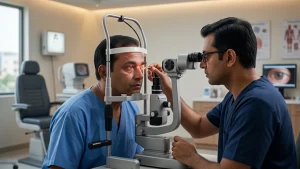
The process of maintaining efficient visual health requires people to undergo regular eye examinations. Any vision impairment that results in 6/9 eyesight shows potential health issues that become easier to treat after their first detection. The complete assessment process requires the following tests to be conducted:
- Visual acuity testing
- Refraction assessment
- Slit-lamp examination
- Retinal evaluation
The observation of 6/9 vision and 6/6 vision changes throughout different time periods enables medical professionals to provide treatment at the right moment, which leads to better patient results.
Conclusion
The ‘6/9 vision’ meaning needs to be understood for proper visual acuity assessment. The condition leads to mild vision impairment but needs assessment when symptoms appear or vision deterioration occurs.
The assessment of what is 6/9 vision should proceed through comparison with standard benchmarks, which include 6/9 vision vs 6/6 vision, to identify needed corrective measures. People need to undergo clinical assessments which establish their vision requirements, because eye care professionals need to examine both is 6/9 vision good and whether they need glasses for 6/9 vision.
People who notice changes to their eyesight should visit an accredited eye care center for immediate testing. ASG Eye Hospital operates multiple locations, which provide complete eye care services from their facilities at ASG Eye Hospital in Mumbai, ASG Eye Hospital in Jaipur, ASG Eye Hospital in Delhi, ASG Eye Hospital in Srinagar, ASG Eye Hospital in Gujarat, ASG Eye Hospital in Indore, ASG Eye Hospital in Patna and ASG Eye Hospital in Uttar Pradesh. The specialized care available at these locations provides essential diagnostic tools which enable doctors to deliver effective treatment for vision problems. The preservation of eye health depends on early detection followed by proper treatment.
Frequently Asked Questions
1. Can 6/9 vision get better on its own?
In some cases, mild vision changes caused by eye strain, fatigue, or excessive screen use may improve with proper rest and healthy eye habits. However, if 6/9 vision persists, an eye examination is important to identify any underlying refractive error or eye condition.
2. Does 6/9 vision qualify as good vision in children?
6/9 vision in children may be acceptable temporarily, but persistent reduced vision should be monitored carefully. Early detection and correction of refractive errors are important for healthy visual development and learning.
3. Is 6/9 vision good enough for driving?
In many cases, people with 6/9 vision can drive safely. However, driving vision requirements vary depending on local regulations, and some individuals may benefit from glasses for clearer distance vision.
4. Can digital screens contribute to 6/9 vision?
Excessive screen time can cause digital eye strain, temporary blurred vision, and eye fatigue. While screens may not directly cause permanent 6/9 vision, they can worsen existing vision problems or discomfort.
5. How often should someone with 6/9 vision get their eyes checked?
People with 6/9 vision should ideally have a comprehensive eye examination once every year. More frequent checkups may be needed if symptoms like headaches, eye strain, or blurred vision occur.
6. Is 6/9 vision normal?
Yes, 6/9 vision is considered mildly reduced vision. Some people may function normally without glasses, while others may notice slight difficulty seeing distant objects clearly.
7. Do I need glasses for 6/9 vision?
Not everyone with 6/9 vision requires glasses. The need for correction depends on symptoms, daily activities, work requirements, and overall eye health.