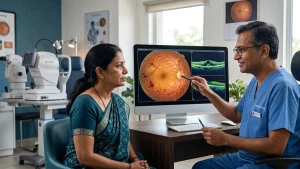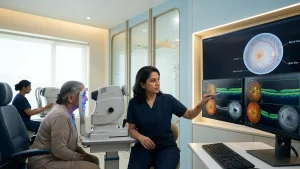
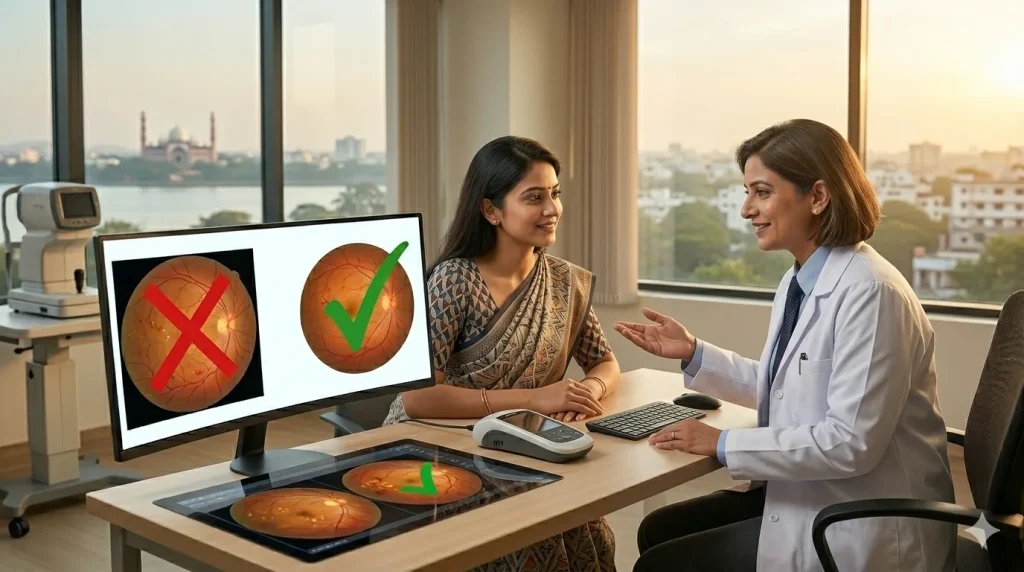
You know, one thing doctors see a lot is someone with diabetes showing up for a regular eye check. They’re comfortable in the chair, reading okay, handling daily life just fine. No red flags. But then comes the retinal scan, and, honestly, the results surprise nearly everyone.
“How can there be a problem if I see perfectly well?” is a typical question from patients. It’s a valid query. The challenging element of diabetic eye illness is that, despite changes occurring within your eye, your vision may look totally normal. Because of this, eye doctors continue to underline the need of having regular diabetic eye care Bhopal.
What Are the Early Symptoms of Diabetic Eye Disease?
Diabetic eye disease often develops without noticeable symptoms in the early stages. Common warning signs include:
- Blurred or fluctuating vision
- Floaters or dark spots
- Difficulty reading
- Distorted vision
- Poor night vision
- Sudden vision changes
Regular diabetic eye screenings help detect retinal damage before vision loss occurs and can prevent serious complications through timely treatment.
Knowing How Diabetes Affects the Eyes
The majority of people think that diabetes is simply linked to blood sugar. However, it also has a lot to do with your vision. The retina is found deep within your eye. It is the component that uses a small network of blood passageways to record pictures and sends them to your brain.
These veins begin to weaken when your blood sugar levels stay high over time. Some leak. Some get blocked up. Later on, weird blood vessels can pop up and, honestly, they’re trouble for your vision. All of this is known as diabetes retinopathy, which is a big reason in the high number of people who require retina treatment Bhopal.
The Sneaky Start of Problems
Here’s the thing: Diabetic eye disease doesn’t make a big entrance. There’s barely any pain. No emergencies. Nothing obvious to grab your attention. That’s why it’s so risky. By the time you realise anything is awry, the retina is generally already harmed.
Plenty of patients tell their doctors they waited to get checked because “everything felt normal.” But the retina’s not big on early warning signs.
Diabetic Eye Disease: Symptoms & Prevention Guide
| Symptoms | Prevention Tips |
|---|---|
| Blurred vision | Control blood sugar levels |
| Floaters | Monitor blood pressure |
| Distorted images | Take medications regularly |
| Poor night vision | Maintain an active lifestyle |
| Sudden vision changes | Quit smoking or tobacco use |
| Difficulty focusing | Schedule annual retinal exams |
Symptoms You Shouldn’t Ignore
Even though it often starts silent, there are symptoms that demand a closer look:
- Blurry vision on and off
- Trouble focusing when reading
- Floaters those little dark spots
- Strange, distorted images
- A tough time seeing at night
- Sudden changes in vision
These should be examined even though they don’t generally suggest a big problem. Your chances of stopping more major problems increase with the speed at which you spot a problem.
What Doctors Spot Before You Do
Here’s something interesting specialists often see signs of trouble way before the patient feels a thing. Thanks to modern eye tech, doctors can see tiny leaks, swelling, or blood vessel changes that you’d never notice on your own. These high-powered retinal images give doctors a clear view, long before your vision takes a hit.
That early detection? It’s a game-changer. It can mean the difference between easy prevention and tough treatment.
Prevention: It Starts with Everyday Habits
People are constantly curious about tactics to protect their eyes. To be honest, the most of it takes place outside of the eye clinic. The worst problems are usually avoided by those who successfully control their diabetes.
Solid habits include:
- Keeping blood sugar steady
- Checking blood pressure regularly
- Taking meds as prescribed
- Staying active
- Kicking tobacco to the curb
- Making routine eye exams a habit
These aren’t particularly exciting, but they do work if you continue.
When Treatment Is Needed
Not everyone with diabetic retinopathy needs quick medical care. Some folks just need good monitoring. Others may need advanced treatments or possibly surgery to avoid the damage and protect their eyes. Patients in Bhopal now have access to cutting-edge choices like lasers, shots, and specific surgery that greatly improve the accuracy of their treatments.
Choosing a Trustworthy Eye Care Partner
Diabetic eye disease needs constant eye care. It’s about keeping dedication and doing annual check-ups. Picking a reliable eye hospital with skilled specialists and the latest tech is smart. They spot problems faster and track progress more closely. You might be surprised at how important it is to see your beloved eye doctor on a daily basis.
Looking Ahead
Diabetes is for life, but losing your vision doesn’t have to be. The bright spot? If you pay attention and take quick action, the majority of important problems may be settled or even avoided. Normal diabetic eye care Bhopal allows medical workers to spot problems early. Swift retina treatment Bhopal protects sight before things get out of hand.
In the end, most people realize healthy vision isn’t just about reacting to problems. It’s about making smart choices long before anything feels wrong. That’s what keeps your eyes—and your life—in focus.
FAQs
1. How does diabetes affect the eyes?
Diabetes can damage the small blood vessels in the retina, leading to diabetic retinopathy, vision problems, and potential vision loss if left untreated.
2. What are the early signs of diabetic eye disease?
Early diabetic eye disease often has no symptoms. As it progresses, patients may experience blurred vision, floaters, poor night vision, or sudden vision changes.
3. How often should diabetic patients get an eye checkup?
Most diabetic patients should have a comprehensive dilated eye examination at least once a year or as recommended by their eye specialist.
4. Can diabetic retinopathy be prevented?
Good blood sugar control, healthy blood pressure levels, regular exercise, avoiding tobacco, and annual retinal screenings can significantly reduce the risk.
5. When is retina treatment needed for diabetic eye disease?
Treatment may be required when retinal swelling, bleeding, abnormal blood vessels, or vision-threatening changes are detected during an eye examination.
6. What treatments are available for diabetic retinopathy?
Depending on severity, treatment options may include retinal laser therapy, intravitreal injections, advanced retinal procedures, and ongoing monitoring.