
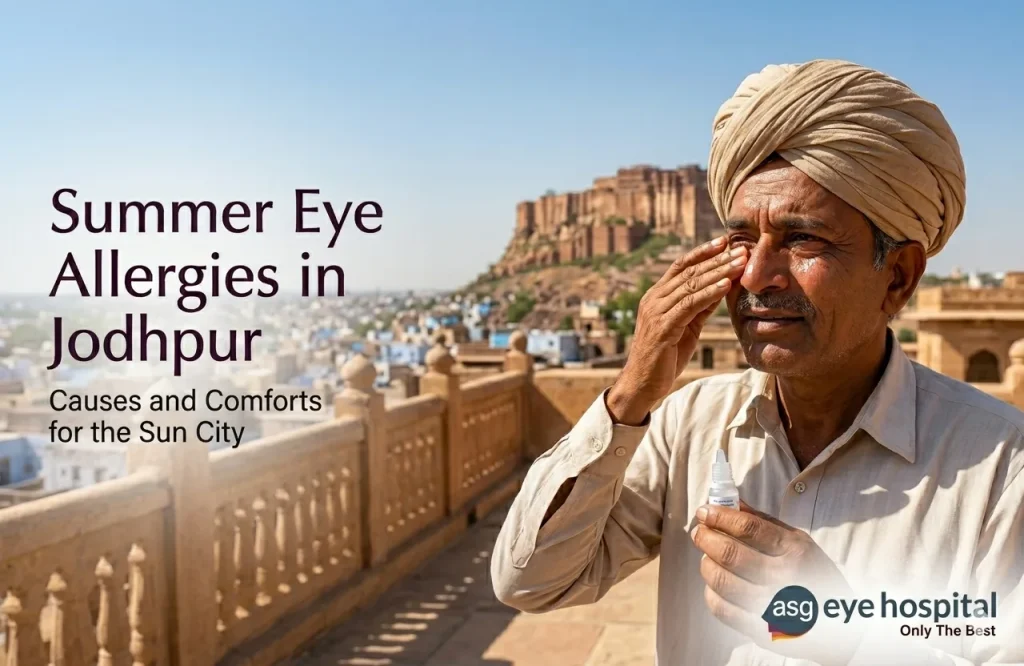
There is a sudden rush of patients in the eye clinics in Jodhpur during every summer. The higher the temperature and wind, the more people begin to have itchy, red and watery eyes. Well, the afternoon dust storms and dry heat apparently seem to set something off in the eyes which remains silent the rest of the year.
The most frequent question that patients will ask is: “Why do my eyes bother me during the summer?”
The solution is in the environment that Jodhpur has. Extremely hot, dry and airborne dust is the perfect situation for the eyes to become irritated. With the addition of daily exposure to the outdoors and the pollution from vehicles, and seasonally the allergens, even healthy eyes can begin to complain.
Hence, the need for eye allergy treatment Jodhpur increases significantly during the summer.
What Causes Eye Allergies During Summer in Jodhpur?
Eye allergies during summer are commonly caused by dust storms, dry winds, pollution, pollen, and extreme heat. Symptoms include itching, redness, watering, burning sensation, and eyelid swelling. Wearing sunglasses, avoiding eye rubbing, and seeking timely eye allergy treatment in Jodhpur can help prevent complications and provide lasting relief.
Summer Doesn’t Affect Everyone the Same Way
One of the most interesting things eye doctors notice is how differently people react to the same conditions. Does it mean that two neighbours in the same colony, one can walk around in the sun without any problems and the other rubs his eyes within minutes of stepping outside?
This is because eye allergies are very similar to your immune system response to your surroundings. There are those that are more sensitive than others. This is why your best eye doctor in Jodhpur always gets to know your lifestyle, daily routine and medical history before recommending treatment.
Common Summer Eye Allergy Symptoms & Prevention Guide
| Problem | What You May Notice |
|---|---|
| Itching Eyes | Frequent urge to rub eyes |
| Redness | Bloodshot or irritated eyes |
| Excessive Watering | Constant tears without crying |
| Burning Sensation | Eye discomfort in hot weather |
| Eyelid Swelling | Puffy or inflamed eyelids |
| Light Sensitivity | Difficulty in bright sunlight |
| Dryness & Grittiness | Feeling of sand inside the eyes |
| Allergic Reaction | Triggered by dust, pollen, or pollution |
Symptoms People Usually Complain About
The majority of patients do not report eye allergies when coming in to the clinic. Rather, they share how they feel:
- Constant itching that gets worse in the evening
- Redness that refuses to go away
- Excessive watering
- Mild swelling of the eyelids
- Burning sensation while travelling
- Sensitivity to bright sunlight
- Feeling like there’s sand or grittiness in the eyes
While these symptoms may look minor, ignoring them for too long isn’t wise.
Why You Shouldn’t Self-Medicate
It’s very tempting to just pick up any eye drops from the chemist when your eyes start troubling you. But this can sometimes do more harm than good. Not every red eye is an allergy — some could be early signs of infection or other inflammatory conditions. Wrong drops can either cover up the actual issue and postpone needed eye allergy treatment Jodhpur.
If the issue continues after a few days, it is important to see an experienced eye expert in Jodhpur.
Modern Eye Care Has Made a Big Difference
Thankfully, eye care has come a long way. Today’s eye hospitals use much better technology to examine the surface of the eye in fine detail. Formerly hard to locate is now easier to find and relief is provided quicker.
Children, outdoor workers and two-wheeler riders often feel the problem more intensely in Jodhpur summers. They spend longer hours in direct heat, traffic fumes and open dust. Because dry weather lowers natural comfort on the skin of the eyes, contact lens users may also experience greater pain. Patients frequently think that the problem is temporary and continue to wait for it to go away on its own. That delay can make the eyes more inflamed and recovery slower. A proper examination helps the doctor identify whether the trigger is dust, pollen, dryness or a mixed allergic response. Treatment generally works better after the problem is recognised. Additionally, quick care avoids rubbing, which exacerbates heat and increases sensitivity. Preventive therapy prior to peak heat might be particularly helpful and comfortable for those who have the same symptoms every summer. It also reduces unnecessary medicine use and avoidable clinic visits later.
Small Changes That Help a Lot
Some patients are taken aback when their doctor prescribes simple measures rather than simply medications. But these small habits often make the biggest difference:
- Always wear good quality sunglasses when going out
- Stop rubbing your eyes (no matter how tempting)
- Wash your face thoroughly as soon as you return home
- Avoid going out during peak dust hours if possible
- Follow the prescribed treatment properly
Don’t simply swallow a pill that will make you feel better for a while!
With the proper treatment, most summer eye allergies can be treated very well. If the issue continues to reoccur annually, however, it is advisable to obtain a correct diagnosis. Persistent eye discomfort can impact your quality of life, employment and sleep.
By seeking timely eye allergy treatment, consulting a trusted eye doctor Jodhpur and following good eye care habits, you can enjoy the summer season much more comfortably — without those itchy, burning eyes distracting you.
FAQ
1. Why do eye allergies increase during summer in Jodhpur?
Hot weather, dust storms, pollution, and airborne allergens make eye allergies more common during summer.
2. What are the common symptoms of eye allergies?
Symptoms include itching, redness, watering, burning sensation, swelling, and sensitivity to sunlight.
3. Can eye allergies go away on their own?
Mild cases may improve, but persistent symptoms should be evaluated by an eye doctor to avoid complications.
4. Is rubbing the eyes harmful during an allergy?
Yes. Rubbing can worsen inflammation, increase irritation, and prolong recovery.
5. Who is at higher risk of eye allergies in summer?
Children, outdoor workers, contact lens users, and people with a history of allergies are more likely to be affected.
6. How can I protect my eyes from summer allergies?
Wear sunglasses, avoid dust exposure, maintain eye hygiene, and follow your eye specialist’s recommendations.