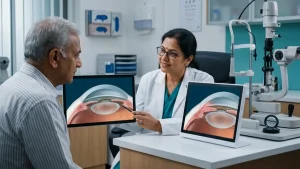
ASG Eye Hospital

Glaucoma Treatment: Innovative Approaches and Strategies

Glaucoma: Risk, Symptoms, and Treatment

Glaucoma is the main source of permanent visual blindness around the world and the second leading cause of permanent visual blindness in India. Nearly three million individuals in India currently have this condition, and experts predict this number to rise to 6.3 million over the next 30 years.


In spite of the fact that glaucoma is more common in adults ageing 60 and above, it can happen at any stage in life. Currently, glaucoma lacks a definitive cure, but timely diagnosis and early treatment can slow or halt vision loss.


This eye condition is a group of disorders that harm the optic nerve of the eye, which conveys visual signs from the retina to the cerebrum, permitting us to see. It is gradually impairs the optic nerve, leading to progressive vision loss and eventual permanent blindness. Since the damage happens gradually, it usually goes unrecognized until it is too late. As it advances, it can prompt decreased quality of life, trouble with driving, increased risks of falls, and diminished mobility.


Increased eye pressure often links to glaucoma. Healthy eyes produce a fluid known as aqueous, which courses through and exits the eye. In this condition, disruption of this cycle results in elevated eye pressure, leading to optic nerve damage. The structure of the drainage pathway at the front of the eye (referred to as the angle) determines the two main types: open-angle and angle closure glaucoma, influencing the outflow of aqueous fluid.


In open-angle glaucoma, the angle seems open, however various elements — including drainage issues —results in poor pressure regulation. In this type of glaucoma optic nerve damage can happen at both high and normal eye pressures (normal tension glaucoma). Both subtypes can lead in vision loss and optic nerve damage.


angle-closure glaucoma the angle is narrow, and the subsequent underlying issues can cause an abrupt closure of the drainage pathway, leading to high eye pressures. Doctors term this condition “acute angle closure“. Although uncommon, acute angle-closure glaucoma is an ophthalmological emergency, and requires immediate treatment with proper medication, laser, or surgery, as it can cause higher amount of optic nerve damage and can cause irreversible vision loss. It is also exists in a chronic form where the increase in eye pressure occurs more slowly, often without symptoms, but still requires evaluation and treatment.


Who is at Risk of Developing Glaucoma?

Glaucoma presents a complex challenge, and although researchers have identified many associated genes, the underlying causes remain unclear. However, experts have identified several significant risk factors, including:

  • Age older than 60
  • A first-degree relative with glaucoma
  • East and Southeast Asian descent (for angle-closure glaucoma)
  • History of eye trauma or multiple eye surgeries
  • Chronic eye conditions, such as diabetic eye disease
  • Use of steroid medications
  • Highly near-sighted or far-sightedness

What are the Glaucoma Symptoms?

The population with it, especially those with open-angle glaucoma or normal-tension glaucoma, may have no or very minimal symptoms for quite a long time. Shocking as it may be, half of the anticipated cases remain undetected, highlighting the need for regular eye checkups, beginning at age 40. An eye care professional will be able to detect the signs of glaucoma before you can, and timely medication and treatment is critical to forestall the disease from spreading and to prevent permanent vision loss.

Early indications of glaucoma incorporates trouble with low contrast, and some deficiency of fringe vision. In further developed stages, patients foster loss of their visual field. Or blind spots, that at last lead to focal vision loss.

Acute angle-closure glaucoma causes symptoms of pain, blurred vision, and nausea, and is a medical emergency.

What Treatment Alternatives are Accessible?

In spite of the fact that there as of now no permanent remedy for this disease. Treatment can help slow or stop the speed of vision loss. Depending upon many elements, including your age and the sort and seriousness of your glaucoma. Treatment may include medications and/or surgery directed at lowering eye pressure.

Medications include pressure-lowering eye drops that work to increase fluid drainage or decrease fluid production. Laser can also be used to increase drainage (in the angle), or to make an opening in the iris. In case of angle closure glaucoma. Various surgical techniques may be used to create an alternate fluid outflow pathway in the eye. So-called filtering surgery and tube-shunt surgery. Recent surgical innovations called MIGS, help in fluid drainage using microscopic-sized implants in the eye.

The future of Glaucoma Care

The focus of research is on the causes of disease and custom medications. Different drugs may be used to treat different types of glaucoma. Later on, hereditary testing might assume a part in assessing individual susceptibility for inheriting glaucoma over the long haul. Additionally, newer treatments to stop loss of nerve cells (the retina and optic nerve), called neuroprotection, show guarantee. Analysts are now concentrating on new medications, drug conveyance frameworks, and advancements to make medical procedures more protected and compelling.

Early Discovery is Vital

Visit your eye specialist regularly if you’re stressed about group of eye diseases, and especially if you have a family history of it. Every adult should have a standard eye examination at age 40, regardless of whether your vision is normal. Vision loss can be minimized with treatment from this eye condition, so early diagnosis and treatment of this disease is vital. For the best eye treatment, you can contact ASG Eye Hospital, Call – 18001200111
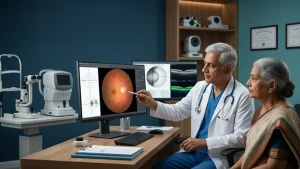

Overview

Job Title: Consultant Ophthalmologist

Location: Pan India
Job Category: Medical Healthcare

Work Employment:  Full time

What you work:

  • Diagnose and treat patients with a focus on Ophthalmologist.
  • Collaborate with senior doctors and multidisciplinary teams.
  • Ensure patient-centric care and follow clinical protocols.
  • Contribute to research, training, or hospital initiatives (if applicable).

Mandatory skills:

  • Relevant medical degree / certification.
  • Strong knowledge of ophthalmology practices / healthcare protocols.
  • Excellent communication and patient-handling skills.
  • Ability to work in fast-paced healthcare environments.

Preferred Qualifications:

  • Experience: 3 to 6 years of experience
  • Prior experience in eye care / multi-speciality hospitals.
  • Fellowship or advanced training in Ophthalmologist.
  • Familiarity with advanced diagnostic tools and surgical techniques.
  • Passion for innovation, patient care, and continuous learning.

Apply For This Positions

This will close in 0 seconds

Overview

Job Title: Optometrist

Location: Amritsar, Punjab 

Job Category: Optometry

Work Employment:  Full time

What you work:

  • Conduct comprehensive eye examinations and vision assessments for patients of all ages.
  • Prescribe and fit spectacles, contact lenses, and low-vision aids.
  • Perform diagnostic tests including refraction, tonometry, perimetry, and OCT imaging.
  • Support consultant ophthalmologists in pre-operative and post-operative patient workups.
  • Counsel patients on eye care, lens hygiene, and follow-up schedules.
  • Maintain accurate clinical records and adhere to hospital protocols.

Mandatory skills:

  • Bachelor’s or Master’s degree in Optometry (B.Optom / M.Optom) from a recognised institution.
  • Valid registration with the relevant state or national optometry council.
  • Proficiency in refraction, slit-lamp examination, and contact lens fitting.
  • Working knowledge of autorefractors, tonometers, fundus cameras, and OCT equipment.
  • Strong communication skills in English, Hindi, and Punjabi.
  • Ability to manage high patient volumes in a fast-paced clinical setting.

Preferred Qualifications:

  • Experience: 1 to 5 years of clinical optometry experience.
  • Prior experience in an eye care or multi-speciality hospital in Punjab.
  • Exposure to paediatric optometry, binocular vision, or low-vision rehabilitation.
  • Familiarity with advanced diagnostic imaging and dry-eye management.
  • Passion for patient care, community eye-health camps, and continuous learning.

Apply For This Positions

This will close in 0 seconds

Overview

Job Title: Optical In-charge 

Location: Panjim, Goa / Mumbai-Worli (Lower Parel) 

Job Category: Optical

Work Employment:  Full time

What you work:

  • Manage day-to-day operations of the optical outlet, including sales, dispensing, and inventory.
  • Guide customers on frame selection, lens options, and coatings based on their prescription and lifestyle.
  • Take accurate frame measurements and ensure precise fitting, adjustments, and after-sales service.
  • Drive optical sales targets and monitor daily, weekly, and monthly business performance.
  • Maintain optimum stock levels, coordinate with vendors, and control shrinkage through periodic audits.
  • Supervise and train optical staff on product knowledge, dispensing standards, and customer service.
  • Coordinate with optometrists and consultants to ensure smooth prescription-to-delivery flow.
  • Ensure visual merchandising, display hygiene, and adherence to brand and hospital standards.

Mandatory skills:

  • Diploma or Bachelor’s degree in Optometry (D.Optom / B.Optom) or equivalent optical dispensing qualification.
  • Minimum 3 years of experience in optical supervisory or in-charge role.
  • Sound knowledge of lens types, coatings, frame materials, and dispensing principles.
  • Hands-on experience with edging, fitting, and basic optical workshop equipment.
  • Proven ability to achieve sales targets and manage inventory and billing systems.
  • Strong communication and interpersonal skills in English, Hindi, and Konkani or Marathi.
  • Working knowledge of POS / retail software and MS Office.

Preferred Qualifications:

  • Experience: 3 to 7 years in optical retail or an eye care hospital optical division.
  • Prior experience managing an optical outlet in Goa or the western region.
  • Exposure to premium and progressive lens brands and specialty eyewear.
  • Familiarity with contact lens dispensing and after-care support.
  • Team leadership, customer relationship management, and continuous learning mindset.

Apply For This Positions

This will close in 0 seconds

Overview

Job Title: Optometrist

Location: Pan India 


Job Category: Optometry

Work Employment:  Full time

What you work:

  • Conduct comprehensive eye examinations and vision assessments for patients of all ages.
  • Prescribe and fit spectacles, contact lenses, and low-vision aids.
  • Perform diagnostic tests including refraction, tonometry, perimetry, and OCT imaging.
  • Support consultant ophthalmologists in pre-operative and post-operative patient workups.
  • Counsel patients on eye care, lens hygiene, and follow-up schedules.
  • Maintain accurate clinical records and adhere to hospital protocols.

Mandatory skills:

  • Diploma / Bachelor’s or Master’s degree in Optometry (D.Optom / B.Optom / M.Optom) from a recognised institution.
  • Valid registration with the relevant state or national optometry council.
  • Proficiency in refraction, slit-lamp examination, and contact lens fitting.
  • Working knowledge of autorefractors, tonometers, fundus cameras, and OCT equipment.
  • Ability to manage high patient volumes in a fast-paced clinical setting.

Preferred Qualifications:

  • Experience: 1 to 5 years of clinical optometry experience.
  • Exposure to paediatric optometry, binocular vision, or low-vision rehabilitation.
  • Passion for patient care, community eye-health camps, and continuous learning.

Apply For This Positions

This will close in 20 seconds