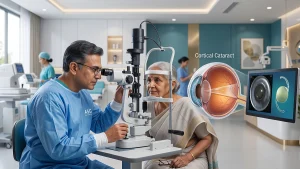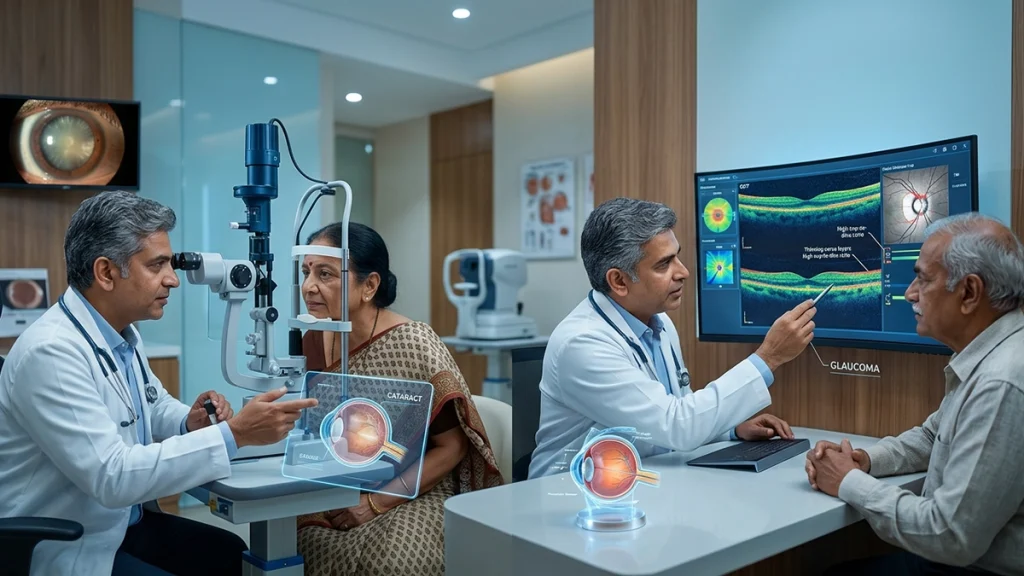
Glaucoma and cataract are a pair of very common eye diseases, which in fact present quite differently. In cataract the natural lens becomes cloudy and in glaucoma the optic nerve is damaged which usually is a result of internal eye pressure changes. That difference is important to note because while cataract treatment may restore lost clarity in many cases with the use of either surgery or medication, glaucoma treatment is mostly directed at protecting what vision is left and at preventing any more damage from occurring.
Doctor, do we have cataracts or glaucoma? It is out of the question which is which as both eye diseases present with slow vision issues in older people. But the treatment for each is different. In the case of Glaucoma treatment we may put you on eye drops, do a laser procedure, or operate, but for cataract treatment we usually wait until your vision is affected enough to impact daily living at which point we will recommend cataract surgery.
What Is Glaucoma?
Glaucoma is a set of eye diseases which affect the optic nerve, the nerve which transmits visual info from the eye to the brain. In many people this damage is associated with high intraocular pressure, though glaucoma also may present in the absence of high eye pressure. Main aim of glaucoma treatment is to lower eye pressure and to slow or prevent further optic nerve damage.
The issue with glaucoma is that it does not present early on. A patient may not experience pain, redness, or notice any blurring at first. By the time side vision begins to go, some nerve damage may be permanent. Also, at onset which is before we see large scale symptoms, diagnosis and intervention are very important. Also unlike cataract, once vision is lost to glaucoma treatment it usually does not return fully.
What Is Cataract?
Removing the cloudy lens and in its place putting in a clear artificial lens. In the early stages cataract treatment may consist of better lighting, updated glasses, and routine check ups. As the cataract starts to impact reading, driving, work, or daily life lens replacement becomes the primary solution. Today’s lens replacement procedures are very well established and it is important for patients to know that cataract surgery is only performed after a full eye exam.
Glaucoma vs Cataract: Key Differences
Both of these are very common eye diseases, but cataract in most cases is reversed with the help of surgery which is a one time solution. On the other hand we have glaucoma which is a more or less a lifelong condition which requires ongoing care. In terms of Glaucoma treatment the goal is to preserve what vision is left and for cataract it is to improve the quality of that vision by removing the clouded lens. This is the key point which patients should be made aware of as they look at which treatment is best for them.
| Point of Difference | Glaucoma | Cataract |
| Main part affected | Optic nerve | Natural lens of the eye |
| Common symptom pattern | Often silent early, later side vision loss | Blurry, cloudy, or glare-affected vision |
| Vision loss | Usually permanent once nerve damage occurs | Often improves after cataract surgery |
| Main treatment goal | glaucoma treatment protects remaining vision | Lens treatment restores visual clarity |
| Surgical option | glaucoma surgery may be needed when pressure is uncontrolled | Lens replacement removes the cloudy lens |
| Follow-up need | Lifelong monitoring is usually required | Follow-up is needed after surgery and as advised |
How Treatment Options Differ
At ASG Eye Care we do in depth eye exams for our patients. We check vision, eye pressure, health of the optic nerve, retina condition, lens clarity, and visual field as part of that. We do this to see if the patient requires glaucoma treatment, cataract treatment, or a bit of both. Also since these eye diseases tend to present together a full scale evaluation is usually better than to just treat the symptoms.
For glaucoma the primary step is usually to place eye drops. These drops may reduce the production of fluid in the eye or else they may improve the outflow of it. If the drops don’t work we may try laser based glaucoma treatment. In the case of very advanced or uncontrolled glaucoma surgery will either create a better outflow path for the fluid or will reduce intra ocular pressure in some other way.
For cataracts we see that initial approach is to do nothing. Should vision still be within acceptable parameters we may put off any intervention and go in for a regular follow up. Only when daily functions are affected do we usually perform the surgical intervention which is lens replacement. In the operating theater the old clouded lens is taken out and in goes a intraocular lens. Unlike surgeries which target pressure this is a restorative procedure aimed at restoring better vision.
When Glaucoma and Cataract Occur Together
In certain cases patients do in fact have to deal with both conditions at the same time. What we see is in older adults this is very common as both eye diseases tend to increase with age. In which case the doctor will determine whether to stabilize the glaucoma treatment first, which is to prioritize cataract treatment, or which is to go with a combined approach.
Sometimes, cataract can make glaucoma evaluation more difficult because the cloudy lens reduces the clarity of the eye examination. In other situations, cataract removal may slightly improve the drainage angle and help pressure control in selected patients. However, lens removal is not a replacement for glaucoma treatment. If optic nerve damage is present, the patient still needs monitoring and may still require drops, laser, or pressure-lowering surgery.
Treatment Comparison Table
The right treatment depends on disease stage, eye pressure, optic nerve condition, vision needs, age, lifestyle, and overall eye health. The table below explains how doctors generally compare pressure control and cataract care in clinical practice.
| Treatment Area | How It Works | When It May Be Recommended |
| Glaucoma eye drops | Reduce eye pressure and protect the optic nerve | Early or moderate glaucoma requiring regular glaucoma treatment |
| Laser for glaucoma | Improves fluid drainage or reduces pressure | When drops are not enough or not tolerated |
| glaucoma surgery | Creates a new or improved drainage route | Advanced glaucoma or uncontrolled eye pressure |
| Observation for cataract | Monitors lens clouding and vision changes | Early cataract with minimal daily difficulty |
| Surgical cataract care | Removes cloudy lens and places an artificial lens | Blurry vision, glare, or reduced daily function where cataract surgery is appropriate |
| Combined planning | Manages both conditions together | Patients with both eye diseases needing careful timing |
Can Lens Removal Help Glaucoma?
In some cases cataract surgery does improve eye pressure slightly which is to say that in large cataracts or when the drain angle is narrow. But this is not true for all patients. A person should not think that removal of the lens is a cure for glaucoma. If glaucoma is present at the time of the surgery it still is important for that patient to be on a glaucoma treatment plan which may include medicated drops and/or other treatments which may be recommended by the ophthalmologist.
The doctor may at times suggest lens removal which is the case when the cataract is causing vision impairment or glaucoma diagnosis to be hard. Also in some cases we see that glaucoma surgery is performed at the same time as the cataract removal if the pressure is not well controlled. This is so because treatment for these eye diseases must be tailored.
Can Pressure-Lowering Surgery Improve Vision Like Lens Replacement?
This is a very common issue in which it is thought that glaucoma surgery will improve vision as much as lens replacement does. What we do in pressure reducing surgery is to lower eye pressure and in that way to also try and prevent more damage to the optic nerve. If vision has already been lost due to glaucoma, that which is gone will usually not be brought back by surgery.
On the other hand we see that from the performance of cataract surgery which by and large improves vision as it removes the cloudy lens patients may notice a great improvement post procedure in the case of lens replacement; also results from glaucoma surgery may not be as immediate. Both procedures are very important although they have distinct goals.
Why Early Diagnosis Matters
The greatest risk in glaucoma is delay. In the early stages of the disease which may be asymptomatic a person may go about their life as normal as the optic nerve damage progresses slowly. Regular eye exams are the best way to catch glaucoma treatment which may prevent major vision loss.
Cataracts present more obvious symptoms which include blurred vision, glare, faded colors, and night time vision difficulty. To that point, though, it is in the delay of cataract treatment that issues present themselves left too long without care will affect confidence, mobility and day to day safety. While both conditions are to be attended to, glaucoma requires extra care as vision which is lost to that condition does not usually return.
Eye Care at ASG Eye Care
At ASG Eye Care we conduct a full eye exam of our patients prior to determining what treatment, if any , is needed. Our team will look at lens clarity, optic nerve health, eye pressure, visual field status, retina health, and the patient’s daily visual requirements. This in turn will determine if the patient requires glaucoma treatment, cataract care, glaucoma surgery, cataract surgery, or a very specific combined approach.
As we present the differences between these eye diseases in easy terms for our patients to see why some people may only need drops, others will do best with pressure reducing surgery, and still have which is which is the best case for lens replacement. We not only aim to treat the eye, but to also preserve long term vision, comfort, and quality of life.
Key Takeaway
Glaucoma and cataract are distinct eye diseases, therefore they should not be put in the same category. For glaucoma treatment we have nerve protection and prevention of additional vision loss as cataract treatment we have the option of removing the cloudy lens and improving sight. When glaucoma surgery medication doesn’t work to lower eye pressure, surgery may be used; in cataract what we see is the recommendation of a new lens when the old one has gone cloudy which in turn improves quality of life.
The primary step is to avoid self diagnosis. When you notice that vision is blurred, side vision seems reduced, lights are too bright, or that you have had high eye pressure in the past, see an ophthalmologist for a full exam. Early intervention in glaucoma treatment and prompt care for cataracts will greatly improve preserved vision.
Frequently Asked Questions
1. What is the main difference between glaucoma and cataract?
Glaucoma affects the optic nerve and cataracts the natural lens of the eye. That is to say that glaucoma treatment is directed at reducing eye pressure and preserving what vision is left and cataract treatment is focused on removing the cloudy lens. Also they are both serious conditions which require different treatment approaches.
2. Can glaucoma and cataract happen together?
Yes it is that which at times does present in the same eye in older adults. When they do present together the doctor may first put in place measures to stabilize eye pressure with meds or laser and then go on to do cataract surgery, which may also include the cataract and glaucoma at the same time in selected cases.
3. Is surgery always needed for glaucoma?
No. Many patients do well on glaucoma drops or from laser based glaucoma treatment. glaucoma surgery We turn to surgery when eye pressure is high, the optic nerve damage is progressing, or when medications do not work. That decision is based on the stage and risk of the disease.
4. Is lens replacement the only cataract treatment?
In early stages cataract care may be in the form of new glasses, brighter lighting, and routine check ups. As the cataracts begin to affect daily activities, cataract surgery is the only sure way to eliminate the cloudy lens and improve clarity in vision.
5. Can lens removal cure glaucoma?
No. Lens surgery may benefit eye pressure in some cases, we do not see it as a cure for glaucoma. In glaucoma patients who have this we still see the need for follow up and may continue glaucoma treatment post cataract removal.
6. Which condition is more dangerous: glaucoma or cataract?
Both conditions require medical care, but glaucoma is a greater issue when left untreated as it causes permanent damage to the optic nerve. Cataract related vision loss may improve with surgery which removes the cataract surgery, but in the case of glaucoma related vision loss that is usually a full reversal of vision is not possible even with surgery.