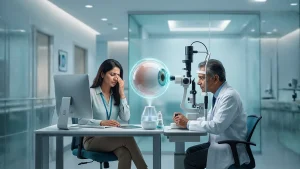

Dry out, burning, or sandy eyes which in turn affects reading, driving, computer use and sleep. Right for Dry Eye Treatment is to reduce discomfort, improve tear film stability and to protect the eye surface. Some people do well with just lubricating drops and making a few simple routine changes, while others require prescription medications, eyelid care or in clinic procedures for Best Dry Eye Relief.
A proper Dry Eye Treatment plan is based on the cause rather than what may appear to be redness. Dry eye symptoms present with that of allergies, infections, eyelid inflammation and corneal disease which is why persistent symptoms should be evaluated by an ophthalmologist instead of which you try random products.
What Is a Dry Eye and Why Does It Happen?
Dry eye is a condition which happens when the eyes produce insufficient tears, or when the tears evaporate too quickly, or when the tear film does not stay put. Tears are made up of a watery component, an oily element and a mucus which together do the job of making the eye smooth and comfortable. When this balance is disrupted the eyes may burn, sting, feel as if there is sand in them, turn red or develop blurred vision which comes and goes. Also some people report to have excessive tearing which is a result of irritation that triggers reflex tears which in fact do not properly lubricate the eye.
Common causes include aging, long term use of electronic devices, contact lenses, dry air, wind, smoke, air conditioning, eyelid inflammation, certain medications and medical conditions which affect tear production. Also people tend to blink less when they are focused on a computer or phone work which in turn causes tears to evaporate faster. In the case of Dry Eye Treatment we first identify if the primary issue is low tear production, excessive evaporation, meibomian gland issues, inflammation or a mix of the which we then treat.
| What a person may notice | Possible reason | Appropriate next step |
| Burning or grittiness that worsens during screen use | Unstable tears or increased evaporation | Take screen breaks, blink fully and discuss suitable lubrication |
| Sticky eyelid margins or symptoms on waking | Blepharitis or oil-gland dysfunction | Ask about eyelid hygiene and warm compresses |
| Discomfort mainly with contact lenses | Lens-related dryness, fit issues or reduced tolerance | Reduce wearing time and arrange a lens review |
| Severe pain, strong light sensitivity or sudden vision change | A condition more serious than routine dryness may be present | Seek urgent eye assessment |
How Doctors Plan Dry Eye Treatment
An ophthalmologist may look at the eyelids, blink action, tear film, cornea and conjunctiva. We also do tests like the slit lamp exam, surface staining, tear break up assessment and the Schirmer test which measures tear production. This info helps us tell the difference between a deficit in tear production and tear evaporation and also may bring to light blepharitis or another condition that needs separate treatment.
This assessment is important because what we find is that although there is Quick Dry Eye Relief we may not be addressing the root cause. Redness from an infection, an allergy, an injury or inflammation may require a different treatment and of course repeated self medication can delay an accurate diagnosis.
Artificial Tears and Dry Eye Eye Drops
Artificial tears which are very popular for the initial stage of Dry Eye Treatment in case of mild symptoms. They supplement the natural tear film and can provide Dry Eye Relief from burning, scratchiness and fluctuating vision. During the day thin drops are easy to use, but for longer action which is at night for example, we have the thicker gels and ointments which although they may last longer they do cause a temporary blurring of vision.
Different types of Dry Eye Eye drops have different functions. Some replace the watery tear layer and some which contain lipids reduce evaporation. Choice is based on the cause of your tear film problem, contact lens use and how often you need to use them.
Frequent users are advised to try Preservative free Dry Eye Eye drops. Wash and dry hands, do not touch the tip of the bottle to the eye or lashes and gently close the eye after use. Do not share eye medicine or use a product that is past its date, changed color, leaked or recalled. FDA safety info shows that drops should be purchased from reliable sources.
The term “redness relief’ doesn’t mean that a product will treat dry eye. Some redness reducing products will only temporarily constrict blood vessels which in turn does not improve tear film quality. As for Dry Eye Eye Drops they may provide lubrication or may be a prescription to address issues with inflammation, tear production or evaporation. An ophthalmologist or pharmacist can help you determine which category a product falls into.
Prescription Dry Eye Treatment for Persistent Symptoms
When there is insufficient lubrication, prescriptive options may be used in Dry Eye Treatment. These include cyclosporine, lifitegrast, a short term use of corticosteroid drops, varenicline nasal spray or medications which reduce evaporation. Each of these has different uses, precautions and side effects.
Prescription Dry Eye Eye Drops may not see results right away as some of them work over time as inflammation goes down. A doctor may recommend to continue with the treatment of lubrication in the meantime and to come back in for a follow up before changing the dose or combining with other therapies. That is why follow up is very important in Dry Eye Treatment.
| Treatment category | How it may help | When it may be considered |
| Artificial tears, gels and ointments | Add lubrication and reduce friction | Mild or intermittent symptoms |
| Prescription anti-inflammatory therapy | Reduces surface inflammation and may support tear production | Persistent or moderate dry eye |
| Warm compresses and eyelid hygiene | Support oil-gland function and improve the oily tear layer | Blepharitis or meibomian gland dysfunction |
| Punctal plugs | Slow tear drainage so moisture remains on the eye longer | Selected cases with poor tear retention |
| Environmental changes or moisture-retaining eyewear | Reduce exposure to wind and dry air | Symptoms triggered by surroundings |
| Gland-focused procedures | Aim to improve meibomian gland function | Evaporative dry eye not controlled with basic care |
Eyelid Care and Warm Compresses
Blocked or poor function of meibomian glands which produce the oil in our tears that slow down evaporation is a cause of Dry Eye Treatment. In these cases we may use a clean warm compress, gentle eyelid massage and lid-margin cleaning as part of the treatment. The compress should be only very warm not hot and a health care professional will go over the proper technique with you.
Consistent eyelid care may offer useful Dry Eye Relief, especially when crusting, blepharitis or morning irritation is present. Vigorous rubbing, excessive heat and unapproved mixtures should be avoided because they can irritate the eyelids or eye surface.
Punctal Plugs and In-Clinic Procedures
Tears run through small openings at the inner corner of the eyelids. In some patients we may put in punctal plugs in those openings which will reduce tear drainage and keep the tears on the eye longer. This approach to Dry Eye treatment may be used when lubrication is not enough and from the exam it is determined that tear conservation will help.
Some clinics report to use gland expression, controlled heat devices, or intense pulsed light for certain types of meibomian gland issues. These interventions are not for all, and none can be put forth as a sure thing for Dry Eye Relief. It is a choice that should follow a full evaluation of the tear film, eyelids, and ocular surface.
Self-Care That Supports Treatment
Daily routine changes can improve the results of Dry Eye Treatment. As you are using the computer or mobile device, take breaks often, look at distant objects and do several full blinks. Place the screen a bit below eye level, change the direction of fans and air conditioner vents away from the face, and use a humidifier in a dry room. Wrap around glasses may also be worn to reduce exposure to wind and dust.
These steps of care may provide you dry eye relief and consistent routines do well at improving day to day comfort but they work best when done in combination with the suggested treatment for the cause of your issue. If an ophthalmologist has put you on a schedule of lubrication stick to it — which may in fact be more effective than waiting until symptoms present in a large way.
Many of what are put forth as for Dry Eye Home Remedies are in fact support practices which reduce triggers. Good sleep, smoke avoidance, controlled use of screens and a comfortable home environment may improve symptoms, it is true but we do not see a single remedy which works for all types of dry eye.
Are Dry Eye Home Remedies Enough?
For occasional symptoms linked to long screen sessions or dry air, simple Dry Eye Home Remedies may settle discomfort. Regular blinking, screen breaks, a clean warm compress and environmental changes are reasonable when symptoms are mild and improve promptly.
However in terms of Dry Eye Home Remedies it is best to stay away from rose water, honey, herbal liquids, oils or any non-sterile home made substances which are put directly in the eye. What is safe for the skin may not be sterile or appropriate for the cornea. Such products may in fact increase irritation, cause an allergy or introduce an infection.
Some patients report on omega-3 supplements. A study which was reported by NIH MedlinePlus did not see great benefit of these for all patients with moderate to severe dry eye. Also supplements may interact with medication or may not be suitable for some people which means they should not be put forward as a sure fire remedy for Dry Eye Relief.
Contact Lenses and Daily Habits
Contact lenses can become uncomfortable when there is an unstable tear film. We may temporarily reduce wear time, switch to glasses and review the lens material or fit as part of Dry Eye Treatment. Do not continue to wear the lenses at the onset of pain, marked redness or if you see a worsening in blurred vision which may be a result of contact-lens related infection which can affect the cornea.
How Long Does Treatment Take to Work?
The response is a result of the cause. For Lubricating Dry Eye eye drops may provide relief within minutes which may require repeat use. Eyelid hygiene reports that it takes from a few days to weeks to see improvement in gland function, also we see that prescription anti inflammatory meds may not work as fast. Also note that procedures also require follow up to see if there has been an improvement in tear production.
Dry eye is also a chronic issue which means that Dry Eye Treatment in the long term is about management and not immediate relief. Symptoms may vary with weather, screen time, contact lens wear, hormones, medications and general health. Keeping a journal of triggers and products used will help the doctor fine tune the plan.
When Should You See an Eye Doctor?
Arrange for an evaluation when dryness is present daily, disrupts work or sleep, is persistent despite use of lubricating products and Dry Eye Home Remedies. Also see a health care provider after eye surgery, with the diagnosis of an autoimmune disease, when many medications are in use, or when contact lenses no longer fit well. Early in these cases assessment allows for a more precise Dry Eye Treatment.
Seek immediate care for severe pain, bright light sensitivity, sudden or which has worsened vision, eye injury, very red eye, pus like discharge or the sensation that something is caught in the eye. These warning signs do not include Dry Eye Home Remedies or over the counter drops, which may only mask the issue as more serious eye conditions may be present.
Frequently Asked Questions
1. What is usually the first Dry Eye Treatment?
For mild dry eye it is common for an ophthalmologist to first recommend artificial tears and practical changes like taking breaks from the screen, improving the rate of blinking and decreasing exposure to wind and dry air. The exact product and how often to use it depends on the type of tear film deficit and symptom picture.
2. Which Dry Eye Eye Drops are best?
There is no one size fits all best product. Watery drops may work for mild daytime symptoms, thicker gels may provide relief for longer, and lipids may be used in cases of rapid evaporation. The best Safe Dry Eye Eye Drops are what are prescribed for the diagnosed cause and are used as a professional health provider recommends.
3. Can Dry Eye Home Remedies cure dry eye?
Dry Eye Home Remedies can reduce symptoms in some people, in particular for mild cases, but they do not cure all causes. If you have long term, painful or vision affected symptoms you should see an eye care professional.
4. How can I get quick Dry Eye Relief while using a computer?
Pause from screen time, take a few slow blinks, look into the distance and use the recommended lubricant. Keep screen at a slight lower level than eye and avoid fans or air conditioning which may blow toward your face.
5. Can I Use Lubricating Drops Every Day?
Many of the available lubricants are for everyday use but the frequency of use and the formula which is best is variable. When there is a great need for drops put in by the patient we can go to an ophthalmologist to determine if a preservative free option or some other Dry Eye Treatment is right.
6. Why Do Dry Eyes Sometimes Water?
Irritation can trigger reflex tearing. These watery tears may overflow but may not contain the balanced oily and mucus components needed for stable lubrication, so watering and dryness can occur together.