Many people take to the eye doctor’s office only when they notice their vision has blurred, their glasses no longer correct the issue at hand, or they are experiencing eye strain from too much screen time. But an eye examination is for more than just determining the need for glasses. A regular eye examination helps detect silent eye diseases, also is a way to catch eye diseases which may be present without symptoms, to review the health of the retina and the optic nerve, to check eye pressure, and in the end to promote better long term eye health.
At ASG Eye Care, our patients put forth that the frequency of their routine eye checkup up is a question we get a lot. What it is based on is age, symptoms, family history, health issues and if you are a contact lens or glasses wearer. For healthy adults we may recommend an eye examination once every few years, but for those with diabetes, high blood pressure, at risk for glaucoma, or who already have vision issues, we may recommend more frequent visits.
Why an Eye Examination Matters for Adults
An eye examination gives your ophthalmologist a full picture of how your eyes are doing. Many eye issues like glaucoma, diabetic retinopathy, cataracts, and age related retinal changes may develop slowly without early warning signs. By the time vision is affected it may be too late.
A comprehensive eye exam is a different service to a basic vision screening. During a screening we may check how well you see the letters on a chart, but a comprehensive eye exam looks at your vision and the eye health as well. May also include a test of your visual acuity, check of your eye pressure, examination of the front of the eye, and assessment of the retina and optic nerve if needed.
For people who put in long hours on phones, computers, or at the office a routine eye checkup may also catch dry eye, eye strain, focusing issues, and changes in prescription. May not be serious in nature but they do affect how you feel, your work performance, driving safety, and overall quality of life
Recommended Eye Examination Frequency by Age
As we age the ideal eye exam schedule changes. Young people without symptoms may not require very frequent tests, but at age 40 and beyond the risk of eye issues grows. This is why doctors usually recommend more regular monitoring as a part of preventive eye health care.
| Adult Age Group | Suggested Eye Examination Frequency | Why It Matters |
| 18–39 years | Once every 5–10 years if there are no symptoms or risk factors | Helps detect early refractive errors, eye strain, dry eye, or hidden problems |
| 40–54 years | Every 2–4 years | Age-related changes and glaucoma risk may begin to appear |
| 55–64 years | Every 1–3 years | Cataracts, retina changes, and pressure-related issues become more common |
| 65 years and above | Every 1–2 years | Regular monitoring helps protect vision and overall eye health |
These are approximate timelines. Your doctor may suggest a more frequent eye examination if you have symptoms, a family history of glaucoma, diabetes, high blood pressure, prior eye surgery, or long term steroid use.
When You Need a Comprehensive Eye Exam More Often
A comprehensive eye exam will be required more often if you are in a high risk group for eye disease. For diabetics it is a good idea to have your retina checked in to as diabetic eye disease may present without any change in vision. Also people with glaucoma risk require more frequent monitoring as glaucoma can affect the optic nerve without notice.
A routine eye checkup should be done when you notice sudden blurred vision, eye pain, flashes of light, floaters, double vision, redness which doesn’t go away, or difficulty seeing at night. These symptoms may require urgent care instead of waiting for your next scheduled eye examination.
| Risk Factor or Symptom | How Often to Consider an Eye Examination | Reason |
| Diabetes | Usually every year, or as advised | Helps detect diabetic retinopathy early |
| High blood pressure | Every year or as advised | Blood vessel changes may affect the retina |
| Family history of glaucoma | Every 1–2 years or as advised | Glaucoma can progress silently |
| Contact lens use | Yearly | Checks corneal health, fit, dryness, and infection risk |
| Sudden vision changes | Immediately | May indicate retina, nerve, pressure, or vascular issues |
A comprehensive eye exam is especially important for adults who feel their vision is “fine” but have risk factors. Good vision on a chart does not always mean the eyes are completely healthy.
What Happens During an Eye Examination?
During an eye examination your doctor will first go over what you are seeing, your medical history, what meds you are on, your work and screen use habits, and also your family’s history of eye disease. Also we perform vision testing with and without correction to determine if you are a candidate for glasses or contacts.
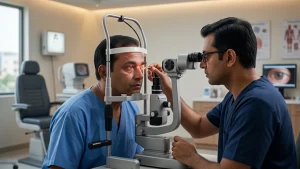
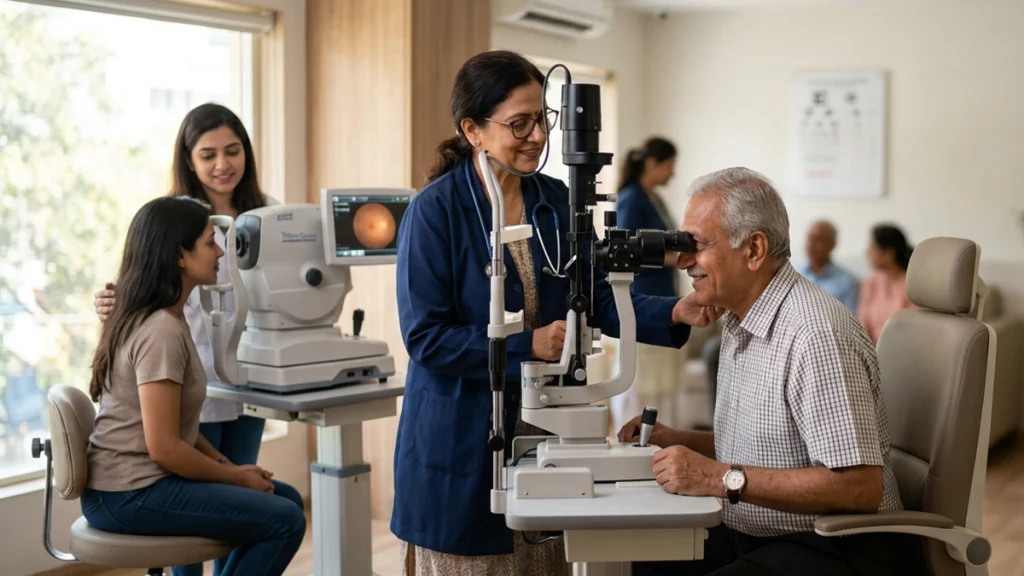
During a routine eye examination we may have refraction testing, eye pressure measurement, slit lamp evaluation, and retina check. Also if required we may do a dilated retina check, OCT scan, visual field test, or look at the cornea. All of which provide a more complete look at the eye health.
A comprehensive eye exam is also recommended when you do not have a serious issue as at that time the doctor is able to identify early stages of disease which may not be present in their advanced form. In fact in many cases early diagnosis allows for easier, safer, and more effective treatment.
Eye Examination vs Routine Eye Checkup
Many people use the terms eye examination and routine eye checkup interchangeably. In everyday language that is fine. But in a clinical setting a routine eye checkup may refer to a regular visit for vision, spectacle power and basic eye assessment which as opposed to a comprehensive eye exam that includes a more in depth evaluation of the internal eye structures.
For instance we see that a person going in for a routine eye checkup may only require a vision test and general eye review. But a patient with diabetes, glaucoma risk, cataract symptoms, or retinal issues may need a comprehensive eye exam which includes use of the drops to dilate the retina and in depth diagnostic tests.
Both are important. A routine eye checkup is for regular monitoring, while a comprehensive eye exam gives in to detailed analysis when there is risk of disease or unexplained vision change.
How Adults Can Protect Eye Health Between Visits
Protecting eye health is more than just regular eye check ups. As an adult you also play a key role in what you do daily. Wear UV protective sunglasses, manage your diabetes and blood pressure, don’t smoke, take breaks from the screen, use your prescribed glasses as directed, and eat a balanced diet which in turn supports long term eye health.
If you have contact lenses it’s very important to keep them clean. You increase your risk of an infection by sleeping in your lenses, using tap water to clean them, or wearing old ones out. Annual eye examinations are recommended to make sure your lenses are safe for your eyes. As for those that work at computers, dryness and fatigue is a big issue. To improve comfort, take breaks often, be aware of your blink rate, adjust screen brightness, and use artificial tears when your doctor recommends it. However, if symptoms continue, a comprehensive eye exam is the better option.
Eye Examination at ASG Eye Care
At ASG Eye Care we tailor our eye examination to each patient’s age, symptoms, health history, and risk factors. We aim not only to fit glasses but also to do a full health check of the eye health and to identify issues in the early stages.
We may suggest a routine eye checkup for an adult with no serious issues, but a full scale comprehensive eye exam may be recommended for patients which include diabetics, glaucoma risk, cataract symptoms, retina issues, or past eye surgery. This patient specific approach we take is to make sure that each of our adult patients gets the right degree of care at the right time.
Key Takeaway
Adults should not wait for severe vision problems before booking an eye examination. Even if your eyes look fine at home, in between exams can catch silent eye disease, update your prescription and protect your long term eye health. For most adults a routine eye check up every few years is sufficient but high risk patients may do well to have annual or more frequent visits. A timely comprehensive eye exam can make all the difference in preserving clear and comfortable vision.
Frequently Asked Questions
1 How often should adults get an eye examination?
Adults that report no symptoms may have an eye examination every few years which will depend on age. In the over 40 age group, contact lens users, diabetics and those with glaucoma risk may require more regular testing.
2 Is a comprehensive eye exam different from a vision screening?
Yes. A vision screening primarily assesses how well you see, while a comprehensive eye exam looks at your vision as well as the eye health of the inner eye that includes the retina, optic nerve, and may also measure eye pressure.
3 Do I need a routine eye checkup if I see clearly?
Yes. A routine eye checkup is the best way to catch issues before they progress into vision loss. Some conditions like glaucoma or diabetic retinopathy may present no symptoms at all in the beginning.
4 Can diabetes affect eye examination frequency?
Yes it does. For diabetics we see a need for more regular retina evaluation as diabetic eye disease may develop without you knowing. Your ophthalmologist will determine the right eye examination schedule for you based on your health.
5 What are the signs that I should not delay an eye examination?
You should not put off an eye examination if you have sudden blurred vision, eye pain, floaters, flashes, double vision, severe redness, or vision loss. These symptoms require prompt medical care.