Contact wear which is what many people turn to if they do not wish to wear glasses at all times. They are handy for work, study, travel, sports and day to day activities. But as the contact lens hygiene is placed right on the eye any care less approach to lens care may result in red itchy eyes, corneal scarring, or serious infections.
At ASG Eye Care what we see is many of our contact lens patients come in with issues of burning, watering, pain, or blurred vision which present themselves after wearing the lenses for too long or as a result of improper cleaning. The great news is that most of these issues can be put to rest with some simple practices. Good contact lens hygiene care is not complex it is about consistency each time you handle, clean, store, or wear your lenses. Once care becomes a routine issue of lens wear drop out will go down and comfort goes up.
This blog goes over what is the right way to clean your contact lenses, which mistakes to avoid, and how eye infection prevention starts with good daily habits.
Why Contact Lens Hygiene Matters
The cornea is that clear front part of the eye. It requires moisture, oxygen, and a clean setting to do well. A contact lens which sits on this delicate surface may cause discomfort from germs, dust, make up particles, and protein deposits if the lenses are not cared for properly.
This is that we often think of contact lens hygiene care as only an issue of clean lenses. Also included is protection of the cornea from infection. What we put into our eyes’ health is also a factor in whether or not we will get microbial keratitis, corneal ulcers, allergic reactions, and repeated eye redness. In very serious cases a corneal infection may cause damage to vision if left untreated.
Many folks think that they are doing fine with what they put in place which is far from the truth. They may leave in their lenses too long, use water to clean them instead of solution, reuse the old solution, and also they may do away with the lens case. These are just some of the practices that over time will increase the risk. What we see is that regular cleaning of the lenses and proper storage is the base for eye infection prevention. In short, strong contact lens hygiene is the foundation of eye infection prevention.
How to Clean Contact Lenses Properly
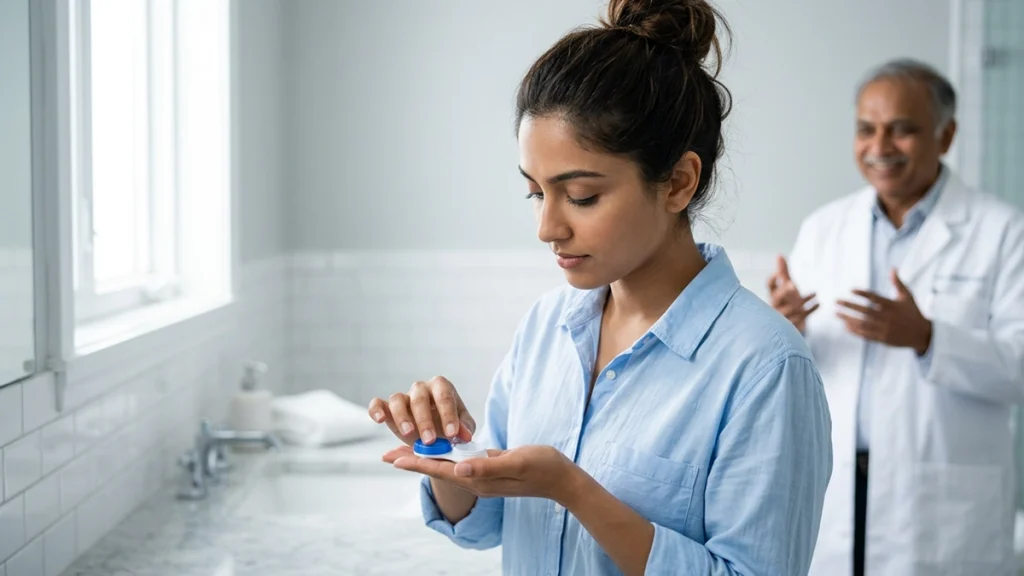
First up in the contact lens cleaning routine is hand hygiene. Soap up your hands, rinse them out well, and dry them with a clean lint free towel before you touch your lenses. Wet and dirty hands will transfer germs and residue right to the lens.
After cleaning out the lens, take it to your hand and apply the disinfecting solution your ophthalmologist recommends. Gently massage the lens with your finger tip then rinse it out again with fresh solution before putting it away. This rub into our method is for better contact lens hygiene care as it does a better job at removing deposits which may remain after just soaking.
Never use tap water, saliva, home made saline, or out of date solutions for contact lens cleaning. Water may look clean but it is a source of eye unsafe microorganisms. Also do not store lenses in plain water for even a short time.
| Safe step | Why it matters |
| Wash and dry hands before touching lenses | Reduces transfer of germs, oil, and dust |
| Rub and rinse lenses with fresh solution | Removes deposits and improves disinfection |
| Use only doctor-recommended solution | Protects the lens material and eye surface |
| Keep lenses away from water | Reduces exposure to harmful organisms |
| Replace the case regularly | Prevents contamination from old deposits |
The care kit is also a part of contact lens hygiene. Each day empty out the old solution, rinse the care set out with fresh solution, and put it out to dry upside down with tops open. Also do not just put in fresh solution over the old which weakens the disinfecting and may allow germs to live.
Common Contact Lens Mistakes That Cause Infections
One of the main errors people make is to wear lenses during swimming, showering, or soaking in a hot tub. It is also very important to keep out of water when wearing contact lenses. This is a basic tenet in the eye infection prevention which notes that water exposure introduces in to the eye things which may cause hard to treat corneal infections.
Another issue is wearing lenses past the recommended time. Daily disposables should be thrown out at the end of the day. Monthly lenses should not be used beyond what is advised by the manufacturer. Overuse of the lenses causes deposit build up which in turn reduces comfort even with regular care.
Wearing contact lenses without a doctor’s say so is also a no go. As the eyes are shut, oxygen flow to the cornea is decreased. Also if you wear them to bed dryness and infection risk goes up. For responsible contact lens care follow the eye doc’s wear schedule.
Using improper solutions may also cause problems. Some solutions don’t work for all types of lenses. With hydrogen peroxide systems for instance the solution has to be neutralized before the lens is put in the eye. For safe contact lens hygiene care it is important that you know your product, do not choose a solution just because it is easy to get.
Daily Contact Lens Care Routine
A proper daily routine for your lenses starts before insertion. Make sure they are clean, wet, and not torn. If the lens is damaged in any way or has become cloudy in appearance do not use it. Put in the lenses prior to putting on your make up and take out your lenses before you take off the make up. This will keep cosmetic particles out of the eye and also support good contact lens hygiene.
During the day do not rub your eyes. If a lens is uncomfortable remove it out, inspect it and rinse in fresh solution. If the issue persists to which the eye still feels strange do what is best which is to stop wear of the lenses and go to an eye specialist. Good contact lens care also includes knowing when to give your eye a break.
At the end of the day take out your lenses unless your doctor told you to wear them at night. Proper cleaning and storage is a must. Consistent lens cleaning which also plays a role in overall eye health by removing deposits, will in turn reduce eye irritation.
Contact Lens Hygiene and Eye Infection Prevention
A contact lens related infection may present with redness, pain, watering, discharge, light sensitivity, or blurred vision. Also at times patients report that there is something in the eye. These symptoms should not be ignored which is also true for contact lens wearers.
Proper care of your contact lens hygiene reduces your risk of infection at each step. Wash hands before you handle them. Use a fresh solution to disinfect lenses. Clean case out between uses to prevent re contamination. Keep away from water which is a source of dangerous organisms. By doing this you form a daily routine for eye infection, and that is why it is so important to follow contact lens hygiene tips every day.
It’s a lot easier to stop an infection before it gets to the cornea than it is to treat one that has. Once an infection does take root you may have to deal with frequent antibiotic drops, many follow up visits, and a break from wearing the lenses for a while. That is why serious care should be put into contact lens care use even by those who have been doing it for years without issues.
| Warning sign | What you should do |
| Redness that does not settle | Remove lenses and book an eye checkup |
| Pain or increasing discomfort | Stop lens use and consult an ophthalmologist |
| Blurred or hazy vision | Do not reinsert lenses until examined |
| Light sensitivity | Seek prompt medical advice |
| Discharge or swelling | Avoid self-medication and get checked |
Cleaning Different Types of Contact Lenses
Soft contact lenses are a common choice which requires proper contact lens cleaning with the solution your doctor has recommended. As for daily disposable lenses which are thrown out after each use, you do not have to store them, but still be very careful in how you handle them.
Rigid gas permeable lenses, scleral lenses, and specialty lenses will require different products at times. Some patients will require separate cleaning, conditioning, or preservative free saline solutions. What you put into your contact lens care routine is based on your lens type, eye health, wear time and comfort level.
Decorative and tinted lenses also require the same care routine as that of prescription lenses. This is an area which often goes out the window because the lenses are only worn occasionally. They should also never be shared, exchanged, or purchased without a proper fit. Even if the lenses are for decorative purposes only, poor care may still increase your risk of infection.
When to Stop Wearing Contact Lenses
Stop at once to see a doctor if your eyes turn red, have pain, produce a lot of tears, are sensitive to light, or go blurry. Do not attempt to treat it yourself by changing the solution or using any random eye drops. Remove the lens and seek professional ophthalmic care.
During active eye infection, severe allergy, strong dryness, or after certain eye procedures do not use lenses until your doctor gives the go ahead. For responsible contact lens care allow your eyes time to heal which may mean going without lenses.
For the health of your eye infection prevention, do not go back to your contacts as soon as you see an improvement. What may appear to be early betterment does not always mean the cornea has fully healed. It is important to have a medical OK before putting your contacts back in.
Safe Lens Guidance at ASG Eye Care
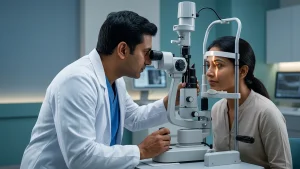
At ASG Eye Care our contact lens patients get advice for not only clear vision but also safe long term lens wear. We perform a proper eye exam which assesses fit of the lens, corneal health, dryness, allergy, and comfort. It is important to note that a very good quality lens can have issues if it doesn’t suit the eye.
Our doctors inform patients on contact lens hygiene, wear schedules, solution use, case disposal, and what to watch for in terms of infection. For those that have long screen time, travel often, use decorative lenses or experience repeat redness we give out individual advice. We aim for better comfort, clearer vision, and eye infection prevention.
If you are having repeat issues do not keep changing out your lenses at will. We recommend a full consultation which will identify what in your contact lens care routine is off. It may be the material of the lenses, the solution you are using, your wear schedule, or how well you are using contact lens cleaning them which is at fault. Also in some cases we may look for a dry eye or allergy treatment.
Key Takeaway
Contact lenses do have a good track record of safety and efficacy when used as directed. What we see as the issues of real risk is when instructions for care, storage, replacement, or wear time are broken. Also, proper contact lens hygiene does a great job of protecting the cornea, improving how they feel in the eye, and also decreases the chance of an infection.
In the interest of long term eye health, make contact lens hygiene care a daily routine. With proper at-home contact lens care, including regular cleaning and eye infection prevention, most people are able to enjoy the benefits of wearing contacts which also includes healthy eyes.
Frequently Asked Questions
1. How often should I clean my contact lenses?
Reusable lenses require to be cleaned at each removal. As for proper contact lens cleaning care that includes rubbing out the lens and then rinsing it with a new disinfecting solution also which is to be stored in a clean solution. As for daily disposable lenses do not clean or reuse.
2. Can I wash contact lenses with water?
No. Contact: do not put your contact lenses in tap water to clean or store in. There is disease causing organisms in water which may cause you serious eye infection. Also keep water away from your lenses which is a key element of contact lens hygiene.
3. What is the best routine for contact lens users?
The best practice is to have clean hands, fresh solution, proper storage, case replacement, and regular eye checkups. Also your doctor may change your contact lens care routine based on your lens type and eye health.
4. Why do my eyes become red after wearing contact lenses?
Redness is from dryness, poor fit, allergy, overwear, deposits, or infection. In mild cases improved contact lens hygiene helps, but persistent redness requires medical evaluation.
5. Can poor cleaning of contact lenses affect vision?
Yes. Poor care of contact lens cleaning increases your risk of getting a corneal infection. Most of these infections may be treated when caught early, however in the event of delay in care and treatment there is a risk of scarring as well as vision loss. That is why it is very important to prevent eye infections and to see eye infection prevention at the first sign of trouble.