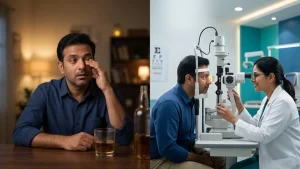
The Question Almost Every LASIK Patient Asks First
Before committing to any surgical procedure involving their eyes, most people want one straightforward answer — will this last? It is a completely reasonable question. After spending time, money, and trust on a process, no one wants to have to get glasses again after five years. For the great majority of patients, the truth about LASIK permanent results is not obvious, but it is usually very good. Understanding what the surgery actually does to the eye makes that answer considerably easier to trust.
Is LASIK Permanent?
Yes, LASIK permanently reshapes the cornea to correct refractive errors like myopia, hyperopia, and astigmatism. The corneal tissue removed during LASIK does not grow back. However, natural age-related vision changes such as presbyopia can still occur later in life, and a small percentage of patients may require enhancement procedures over time.
What LASIK Does to the Eye
By reshaping the cornea, the transparent, dome-shaped tissue in front of the eye that aids with focusing, LASIK may resolve close and distant things more clearly. The refractive mistake is repaired by forming a tiny flap on the corneal surface, using a laser to carefully remove very small amounts of tissue underneath it, and then reinstalling the flap. The whole process takes approximately ten minutes. Within those minutes, the cornea changes in a way that will last forever. Surgically removed tissue does not grow back. That structural change stays for life.
Where the conversation around LASIK permanent results gets more complicated is the distinction between the corneal correction itself and the natural changes the eye continues experiencing after surgery.
LASIK Long-Term Results Overview
| Factor | What Happens After LASIK? |
|---|---|
| Corneal Reshaping | Permanent |
| Removed Corneal Tissue | Does Not Grow Back |
| Vision Stability | Usually Long-Term |
| Need for Glasses Later | Possible Due to Aging |
| Presbyopia After 40 | Common & Natural |
| Enhancement Procedures | Occasionally Needed |
| LASIK Success Rate | Very High |
| Recovery Time | Usually Quick |
| Long-Term Satisfaction | Extremely High |
Why Some Patients Need Enhancement Procedures Later
The cornea does not change after LASIK — but the eye is part of a living body that keeps aging. Two situations occasionally lead patients back to their eye hospital years after their original procedure.
The first is regression. A small percentage of patients — particularly those with higher prescriptions before surgery — experience a gradual partial return of their refractive error over years. The corneal reshaping holds, but other factors within the eye’s focusing system shift slightly. This does not mean the surgery failed. It means biology continued doing what biology does.
The second is presbyopia. Completely unrelated to LASIK, this age-related condition affects near vision for virtually everyone after their mid-forties. Patients who had perfect distance vision after LASIK sometimes assume their surgery is reversing when they start struggling to read fine print. It is not — presbyopia would have arrived regardless.
Both situations can typically be addressed with an enhancement procedure when clinically appropriate, which experienced LASIK specialists India evaluate on a case by case basis.
What Long-Term Studies Actually Show
There are now decades’ worth of professional follow-up statistics on LASIK effects. The results repeatedly show that long after surgery, the vast majority of patients continue to experience significant gains in their vision. After surgery, most people don’t need glasses at all or only need small changes for certain jobs, according to studies that follow patients for ten to fifteen years. Patients are still very happy with long-term follow-up studies, which have some of the highest patient happiness rates of any voluntary surgery done anywhere in the medical field.
LASIK permanent results in terms of structural corneal change are essentially absolute. The vision stability that follows depends on the patient’s age at the time of surgery, the original prescription, and individual biological factors — all things a qualified surgeon evaluates thoroughly before recommending the procedure.
LASIK vs Age-Related Vision Changes
| Condition | Related to LASIK? | Common Age |
|---|---|---|
| Stable Distance Vision | Yes | Any Age |
| Presbyopia | No | 40+ |
| Cataracts | No | 50+ |
| Minor Regression | Sometimes | Varies |
| Reading Glasses Need | Usually Age-Related | 40+ |
What LASIK Cost India Looks Like and Why It Varies
LASIK cost India varies across facilities, cities, and technology platforms used. Basic LASIK using older laser platforms sits at a lower price point. Bladeless LASIK using femtosecond technology for flap creation costs more. SMILE — a flapless variant gaining significant popularity — sits at a higher range again. LASIK cost India also reflects the experience level of the surgical team, the diagnostic equipment used pre-operatively, and the quality of post-operative care included in the package.
Choosing a procedure based purely on the lowest available price in a cost-sensitive market like India carries real risk. The technology used, the precision of pre-surgical mapping, and the surgeon’s experience handling complications all affect outcomes more than the price difference between facilities suggests.
Why ASG Eye Hospital LASIK Stands Out
ASG Eye Hospital LASIK services combine advanced laser platforms with experienced surgical teams across multiple locations throughout India. In order to find suitable candidates and rule out those whose corneal thickness or curve profile makes the treatment inadvisable, the pre-operative review at ASG Eye Hospital LASIK centers uses thorough corneal topography and pachymetry. This screening process considerably minimises the chance of long-term complications.
Conclusion
LASIK is a legitimate, long-lasting, and permanent procedure to correct the outer layer of the eye. For appropriately selected patients treated by skilled LASIK specialists India, the procedure consistently delivers years of clear, glasses-free vision. Understanding what LASIK permanent results realistically means — permanent structural correction within a body that keeps aging — sets the right expectations and helps patients walk into any quality eye hospital consultation genuinely informed.
FAQ Section
1. Is LASIK surgery permanent?
Yes, the corneal reshaping done during LASIK is permanent. The removed tissue does not regenerate, making the correction long-lasting for most patients.
2. Can eyesight worsen again after LASIK?
Some patients may experience minor vision regression over many years, especially those with very high prescriptions before surgery. Age-related eye changes can also affect vision later.
3. Does LASIK wear off after 10 years?
In most cases, LASIK does not “wear off.” Long-term studies show many patients maintain excellent vision for 10–15 years or more after surgery.
4. Why do some people need glasses again after LASIK?
Usually due to presbyopia, an age-related near-vision condition that affects almost everyone after age 40, not because LASIK failed.
5. Can LASIK be repeated?
Yes, enhancement or touch-up procedures may be possible depending on corneal thickness and overall eye health.
6. What is the average LASIK cost in India?
LASIK cost India depends on technology, surgeon expertise, and hospital infrastructure. Advanced bladeless or SMILE procedures generally cost more than conventional LASIK.
7. Is LASIK safe long term?
LASIK has a strong long-term safety profile when performed by experienced surgeons using advanced diagnostic screening and laser technology.
8. Who is not suitable for LASIK?
Patients with thin corneas, unstable prescriptions, severe dry eye, or certain eye diseases may not qualify for LASIK surgery.