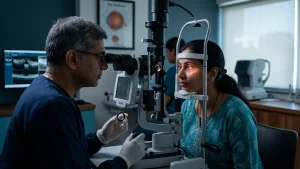
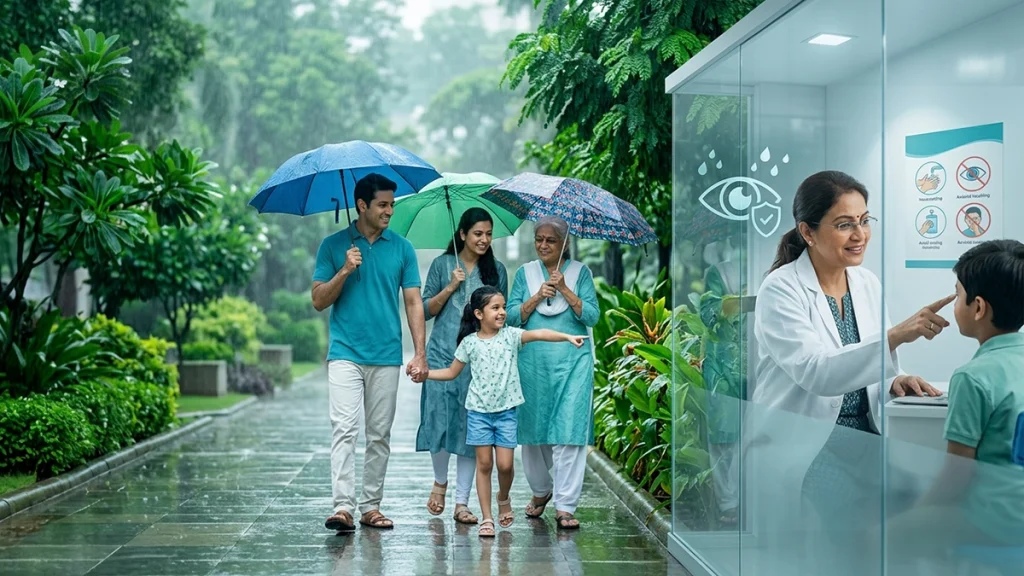
The rainy season brings a break from the summer heat which is much awaited by people, at the same time it brings about changes in our daily routines. We see more people out in crowded places, we see them touch public wet surfaces, we see them wipe what is in between rain and sweat from their face and spend more time inside with each other. These behaviors put at risk the spread of monsoon eye infections. It is not the rain that causes eye infection; what we should be more concerned about is the contact with infected discharges, contaminated hands, shared personal items, unsafe water and improper care of contact lenses.
Eye infection in the rainy season may present as redness, watering, itching, or a sticky discharge. Also at the same time these symptoms present with allergies, dry eye, a corneal problem, or an injury. For proper eye care during monsoon it is important to recognize these symptoms early, avoid unsafe self medication, and to seek out an ophthalmologist when pain or vision changes are present.
Why Eye Problems Increase During the Monsoon
Viral and bacterial conjunctivitis may be transmitted by a person who touches an infected eye and then touches another person, a towel, pillow, phone, desk, or any other shared item. CDC reports that frequent hand washing, avoidance of eye rubbing and also not to share towels, cosmetic products, eye drops, contact lenses, lens cases or glasses when infected with conjunctivitis is of great recommendation.
This hand over hand transfer of the infection is what may account for the clusters of monsoon eye infections in families, schools, hostels and work places. In conjunctivitis in monsoon the infection may go to others before they get into a better hygiene routine. Also at large in monsoon we see that people use poorly maintained swimming areas, they use infected cosmetic products for the eye, and also put in contact lenses into already irritated eyes which in turn increases risk.
Good eye care during the monsoon is to not live in fear of every raindrop. It is to keep hands clean, use your own personal items, practice safe contact lens care, and to note when a red eye is different from what is usual.
Common Causes of monsoon eye infections
Monsoon eye infections brings out a variety of ocular issues which are not a single entity. Conjunctivitis may result from viruses, bacteria, allergens, chemicals, contact lens wear, fungi, or some underlying health conditions. As many different causes present with the same signs of redness and wateriness of the eye, clinical presentation may not in itself give us the diagnosis.
Viral conjunctivitis is a common cause of what we see as pink eye which is very contagious. It usually causes a lot of watery discharge, redness, burning, and a grittiness in the eye. Also some patients report having a cold, sore throat, or a fever. In most cases which are not complicated by secondary infection we see that the virus runs its course without the use of antibiotics which of course do not work on viruses.
Bacterial conjunctivitis is noted to produce thicker yellow, white, or greenish discharge which also may cause the eyes to stick shut upon waking. But symptoms do cross over with viral conjunctivitis which is why discharge color should not be the only thing used in determining treatment. The CDC reports that bacterial conjunctivitis may present with redness, puffy eyelids, discomfort, purulent discharge and in some cases reduced vision.
Allergies of the conjunctiva which is what we term allergic conjunctivitis do in fact present like an eye infection which is why in the eye infection in the rainy season. you may see an increase in cases. It is characterized by very noticeable itching, may affect either or both eyes, also you may see symptoms of sneezing or an itchy nose. It is important to note that this is not a contagious condition and does not respond to antibiotic treatment.
Contact which is related to contact lenses requires special care. A lens may trap organisms against the cornea when exposed to tap water, handled with unwashed hands, stored in an improper case, or worn while swimming. Contact lens users with reported bacterial conjunctivitis note that they are at high risk of bacterial keratitis and that they should remove their lenses and report to the eye doctor as soon as possible.
| Possible condition | Common pattern | Why it matters |
| Viral conjunctivitis | Watery discharge, redness, burning or gritty feeling; sometimes a cold or sore throat | Often contagious and commonly managed with supportive care |
| Bacterial conjunctivitis | Sticky or pus-like discharge, crusted lashes, redness and swelling | Symptoms overlap with viral disease, so examination may be needed |
| Allergic conjunctivitis | Strong itching, watering, usually both eyes, nasal allergy symptoms | Not contagious and should not automatically be treated with antibiotics |
| Corneal infection or keratitis | Pain, light sensitivity, blurred vision and marked redness | Requires urgent assessment, especially in contact-lens users |
Symptoms and Warning Signs
Common symptoms of monsoon eye infections include redness, watering, itching, burning, eyelid swelling, a sandy sensation, and also unusual discharge as symptoms of eye issues. Monsoon eye infections can include inflammation of the conjunctiva, the thin tissue that lines the inside of the eyelid and covers the white of the eye. A person may wake to find crusting around the lashes or see that the symptoms are spreading from one eye to the other with conjunctivitis in monsoon
Not all cases of watery or red eyes are infectious. In the rain we see that dust, pollen, make up, air pollution and also extended screen use do play a role in irritation of the eyes. With an eye infection in the rainy season, discharge may keep returning after cleaning, redness may intensify, or another close contact may develop similar symptoms.
Ordinary conjunctivitis does not usually present with severe pain, large amounts of light sensitivity or great vision loss. Go to the ophthalmologist at once if you have severe pain, reduced or blurred vision, marked light sensitivity, a very red eye, increasing eyelid swelling, an eye injury, chemical exposure, or symptoms which improve. A red and painful eye which is a contact lens user’ requires urgent care. Also it is advised from the authorities that you seek medical care when symptoms are severe, persist, or are out of the ordinary.
New born infants which present with red, sticky, or swollen eyes require prompt medical attention. Also it is early to seek advice for people with suppressed immune systems, recent eye surgery, pre-existing corneal conditions, or who are left with only one functional eye.
How monsoon eye infections Spread at Home and School
When conjunctivitis in monsoon is contagious it is usually from contaminated hands and items as opposed to just the act of looking at someone. A person rubs a watery eye, touches a phone, doorknob, towel, pillow, desk, or toy and thus transmits the infectious material to another person which they in turn bring to their own eye. Viral and bacterial pink eye has great person to person transmission.
Families managing monsoon eye infections should use separate face towels, handkerchiefs, pillowcases, cosmetics, eye drop bottles, glasses, contact lens, and cases. Affected persons’ bedding and wash cloths should be put through the detergent. It is at the hand of the caregiver to wash the hands before and after cleaning discharge or putting in prescribed medicine.
Preventing monsoon eye infections with Practical eye care during monsoon
Consistent eye care during monsoon is better than sporadic measures. Wash hands with soap and water for at least 20 seconds after travel, coughing, sneezing, handling used linens, or touching the face. When soap and water isn’t available the CDC recommend an alcohol based hand sanitizer that has at least 60% alcohol.
To lower your risk of monsoon eye infections do not rub your eyes with wet or dirty hands. If you get road spray or dirty rain into your eyes, rinse gently with clean water. Pat the face dry with a clean and fresh cloth or paper and don’t share it. Use your own eye cosmetic products, also throw out what may have been in contact with an infected eye.
Care in your eye care during the monsoon is very important for contact lens users. Do not clean lenses or cases with tap water, wear lenses while swimming out, or put in a lens to a red or irritated eye. If you see redness, pain, discharge, or blurred vision remove the lenses and see an eye care professional. In case of an infection disposable lenses and cases should be thrown out, but reusable items should be cleaned as directed by your health care provider.
| Everyday situation | Safer rainy-season habit | Habit to avoid |
| Returning from outdoors | Wash and dry hands before touching the face | Wiping the eyes immediately with damp hands |
| Someone at home has red eyes | Separate towels, bedding, cosmetics and drops | Sharing cloths, pillows or medicine bottles |
| Wearing contact lenses | Follow the prescribed cleaning and replacement schedule | Using tap water, swimming in lenses or wearing them during irritation |
| Cleaning eye discharge | Use clean hands and fresh cotton or cloth for each eye | Reusing cotton or rubbing both eyes |
| Mild eye irritation | Use only suitable lubricants or clinician-advised care | Starting antibiotic or steroid drops without examination |
What to Do When Symptoms Begin
At the first sign of an eye infection in the rainy season, stop rubbing the eye and wash your hands. For contact lens users remove your lenses. Gently clean discharge with clean hands and a fresh damp cotton pad or washed cloth, use a separate pad for each eye. Cool compresses and artificial tears may ease mild discomfort although they don’t replace evaluation when you see warning signs. The National Eye Institute reports cold compresses and artificial tears to be supportive in case of mild pink eye.
Do not use old antibiotic doses from past illness, share your drops with another person, or put the dropper tip to your lashes or eye. Steroids containing drops may cause some infections to worsen and should not be started without an ophthalmologist’s direction.
Treatment for monsoon eye infections depends on the cause. Viral conjunctivitis in monsoon is often managed with supportive care,bacterial infection may require a prescription of antibiotic drops or ointment, and allergy may respond to getting rid of the allergen, use of lubricating drops, or anti allergy medicine. Antibiotics do not work for viral or allergic conjunctivitis which is why an accurate diagnosis is key.
Treatment, Recovery and Follow-Up
Recovery times vary according to the cause. In many viral cases of which are uncomplicated recovery is seen in 1 to 2 weeks though some do go on longer. Bacterial symptoms improve with proper treatment, but allergic redness will return as exposure to the trigger does.
Continue good eye care during monsoon after the eye starts looking better. Wash hands, avoid shared towels, clean glasses, replace used up makeups, and wait for professional advice before putting in contact lenses. These measures reduce the chance of a re infection or transmission.
When to Consult ASG Eye Care
Book in for an eye exam if you have an eye infection in rainy season that is painful, causes vision issues, light sensitivity, heavy discharge, or doesn’t improve in time. It is very early to seek out care if you are a child, senior citizen, contact lens user, diabetic, have low immunity, or have had recent eye surgery. Also at that first sign of something not right, get in to see your eye care professional.
ASG Eye Care we do monsoon eye infections, determine the cause out of that which one you’re dealing with and we present a treatment plan based on what we see instead of a one size fits all approach. Also timely evaluation is key in telling the difference between simple conjunctivitis in monsoon common thing from a corneal infection or some other issue that requires prompt care.
Conclusion
Most monsoon eye infections do well when we recognize symptoms early and we avoid self medication which is not safe. The best practices are clean hands, separate towels and make up, care in lens hygiene, and that you seek attention for pain or visual change right away. For every eye infection in rainy season it is best to manage it according to its actual cause which may not be what you think it is.
Preventing monsoon eye infections through thoughtful eye care during monsoon protects the affected person as well as family members, classmates, and colleagues. When redness becomes severe, vision changes, pain develops, or symptoms fail to improve, consult an ophthalmologist for diagnosis and personalised treatment.
Frequently Asked Questions
1. Are monsoon eye infections caused directly by rain?
Monsoon eye infections do not see high incidence of rainfall itself. Rather it is from contaminated hands, shared items, unsafe water, and poor lens hygiene which are to blame. Clean practices are still the base of good eye care during monsoon.
2. Is conjunctivitis in the monsoon always contagious?
No. Viral and bacterial conjunctivitis in monsoon is a cause which may be very much contagious, on the other hand allergic conjunctivitis is not. At times an ophthalmic evaluation may be required because of the similar symptoms.
3. Can I use antibiotic drops for an eye infection in the rainy season?
Do not start antibiotics without medical advice. Eye infection in rainy season may be of the viral, bacterial, allergic, or corneal type. Antibiotics do not treat viral or allergic issues.
4. How can I protect other family members?
During monsoon eye infections wash hands, use separate towels and pillowcases, do not share eye drops or make up, and clean glasses. When conjunctivitis in monsoon affects a child do take extra care.
5. Should contact lenses be worn during an eye infection in rainy season?
No. Stop when you have an eye infection in rainy season. See to it that you get prompt assessment for pain, discharge, light sensitivity, or blurred vision as the cornea may be involved.
6. What is a practical routine for eye care during monsoon?
Good eye care during monsoon includes washing hands, don’t rub your eyes, use separate towels and make-up products, proper care of contact lenses, and to seek early advice for pain or vision changes.
7. How long does conjunctivitis in monsoon take to settle?
The cause of conjunctivitis in monsoon is based on the cause. Many viral cases improve within a week to 10 days’ time, but if there is persistence or aggravation of symptoms evaluation is required.
8. Can children attend school with monsoon eye infections?
School absenteeism due to monsoon eye infections is a result of symptoms, health care provider’s advice, close contact risk, and what the school’s policies are. Illness which is of a degree that it affects school performance may keep a child at home.