ASG Eye Hospital

Posterior Capsular Opacification (PCO): Causes, Symptoms & Treatment After Cataract Surgery

Cataract surgery is one of the most successful eye procedures, helping patients regain clear vision. However, some patients may experience blurred vision months or even years after surgery. This condition is known as Posterior Capsular Opacification (PCO), often referred to as a secondary cataract.

PCO does not mean that the cataract has returned. Instead, it occurs when the thin capsule that holds the artificial lens becomes cloudy over time. This clouding can affect vision clarity and cause symptoms similar to cataracts.

What is Posterior Capsular Opacification?

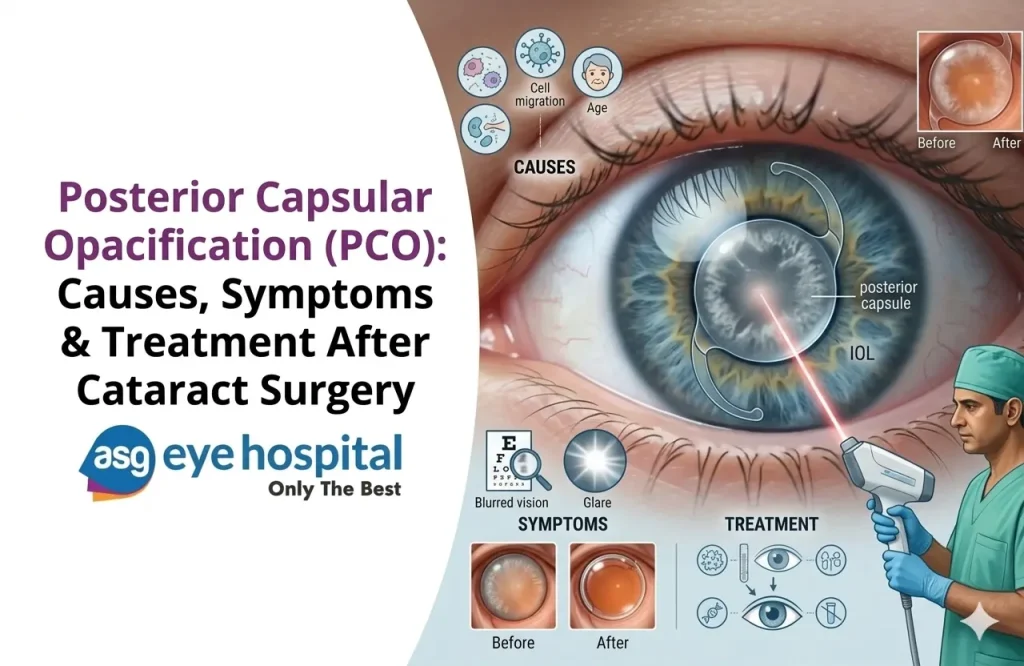
During cataract surgery, the natural cloudy lens is replaced with an artificial intraocular lens (IOL). The back portion of the capsule is left intact to support this lens. Over time, residual lens cells may grow on this capsule, making it cloudy and affecting vision.

Causes of PCO

PCO develops due to natural healing processes after surgery. The main causes include:

  • Growth of leftover lens epithelial cells
  • Post-surgery inflammation
  • Type and design of intraocular lens (IOL)
  • Surgical technique

These cells form a thin layer that blocks light from passing clearly through the lens.

Symptoms of Posterior Capsular Opacification

Patients with PCO may experience:

  • Blurry or cloudy vision
  • Glare and halos around lights
  • Difficulty seeing at night
  • Reduced contrast sensitivity
  • Double vision in one eye

These symptoms often feel similar to the original cataract, which is why many patients think the cataract has come back.

How is PCO Diagnosed?

An eye specialist can easily diagnose PCO through:

  • Vision testing
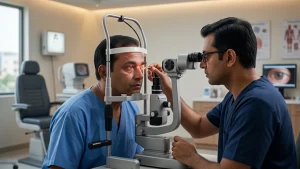
  • Slit-lamp examination
  • Dilated eye exam

These tests help identify the cloudy capsule behind the artificial lens.

Treatment: YAG Laser Capsulotomy

The most effective treatment for PCO is YAG Laser Capsulotomy.

  • A quick, painless outpatient procedure
  • Takes only a few minutes
  • Creates a small opening in the cloudy capsule
  • Restores clear vision almost immediately

Most patients notice improvement within a day after the procedure.

Is PCO Dangerous?

PCO is not a serious condition, but it can affect your daily activities if left untreated. In rare cases, complications like increased eye pressure or retinal issues may occur after treatment, but these are uncommon.

Can PCO Be Prevented?

While PCO cannot always be completely prevented, the risk can be reduced by:

  • Using advanced intraocular lenses
  • Choosing experienced eye surgeons
  • Following proper post-surgery care

When Should You See a Doctor?

If you notice blurred vision after cataract surgery, consult an eye specialist immediately. Early diagnosis ensures quick and effective treatment.

Conclusion

Posterior Capsular Opacification is a common and treatable condition after cataract surgery. With advanced laser technology, it can be corrected quickly and safely, restoring your clear vision.

If you’re experiencing vision problems after cataract surgery, visit ASG Eye Hospital for expert diagnosis and advanced treatment options.

Frequently Asked Questions (FAQs)

1. What is Posterior Capsular Opacification (PCO)?

Posterior Capsular Opacification (PCO) is a common condition that can occur after cataract surgery, where the lens capsule becomes cloudy, leading to blurred vision.

2. How long after cataract surgery can PCO develop?

PCO can develop within a few months or even years after cataract surgery. The timing varies depending on individual healing and other factors.

3. What are the main symptoms of PCO?

Common symptoms include:

  • Blurry or cloudy vision
  • Glare and halos around lights
  • Poor night vision
  • Reduced clarity and contrast
4. What is YAG laser capsulotomy?

YAG laser capsulotomy is a quick and painless laser procedure used to treat PCO. It creates a small opening in the cloudy capsule to restore clear vision.

5. Is YAG laser treatment safe?

Yes, YAG laser capsulotomy is a safe and commonly performed procedure with minimal risks and a high success rate.

6. How long does it take to recover after YAG laser treatment?

Most patients notice improved vision within 24 hours. Normal activities can usually be resumed immediately after the procedure.
Overview

Job Title: Consultant Ophthalmologist

Location: Pan India
Job Category: Medical Healthcare

Work Employment:  Full time

What you work:

  • Diagnose and treat patients with a focus on Ophthalmologist.
  • Collaborate with senior doctors and multidisciplinary teams.
  • Ensure patient-centric care and follow clinical protocols.
  • Contribute to research, training, or hospital initiatives (if applicable).

Mandatory skills:

  • Relevant medical degree / certification.
  • Strong knowledge of ophthalmology practices / healthcare protocols.
  • Excellent communication and patient-handling skills.
  • Ability to work in fast-paced healthcare environments.

Preferred Qualifications:

  • Experience: 3 to 6 years of experience
  • Prior experience in eye care / multi-speciality hospitals.
  • Fellowship or advanced training in Ophthalmologist.
  • Familiarity with advanced diagnostic tools and surgical techniques.
  • Passion for innovation, patient care, and continuous learning.

Apply For This Positions

This will close in 0 seconds

Overview

Job Title: Optometrist

Location: Amritsar, Punjab 

Job Category: Optometry

Work Employment:  Full time

What you work:

  • Conduct comprehensive eye examinations and vision assessments for patients of all ages.
  • Prescribe and fit spectacles, contact lenses, and low-vision aids.
  • Perform diagnostic tests including refraction, tonometry, perimetry, and OCT imaging.
  • Support consultant ophthalmologists in pre-operative and post-operative patient workups.
  • Counsel patients on eye care, lens hygiene, and follow-up schedules.
  • Maintain accurate clinical records and adhere to hospital protocols.

Mandatory skills:

  • Bachelor’s or Master’s degree in Optometry (B.Optom / M.Optom) from a recognised institution.
  • Valid registration with the relevant state or national optometry council.
  • Proficiency in refraction, slit-lamp examination, and contact lens fitting.
  • Working knowledge of autorefractors, tonometers, fundus cameras, and OCT equipment.
  • Strong communication skills in English, Hindi, and Punjabi.
  • Ability to manage high patient volumes in a fast-paced clinical setting.

Preferred Qualifications:

  • Experience: 1 to 5 years of clinical optometry experience.
  • Prior experience in an eye care or multi-speciality hospital in Punjab.
  • Exposure to paediatric optometry, binocular vision, or low-vision rehabilitation.
  • Familiarity with advanced diagnostic imaging and dry-eye management.
  • Passion for patient care, community eye-health camps, and continuous learning.

Apply For This Positions

This will close in 0 seconds

Overview

Job Title: Optical In-charge 

Location: Panjim, Goa / Mumbai-Worli (Lower Parel) 

Job Category: Optical

Work Employment:  Full time

What you work:

  • Manage day-to-day operations of the optical outlet, including sales, dispensing, and inventory.
  • Guide customers on frame selection, lens options, and coatings based on their prescription and lifestyle.
  • Take accurate frame measurements and ensure precise fitting, adjustments, and after-sales service.
  • Drive optical sales targets and monitor daily, weekly, and monthly business performance.
  • Maintain optimum stock levels, coordinate with vendors, and control shrinkage through periodic audits.
  • Supervise and train optical staff on product knowledge, dispensing standards, and customer service.
  • Coordinate with optometrists and consultants to ensure smooth prescription-to-delivery flow.
  • Ensure visual merchandising, display hygiene, and adherence to brand and hospital standards.

Mandatory skills:

  • Diploma or Bachelor’s degree in Optometry (D.Optom / B.Optom) or equivalent optical dispensing qualification.
  • Minimum 3 years of experience in optical supervisory or in-charge role.
  • Sound knowledge of lens types, coatings, frame materials, and dispensing principles.
  • Hands-on experience with edging, fitting, and basic optical workshop equipment.
  • Proven ability to achieve sales targets and manage inventory and billing systems.
  • Strong communication and interpersonal skills in English, Hindi, and Konkani or Marathi.
  • Working knowledge of POS / retail software and MS Office.

Preferred Qualifications:

  • Experience: 3 to 7 years in optical retail or an eye care hospital optical division.
  • Prior experience managing an optical outlet in Goa or the western region.
  • Exposure to premium and progressive lens brands and specialty eyewear.
  • Familiarity with contact lens dispensing and after-care support.
  • Team leadership, customer relationship management, and continuous learning mindset.

Apply For This Positions

This will close in 0 seconds

Overview

Job Title: Optometrist

Location: Pan India 


Job Category: Optometry

Work Employment:  Full time

What you work:

  • Conduct comprehensive eye examinations and vision assessments for patients of all ages.
  • Prescribe and fit spectacles, contact lenses, and low-vision aids.
  • Perform diagnostic tests including refraction, tonometry, perimetry, and OCT imaging.
  • Support consultant ophthalmologists in pre-operative and post-operative patient workups.
  • Counsel patients on eye care, lens hygiene, and follow-up schedules.
  • Maintain accurate clinical records and adhere to hospital protocols.

Mandatory skills:

  • Diploma / Bachelor’s or Master’s degree in Optometry (D.Optom / B.Optom / M.Optom) from a recognised institution.
  • Valid registration with the relevant state or national optometry council.
  • Proficiency in refraction, slit-lamp examination, and contact lens fitting.
  • Working knowledge of autorefractors, tonometers, fundus cameras, and OCT equipment.
  • Ability to manage high patient volumes in a fast-paced clinical setting.

Preferred Qualifications:

  • Experience: 1 to 5 years of clinical optometry experience.
  • Exposure to paediatric optometry, binocular vision, or low-vision rehabilitation.
  • Passion for patient care, community eye-health camps, and continuous learning.

Apply For This Positions

This will close in 20 seconds