ASG Eye Hospital

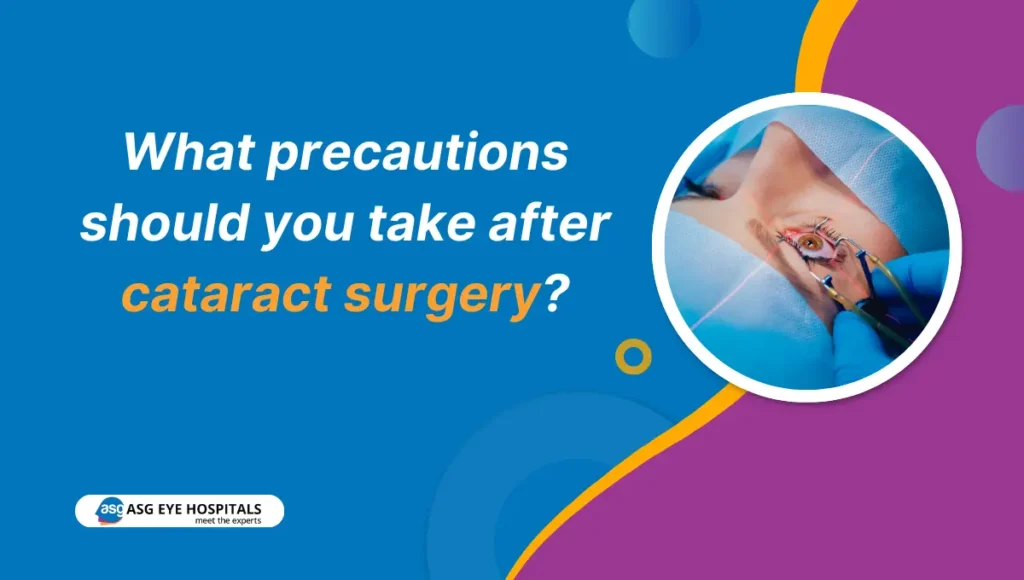
What Precautions Should You Take After Cataract Surgery? A Complete Guide

Cataract surgery is a procedure that can improve vision and quality of life for those affected by this condition. However, like any surgical procedure, it requires proper care and attention during recovery to get the best outcomes and minimize the risk of complications. In this blog, we’ll explore the precautions you should take after cataract surgery, addressing common concerns and providing guidance for a smooth recovery.


What is Cataract Surgery?

Before delving into post-operative precautions, it’s essential to have a basic understanding of cataract surgery. During this procedure, the cloudy lens in the eye (the cataract) is replaced with an artificial intraocular lens (IOL) to restore clear vision. Cataract surgery is typically performed as an outpatient procedure and is considered highly safe and effective.


Precautions We Should Take After Cataract Surgery

Follow Your Doctor’s Instructions: One of the most crucial precautions after cataract surgery is following your doctor’s post-operative instructions. These instructions may include;

  • Do not forget to use prescribed eye drops by your surgeon
  • Wear an eye shield at night
  • Avoid strenuous activities
  • Do not wear any eye makeup
  • Do not wear contact lenses
  • Protect your eyes from potential injury or infection during the recovery period.
  • Wear sunglasses outdoors to shield your eyes from bright sunlight and harmful UV rays.
  • Avoid rubbing or pressing on your eyes
  • Do not drive until your doctor says
  • Refrain from swimming or using hot tubs until your doctor gives you the green light.


Some degree of discomfort or mild pain is after cataract surgery. Your doctor may prescribe pain-relieving eye drops or medications to alleviate any discomfort. Use these medications as directed. Avoid using over-the-counter eye drops without consulting your eye consultants first.


While you may be eager to resume your normal activities, avoid strenuous activities such as heavy lifting, bending over, or engaging in energetic exercise for the first few weeks after surgery. These activities can increase pressure in the eyes and hamper the healing process.


While cataract surgery is generally safe, it’s essential to be alert for any signs of complications, such as increased pain, redness, swelling, or vision changes. Contact your doctor immediately if you experience any unusual symptoms or concerns.


Cataract Surgery Recovery Time

The recovery time after cataract surgery can vary from person to person, but most individuals experience significant improvement in vision within a few days to weeks after the procedure.
However, it’s essential to remember that full recovery may take several weeks, and your vision may improve gradually over time.

During the initial recovery period, it’s normal to experience some temporary side effects, such as

  • Blurred vision
  • Sensitivity to light
  • Mild discomfort

These symptoms typically subside as the eyes heal, but it’s essential to be patient and allow your eyes sufficient time to recover fully.


Complications Occur If You Do Not Take Proper Precautions

While cataract surgery is considered safe, like any surgical procedure, it carries some risks of complications. Complications may include infection, inflammation, bleeding, or damage to the surrounding eye structures. However, the risk of serious complications is relatively low, and most patients experience successful outcomes from cataract surgery.


Follow all pre-operative and post-operative instructions carefully to minimize the risk of complications.


Proper precautions and close monitoring of your eyes during the recovery can help to ensure a smooth and successful outcome from cataract surgery.


Lastly

Cataract surgery is a transformative procedure that can significantly improve vision and quality of life for individuals with cataracts. By following the precautions outlined in this blog, you can help ensure a smooth recovery and minimize the risk of complications. With proper care and attention, you can look forward to enjoying clear vision and improved eye health after cataract surgery.


For those seeking cataract treatment in India or looking for experienced eye consultants, it’s essential to prioritize post-operative care to ensure the best possible outcome. If you have questions about cataract surgery recovery or precautions, don’t hesitate to reach our team of experts at ASG Super Specialty Eye Hospital for personalized guidance and support.
Overview

Job Title: Consultant Ophthalmologist

Location: Pan India
Job Category: Medical Healthcare

Work Employment:  Full time

What you work:

  • Diagnose and treat patients with a focus on Ophthalmologist.
  • Collaborate with senior doctors and multidisciplinary teams.
  • Ensure patient-centric care and follow clinical protocols.
  • Contribute to research, training, or hospital initiatives (if applicable).

Mandatory skills:

  • Relevant medical degree / certification.
  • Strong knowledge of ophthalmology practices / healthcare protocols.
  • Excellent communication and patient-handling skills.
  • Ability to work in fast-paced healthcare environments.

Preferred Qualifications:

  • Experience: 3 to 6 years of experience
  • Prior experience in eye care / multi-speciality hospitals.
  • Fellowship or advanced training in Ophthalmologist.
  • Familiarity with advanced diagnostic tools and surgical techniques.
  • Passion for innovation, patient care, and continuous learning.

Apply For This Positions

This will close in 0 seconds

Overview

Job Title: Optometrist

Location: Amritsar, Punjab 

Job Category: Optometry

Work Employment:  Full time

What you work:

  • Conduct comprehensive eye examinations and vision assessments for patients of all ages.
  • Prescribe and fit spectacles, contact lenses, and low-vision aids.
  • Perform diagnostic tests including refraction, tonometry, perimetry, and OCT imaging.
  • Support consultant ophthalmologists in pre-operative and post-operative patient workups.
  • Counsel patients on eye care, lens hygiene, and follow-up schedules.
  • Maintain accurate clinical records and adhere to hospital protocols.

Mandatory skills:

  • Bachelor’s or Master’s degree in Optometry (B.Optom / M.Optom) from a recognised institution.
  • Valid registration with the relevant state or national optometry council.
  • Proficiency in refraction, slit-lamp examination, and contact lens fitting.
  • Working knowledge of autorefractors, tonometers, fundus cameras, and OCT equipment.
  • Strong communication skills in English, Hindi, and Punjabi.
  • Ability to manage high patient volumes in a fast-paced clinical setting.

Preferred Qualifications:

  • Experience: 1 to 5 years of clinical optometry experience.
  • Prior experience in an eye care or multi-speciality hospital in Punjab.
  • Exposure to paediatric optometry, binocular vision, or low-vision rehabilitation.
  • Familiarity with advanced diagnostic imaging and dry-eye management.
  • Passion for patient care, community eye-health camps, and continuous learning.

Apply For This Positions

This will close in 0 seconds

Overview

Job Title: Optical In-charge 

Location: Panjim, Goa / Mumbai-Worli (Lower Parel) 

Job Category: Optical

Work Employment:  Full time

What you work:

  • Manage day-to-day operations of the optical outlet, including sales, dispensing, and inventory.
  • Guide customers on frame selection, lens options, and coatings based on their prescription and lifestyle.
  • Take accurate frame measurements and ensure precise fitting, adjustments, and after-sales service.
  • Drive optical sales targets and monitor daily, weekly, and monthly business performance.
  • Maintain optimum stock levels, coordinate with vendors, and control shrinkage through periodic audits.
  • Supervise and train optical staff on product knowledge, dispensing standards, and customer service.
  • Coordinate with optometrists and consultants to ensure smooth prescription-to-delivery flow.
  • Ensure visual merchandising, display hygiene, and adherence to brand and hospital standards.

Mandatory skills:

  • Diploma or Bachelor’s degree in Optometry (D.Optom / B.Optom) or equivalent optical dispensing qualification.
  • Minimum 3 years of experience in optical supervisory or in-charge role.
  • Sound knowledge of lens types, coatings, frame materials, and dispensing principles.
  • Hands-on experience with edging, fitting, and basic optical workshop equipment.
  • Proven ability to achieve sales targets and manage inventory and billing systems.
  • Strong communication and interpersonal skills in English, Hindi, and Konkani or Marathi.
  • Working knowledge of POS / retail software and MS Office.

Preferred Qualifications:

  • Experience: 3 to 7 years in optical retail or an eye care hospital optical division.
  • Prior experience managing an optical outlet in Goa or the western region.
  • Exposure to premium and progressive lens brands and specialty eyewear.
  • Familiarity with contact lens dispensing and after-care support.
  • Team leadership, customer relationship management, and continuous learning mindset.

Apply For This Positions

This will close in 0 seconds

Overview

Job Title: Optometrist

Location: Pan India 


Job Category: Optometry

Work Employment:  Full time

What you work:

  • Conduct comprehensive eye examinations and vision assessments for patients of all ages.
  • Prescribe and fit spectacles, contact lenses, and low-vision aids.
  • Perform diagnostic tests including refraction, tonometry, perimetry, and OCT imaging.
  • Support consultant ophthalmologists in pre-operative and post-operative patient workups.
  • Counsel patients on eye care, lens hygiene, and follow-up schedules.
  • Maintain accurate clinical records and adhere to hospital protocols.

Mandatory skills:

  • Diploma / Bachelor’s or Master’s degree in Optometry (D.Optom / B.Optom / M.Optom) from a recognised institution.
  • Valid registration with the relevant state or national optometry council.
  • Proficiency in refraction, slit-lamp examination, and contact lens fitting.
  • Working knowledge of autorefractors, tonometers, fundus cameras, and OCT equipment.
  • Ability to manage high patient volumes in a fast-paced clinical setting.

Preferred Qualifications:

  • Experience: 1 to 5 years of clinical optometry experience.
  • Exposure to paediatric optometry, binocular vision, or low-vision rehabilitation.
  • Passion for patient care, community eye-health camps, and continuous learning.

Apply For This Positions

This will close in 20 seconds