ASG Eye Hospital

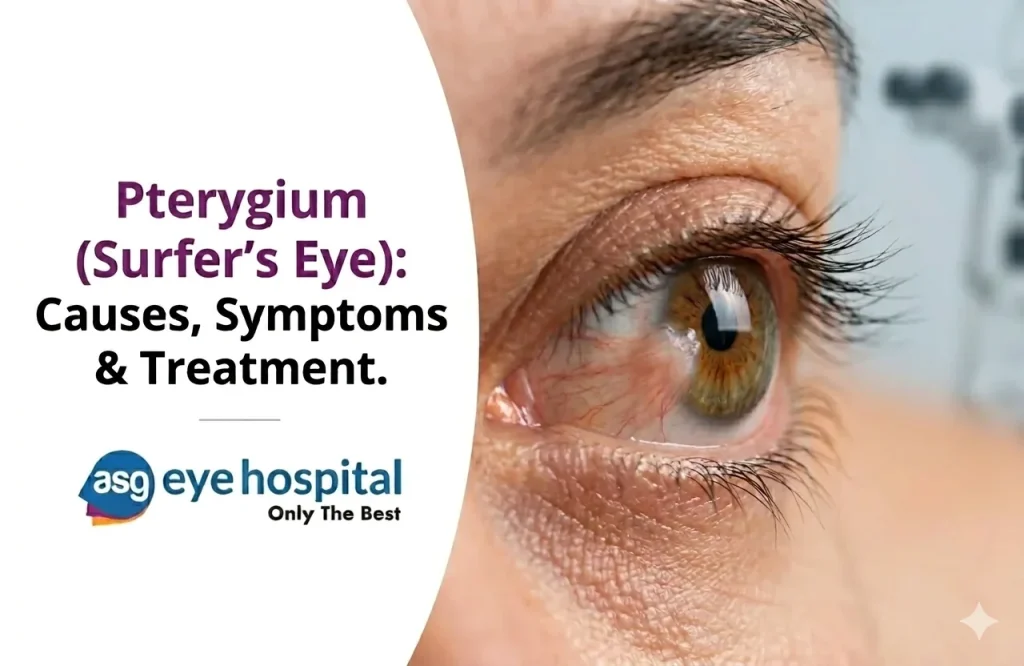
Pterygium (Surfer’s Eye): Causes, Symptoms & Treatment

Pterygium, commonly known as Surfer’s Eye, is a non-cancerous growth that develops on the white part of the eye and can gradually extend onto the cornea. It may start as a small, harmless patch but can grow over time and affect vision if left untreated.

This condition is more common in people exposed to sunlight, dust, and dry environments especially those working outdoors.

What is Pterygium?

Pterygium is a wedge-shaped growth of tissue on the conjunctiva (the clear layer covering the white of the eye). Over time, it may spread toward the cornea and distort vision.

It usually appears near the inner corner of the eye and may affect one or both eyes.

Causes of Pterygium

The primary causes of pterygium include:

  • Long-term exposure to UV (ultraviolet) rays
  • Dust, wind, and dry environmental conditions
  • Chronic eye irritation
  • Outdoor work without eye protection

People living in sunny or tropical regions are at higher risk of developing this condition.

Symptoms of Pterygium

In the early stages, symptoms may be mild or unnoticeable. As it progresses, you may experience:

  • Redness in the eye
  • Dryness and irritation
  • Gritty or burning sensation
  • Visible fleshy growth on the eye
  • Blurred vision (in advanced stages)
  • Sensitivity to light

If the growth extends onto the cornea, it can lead to astigmatism and vision problems.

Stages of Pterygium

Pterygium develops gradually in stages:

  1. Early Stage – Small growth with mild irritation
  2. Progressive Stage – Growth increases with discomfort
  3. Corneal Involvement – Vision begins to blur
  4. Advanced Stage – Growth affects vision significantly

Diagnosis of Pterygium

An eye specialist can diagnose pterygium through:

  • Eye examination
  • Slit-lamp test
  • Vision assessment

These tests help determine the severity and need for treatment.

Treatment of Pterygium

Treatment depends on the severity of the condition:

1. Non-Surgical Treatment

  • Lubricating eye drops
  • Anti-inflammatory medications
  • UV protection (sunglasses)

These help manage symptoms but do not remove the growth.

2. Surgical Treatment

Surgery is recommended when:

  • Vision is affected
  • Growth becomes large
  • Frequent irritation occurs

Modern surgery involves removing the growth and placing a tissue graft to reduce recurrence and improve cosmetic appearance.

Prevention Tips

You can reduce the risk of pterygium by:

  • Wearing UV-protected sunglasses
  • Avoiding dust and dry environments
  • Using artificial tears
  • Protecting eyes during outdoor activities

When to See a Doctor?

Consult an eye specialist if you notice:

  • Persistent redness
  • Eye irritation
  • Growth on the eye surface
  • Blurred or distorted vision

Early treatment can prevent complications.

Conclusion

Pterygium is a common eye condition caused mainly by environmental exposure. While it may start as a minor issue, timely diagnosis and proper treatment can prevent vision problems. Advanced surgical techniques make treatment safe and effective.

For expert care and advanced treatment options, visit ASG Eye Hospital.

FAQs (Frequently Asked Questions)

1. What is pterygium in the eye?

Pterygium is a non-cancerous tissue growth on the white part of the eye that may extend onto the cornea.

2. What causes pterygium?

The main causes include prolonged UV exposure, dust, wind, and dry environmental conditions.

3. Is pterygium dangerous?

Pterygium is usually not dangerous but can affect vision if it grows over the cornea.

4. Can pterygium go away without surgery?

No, it does not go away on its own. Eye drops can reduce symptoms, but surgery is required to remove it.

5. When is pterygium surgery needed?

Surgery is needed when vision is affected, growth increases, or irritation becomes severe.

6. Is pterygium surgery safe?

Yes, it is a safe and commonly performed procedure with modern techniques reducing recurrence risk.

7. How long does recovery take after surgery?

Recovery usually takes 1–2 weeks, depending on the individual and procedure.

8. Can pterygium come back after surgery?

Yes, but advanced surgical techniques and proper care significantly reduce recurrence chances.

9. How can I prevent pterygium?

Wear UV sunglasses, avoid dust exposure, and use lubricating eye drops regularly.

10. What are early signs of pterygium?

Early signs include redness, irritation, and a small growth on the white part of the eye.
Overview

Job Title: Consultant Ophthalmologist

Location: Pan India
Job Category: Medical Healthcare

Work Employment:  Full time

What you work:

  • Diagnose and treat patients with a focus on Ophthalmologist.
  • Collaborate with senior doctors and multidisciplinary teams.
  • Ensure patient-centric care and follow clinical protocols.
  • Contribute to research, training, or hospital initiatives (if applicable).

Mandatory skills:

  • Relevant medical degree / certification.
  • Strong knowledge of ophthalmology practices / healthcare protocols.
  • Excellent communication and patient-handling skills.
  • Ability to work in fast-paced healthcare environments.

Preferred Qualifications:

  • Experience: 3 to 6 years of experience
  • Prior experience in eye care / multi-speciality hospitals.
  • Fellowship or advanced training in Ophthalmologist.
  • Familiarity with advanced diagnostic tools and surgical techniques.
  • Passion for innovation, patient care, and continuous learning.

Apply For This Positions

This will close in 0 seconds

Overview

Job Title: Optometrist

Location: Amritsar, Punjab 

Job Category: Optometry

Work Employment:  Full time

What you work:

  • Conduct comprehensive eye examinations and vision assessments for patients of all ages.
  • Prescribe and fit spectacles, contact lenses, and low-vision aids.
  • Perform diagnostic tests including refraction, tonometry, perimetry, and OCT imaging.
  • Support consultant ophthalmologists in pre-operative and post-operative patient workups.
  • Counsel patients on eye care, lens hygiene, and follow-up schedules.
  • Maintain accurate clinical records and adhere to hospital protocols.

Mandatory skills:

  • Bachelor’s or Master’s degree in Optometry (B.Optom / M.Optom) from a recognised institution.
  • Valid registration with the relevant state or national optometry council.
  • Proficiency in refraction, slit-lamp examination, and contact lens fitting.
  • Working knowledge of autorefractors, tonometers, fundus cameras, and OCT equipment.
  • Strong communication skills in English, Hindi, and Punjabi.
  • Ability to manage high patient volumes in a fast-paced clinical setting.

Preferred Qualifications:

  • Experience: 1 to 5 years of clinical optometry experience.
  • Prior experience in an eye care or multi-speciality hospital in Punjab.
  • Exposure to paediatric optometry, binocular vision, or low-vision rehabilitation.
  • Familiarity with advanced diagnostic imaging and dry-eye management.
  • Passion for patient care, community eye-health camps, and continuous learning.

Apply For This Positions

This will close in 0 seconds

Overview

Job Title: Optical In-charge 

Location: Panjim, Goa / Mumbai-Worli (Lower Parel) 

Job Category: Optical

Work Employment:  Full time

What you work:

  • Manage day-to-day operations of the optical outlet, including sales, dispensing, and inventory.
  • Guide customers on frame selection, lens options, and coatings based on their prescription and lifestyle.
  • Take accurate frame measurements and ensure precise fitting, adjustments, and after-sales service.
  • Drive optical sales targets and monitor daily, weekly, and monthly business performance.
  • Maintain optimum stock levels, coordinate with vendors, and control shrinkage through periodic audits.
  • Supervise and train optical staff on product knowledge, dispensing standards, and customer service.
  • Coordinate with optometrists and consultants to ensure smooth prescription-to-delivery flow.
  • Ensure visual merchandising, display hygiene, and adherence to brand and hospital standards.

Mandatory skills:

  • Diploma or Bachelor’s degree in Optometry (D.Optom / B.Optom) or equivalent optical dispensing qualification.
  • Minimum 3 years of experience in optical supervisory or in-charge role.
  • Sound knowledge of lens types, coatings, frame materials, and dispensing principles.
  • Hands-on experience with edging, fitting, and basic optical workshop equipment.
  • Proven ability to achieve sales targets and manage inventory and billing systems.
  • Strong communication and interpersonal skills in English, Hindi, and Konkani or Marathi.
  • Working knowledge of POS / retail software and MS Office.

Preferred Qualifications:

  • Experience: 3 to 7 years in optical retail or an eye care hospital optical division.
  • Prior experience managing an optical outlet in Goa or the western region.
  • Exposure to premium and progressive lens brands and specialty eyewear.
  • Familiarity with contact lens dispensing and after-care support.
  • Team leadership, customer relationship management, and continuous learning mindset.

Apply For This Positions

This will close in 0 seconds

Overview

Job Title: Optometrist

Location: Pan India 


Job Category: Optometry

Work Employment:  Full time

What you work:

  • Conduct comprehensive eye examinations and vision assessments for patients of all ages.
  • Prescribe and fit spectacles, contact lenses, and low-vision aids.
  • Perform diagnostic tests including refraction, tonometry, perimetry, and OCT imaging.
  • Support consultant ophthalmologists in pre-operative and post-operative patient workups.
  • Counsel patients on eye care, lens hygiene, and follow-up schedules.
  • Maintain accurate clinical records and adhere to hospital protocols.

Mandatory skills:

  • Diploma / Bachelor’s or Master’s degree in Optometry (D.Optom / B.Optom / M.Optom) from a recognised institution.
  • Valid registration with the relevant state or national optometry council.
  • Proficiency in refraction, slit-lamp examination, and contact lens fitting.
  • Working knowledge of autorefractors, tonometers, fundus cameras, and OCT equipment.
  • Ability to manage high patient volumes in a fast-paced clinical setting.

Preferred Qualifications:

  • Experience: 1 to 5 years of clinical optometry experience.
  • Exposure to paediatric optometry, binocular vision, or low-vision rehabilitation.
  • Passion for patient care, community eye-health camps, and continuous learning.

Apply For This Positions

This will close in 20 seconds