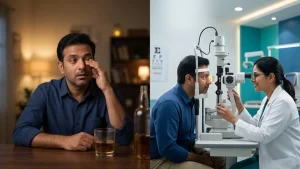
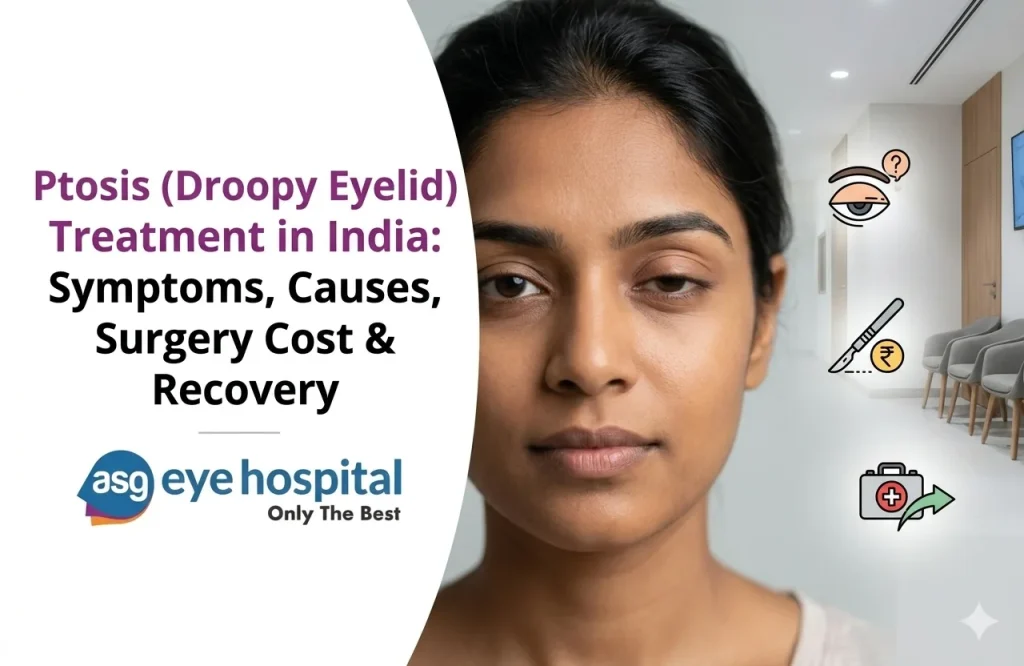
Do your eyes often look tired or sleepy even after proper rest? If one or both of your eyelids appear to droop, you may be suffering from Ptosis (Droopy Eyelid) — a condition that can affect both your appearance and vision.
Ptosis is not just a cosmetic issue. In many cases, it can block vision and interfere with daily activities like reading, driving, or using digital screens. The good news is that ptosis treatment is highly effective, especially with advanced ptosis surgery in India.
What is Ptosis (Droopy Eyelid)?
Ptosis refers to the drooping of the upper eyelid due to weakness or dysfunction of the levator muscle, which is responsible for lifting the eyelid.
It can affect:
- One eye (unilateral ptosis)
- Both eyes (bilateral ptosis)
In severe cases, the eyelid may cover the pupil, leading to blurred or obstructed vision.
Types of Ptosis
1. Congenital Ptosis
- Present at birth
- Caused by improper development of the eyelid muscle
- May affect a child’s vision development if untreated
2. Acquired Ptosis
Develops later in life due to:
- Aging (most common)
- Eye injury or trauma
- Long-term contact lens use
- Previous eye surgeries
Ptosis Symptoms: How to Identify Droopy Eyelid
Early diagnosis helps in better treatment outcomes. Common ptosis symptoms include:
- Drooping of one or both eyelids
- Difficulty keeping eyes open
- Blocked or reduced vision
- Frequent eyebrow lifting to see clearly
- Head tilting backward (chin-up posture)
- Eye strain and fatigue
- Uneven eye appearance in photos
Causes of Ptosis (Droopy Eyelid)
The most common cause is Aponeurotic Ptosis, where the eyelid muscle tendon stretches due to aging.
Other causes include:
- Neurological disorders affecting eye muscles
- Muscle weakness conditions like Myasthenia Gravis
- Eye injuries or trauma
- Eyelid tumors
- Nerve damage
- Complications after eye surgery
Droopy Eyelid Treatment Options
Treatment depends on severity:
Non-Surgical Treatment
- Glasses with ptosis crutches (temporary support)
- Used only in mild or specific cases
Surgical Treatment (Permanent Solution)
Ptosis surgery is the most effective and long-lasting solution.
Ptosis Surgery in India: Advanced Techniques
1. Levator Advancement Surgery
- Tightens the eyelid muscle
- Most commonly used procedure
- Ideal for age-related ptosis
2. Mullerectomy (Scarless Surgery)
- Performed from inside the eyelid
- No visible scar
- Best for mild ptosis cases
3. Frontalis Sling Surgery
- Used in severe ptosis
- Connects eyelid to forehead muscle
- Helps lift eyelid using forehead movement
Ptosis Surgery Cost in India
The ptosis surgery cost in India is affordable compared to global standards.
Average Cost:
👉 ₹25,000 to ₹55,000 per eyelid
Factors Affecting Cost:
- Severity of ptosis
- Surgical technique used
- Surgeon’s expertise
- Hospital infrastructure
- Type of anesthesia
- Functional vs cosmetic surgery
Ptosis Surgery Recovery Time
Recovery is usually quick and smooth.
- Surgery Duration: 30–60 minutes
- Hospital Stay: Same-day discharge
- Initial Recovery: 7–14 days
- Final Results: 4–6 weeks
Post-Surgery Care:
- Avoid rubbing eyes
- Use prescribed eye drops
- Limit screen time initially
- Follow doctor’s instructions carefully
Benefits of Ptosis Eye Surgery
- Improved vision
- Better eye symmetry
- Enhanced facial appearance
- Increased confidence
- Long-lasting results
Why Choose Expert Care for Ptosis Treatment?
Choosing an experienced eye hospital ensures:
- Accurate diagnosis
- Advanced surgical techniques
- Safe procedure
- Better outcomes
At ASG Eye Hospitals, ptosis treatment is performed by experienced oculoplasty specialists using modern technology and personalized care.
FAQs on Ptosis (Droopy Eyelid) Treatment
1. What is the main cause of ptosis?
The most common cause is aging, which weakens the eyelid muscle over time.
2. Is ptosis surgery painful?
No, the surgery is performed under local anesthesia and is generally painless.
3. How long does ptosis surgery take?
It usually takes about 30 to 60 minutes.
4. Is ptosis surgery permanent?
Yes, in most cases, the results are long-lasting, especially when performed by experienced surgeons.
5. What is the recovery time after ptosis surgery?
Initial recovery takes about 1–2 weeks, while full results are visible in 4–6 weeks.
6. Can droopy eyelids be treated without surgery?
Mild cases may be managed temporarily, but surgery is the only permanent solution.
Conclusion: Restore Your Vision & Confidence
A droopy eyelid can impact both your vision and confidence. With advanced ptosis treatment surgery in India, you can achieve clear vision and a more youthful appearance.
👉 Don’t ignore the symptoms. Early treatment can prevent complications.
Book your consultation today at ASG Eye Hospitals and get a personalized ptosis treatment plan from expert surgeons.
Quick Summary Table
| Feature | Details |
|---|---|
| Condition | Ptosis (Droopy Eyelid) |
| Main Symptom | Drooping eyelid, vision blockage |
| Treatment | Ptosis Surgery |
| Recovery Time | 1–2 weeks |
| Surgery Cost | ₹25,000 – ₹55,000 per eye |
Also read : Ptosis Treatment