
Diabetes has a way of damaging things silently before the patient realises damage is happening. The kidneys. The nerves in the feet. Additionally, light is turned into messages that the brain processes as vision by the retina, a tiny layer of tissue at the back of the eye. In a place like Patna, where diabetes rates have been gradually rising over the past ten years, the need for a trained retina specialist Patna has never been greater. Diabetic retinopathy is the largest cause of preventable blindness among working-age people in India.
The problem is that the majority of patients are unaware that they require one until their vision loss has already started.
What Is Retina Treatment?
Retina treatment focuses on diagnosing and managing diseases affecting the retina, the light-sensitive tissue at the back of the eye. Common retinal conditions include diabetic retinopathy, retinal detachment, macular degeneration, and retinal vein occlusion. Early diagnosis through retinal imaging and timely treatment can help prevent permanent vision loss.
The Retina Problem That Gives No Warning
Retina conditions are unusual in eye health because they frequently progress without any pain, redness, or obvious discomfort. A patient with early diabetic retinopathy may see perfectly well during a routine check. The eye problems happening at the back of the eye are invisible to the patient and invisible to a basic eye examination that does not include retinal imaging.
By the time vision blurs, floaters multiply, or a dark curtain appears across part of the visual field, the eye treatment required is considerably more involved than what early-stage intervention would have needed. This is the reality that every eye doctor dealing with retina cases manages repeatedly — patients who arrived six months or a year too late because nothing told them to come sooner.
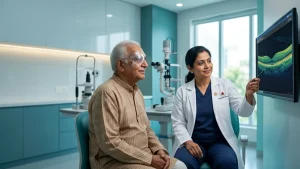
For those with diabetes, hypertension, or a family history of eye disease, a regular dilated retinal screening is not an unnecessary safeguard. It is the only reliable way to catch these conditions at a stage where eye care can make a meaningful difference.
Common Retina Conditions
| Retina Condition | Common Symptoms |
|---|---|
| Diabetic Retinopathy | Blurred vision, floaters |
| Retinal Detachment | Curtain-like shadow, flashes |
| Macular Degeneration | Distorted central vision |
| Retinal Vein Occlusion | Sudden vision loss |
| Macular Edema | Swollen blurry central vision |
| Retinal Tear | Floaters and flashes |
| Epiretinal Membrane | Distorted or wavy vision |
| Vitreous Hemorrhage | Dark spots or vision blockage |
What Diabetic Retina Treatment Patna Actually Involves
Diabetic retina treatment Patna has evolved considerably with improvements in retinal eye technology available at specialist centres. The entire course of treatment is determined by the level and type of participation discovered during review.
Early diabetes retinopathy may not need to be treated right away, but if leaking blood vessels start threatening the macula, the core area of vision, it will require controlled blood sugar, frequent tracking, and anti-VEGF shots. To treat macular oedema, a disorder where fluid accumulates and impairs central vision, a skilled eye surgeon administers intravitreal injections under hygienic settings.
Laser photocoagulation is required to close the aberrant vessels and stop future growth in advanced proliferative diabetic retinopathy, a disease in which abnormal new blood vessels form across the retina and vitreous. Vitreoretinal surgery is needed when the retina cracks or the vitreous fills with blood.
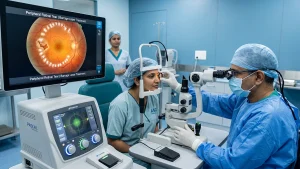
The eye specialist performing this test must be skilled in retinal imaging, optical coherence tomography for macula evaluation, and fluorescein angiography for vascular mapping. This is the eye technology infrastructure that separates a comprehensive retina centre from a general eye clinic.
Beyond Diabetes — Other Retinal Conditions Requiring Specialist Attention
Although ASG Eye Hospital’s retina specialist Patna treats a wider spectrum of diseases, diabetic retina therapy Patna accounts for the majority of retinal patients. Anti-VEGF shots must be given over a long period of time to treat age-related macular degeneration, which affects central vision in older people. In order to maintain vision, the retina must be carefully reattached within hours to days when it physically breaks from the surrounding tissue, which is a real eye emergency.
A well-equipped eye hospital must be able to spot and treat a variety of retinal eye health problems, including retinal vein occlusions, macular holes, epiretinal membranes, and genetic diseases like retinitis pigmentosa. Eye problems of this scale require the knowledge of an eye surgeon with subspeciality training in vitreoretinal operations, not a general ophthalmologist treating random retinal cases.
Retina Treatment Options
| Treatment | Purpose |
|---|---|
| Anti-VEGF Injections | Reduce retinal swelling |
| Laser Photocoagulation | Seal abnormal blood vessels |
| Vitrectomy Surgery | Remove blood or scar tissue |
| Retinal Detachment Surgery | Reattach retina |
| OCT Imaging | Detect retinal damage early |
| Fluorescein Angiography | Map retinal blood vessels |
ASG Eye Hospital and Retinal Care in Patna
ASG Eye Hospital provides retina specialist Patna services within a facility that carries the diagnostic and surgical infrastructure these cases require. The eye care pathway for retinal patients at ASG begins with a comprehensive dilated fundus examination, moves through imaging and OCT where indicated, and leads to an eye treatment plan presented clearly before any intervention is scheduled.
For patients who have been managing diabetes for several years without a retinal check, or for anyone who has noticed floaters, flashing lights, or sudden visual changes, the eye doctor at ASG Eye Hospital is the right first call. These symptoms are not always serious. But the ones that are serious do not give second chances.
Eye health at the retinal level rewards the patient who comes early and penalises the one who waits.
FAQ Section
1. What are common symptoms of retina problems?
Blurred vision, floaters, flashes of light, dark spots, distorted vision, and sudden vision loss are common retina-related symptoms.
2. What is diabetic retinopathy?
Diabetic retinopathy is a diabetes-related eye disease that damages retinal blood vessels and may lead to blindness if untreated.
3. When should I visit a retina specialist?
Consult a retina specialist immediately if you notice sudden vision changes, flashes, floaters, or difficulty seeing clearly.
4. Can retinal diseases cause permanent vision loss?
Yes. Delayed treatment of retinal conditions may result in irreversible vision damage.
5. What treatments are available for retinal diseases?
Treatment options include anti-VEGF injections, laser therapy, retinal surgery, and advanced vitreoretinal procedures.
6. Is retina surgery safe?
Modern retina surgeries are highly advanced and generally safe when performed by experienced retina specialists.
7. How often should diabetic patients get retina checkups?
People with diabetes should undergo a comprehensive retinal examination at least once a year.
8. What is OCT in retina treatment?
Optical Coherence Tomography (OCT) is an advanced retinal imaging test used to detect swelling, macular problems, and retinal damage.