ASG Eye Hospital

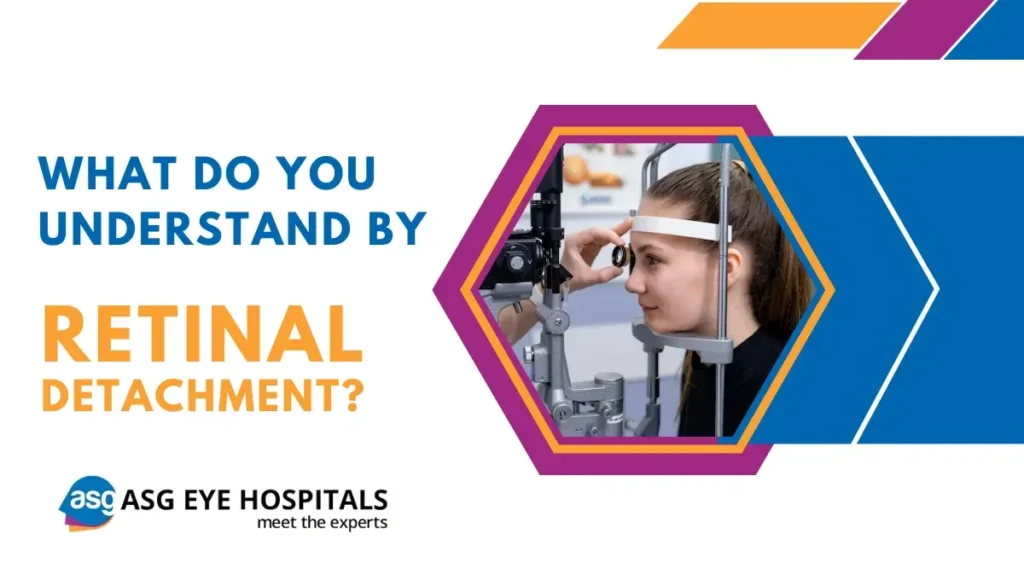
Retinal Detachment: Unveiling Signs and Symptoms

Our eyes are like tiny cameras, capturing the world around us and allowing us to experience the beauty of life. But just like any important gadget, sometimes things can go wrong. One serious issue that can happen is called retinal detachment. It’s like the wallpaper at the back of our eye peeling off, and if not fixed fast, it can mess with our vision. In this blog, we’re going to talk about how to spot the signs of retinal detachment and what to do if it happens.


What is Retinal Detachment:


Okay, let’s imagine our eye is like a sandwich. At the back, there’s something called the retina. It’s a thin layer that’s super important for our vision. Now, retinal detachment is like when the lettuce in our sandwich decides it doesn’t want to stay in its place.


There are 3 Main Types of Retinal Detachment


  • Rhegmatogenous Detachment: This is the most common type, occurring when a tear or hole develops in the retina, allowing fluid to accumulate underneath and lifting the retina.
  • Tractional Detachment: Scar tissue on the retina’s surface causes it to contract, pulling away from the underlying layers.
  • Exudative Detachment: Fluid accumulates beneath the retina without a tear or hole, often due to inflammation or injury.


Signs and Symptoms


  • Alright, now let’s talk about how we can tell if, our retina is having issues. Look out for these signs:
  • Floaters: Sudden appearance of floaters—tiny specks or cobweb-like structures—in the field of vision.
  • Flashes of Light: Seeing sudden flashes of light, especially in peripheral vision.
  • Blurry Vision: Gradual or sudden loss of peripheral vision, leading to a blurred or distorted central vision.
  • Shadow or Curtain Effect: Picture a curtain slowly coming down on one side of your vision. If you feel like there’s a shadow or something blocking part of what you see, it’s time to pay attention.


Who is at Risk for Retinal Detachment?


Retinal detachment can happen to anyone, but certain factors may increase the risk of experiencing this serious eye condition. It’s essential to be aware of these risk factors to monitor your eye health more closely. Here are some factors that may put individuals at a higher risk for retinal detachment Surgery:


  • Age: Risk increases after 40.
  • Previous Detachment or Surgery: Increases risk, especially if occurred in one eye.
  • Nearsightedness: Severe myopia raises the risk.
  • Family History: Genetic factors may contribute.
  • Eye Injuries: Trauma to the eye can lead to detachment.
  • Eye Diseases and Conditions: Conditions like lattice degeneration or uveitis elevate risk.
  • Eye Procedures: Some surgeries may slightly increase risk.
  • Other Health Conditions: Diabetes and inflammatory disorders may be contributing factors.
  • Genetic Predisposition: Some individuals may have a genetic predisposition


Emergency Response


If you notice any of these signs, it’s time to act fast. Here’s what you should do:


  • Seek Immediate Medical Attention: Contact an eye specialist in india or visit the emergency room promptly. Time is of the essence in preserving vision.
  • Avoid Rubbing Your Eyes: Rubbing your eyes can worsen the detachment or lead to additional tears.
  • Minimize Head Movement: Keep your head in a neutral position. Sudden head movements may exacerbate the detachment.
  • Cover the Eye: If only one eye is affected, cover the unaffected eye with a clean cloth to prevent unnecessary movement.
  • Do Not Self-Medicate: avoid using over-the-counter eye drops or attempting any home remedies. Only a qualified eye care professional can provide appropriate treatment.


Treatment Options


The treatment for retinal detachment depends on its severity and type. Common interventions include:

  • Pneumatic Retinopexy: Injection of a gas bubble into the eye to push the retina back into place.
  • Scleral Buckling: Placing a small band around the eye to counteract the force pulling the retina away.
  • Vitrectomy: Removal of the vitreous gel to repair the detachment.


Conclusion


Retinal detachment is a serious eye emergency that demands immediate attention. Recognizing the signs and responding promptly can significantly improve the chances of preserving vision. Regular eye check-ups, especially for those at higher risk, such as individuals with a history of eye trauma or certain eye conditions, play a crucial role in early detection. Remember, when it comes to retinal detachment, time is of the essence, and swift action can make all the difference in protecting your sight.

Overview

Job Title: Consultant Ophthalmologist

Location: Pan India
Job Category: Medical Healthcare

Work Employment:  Full time

What you work:

  • Diagnose and treat patients with a focus on Ophthalmologist.
  • Collaborate with senior doctors and multidisciplinary teams.
  • Ensure patient-centric care and follow clinical protocols.
  • Contribute to research, training, or hospital initiatives (if applicable).

Mandatory skills:

  • Relevant medical degree / certification.
  • Strong knowledge of ophthalmology practices / healthcare protocols.
  • Excellent communication and patient-handling skills.
  • Ability to work in fast-paced healthcare environments.

Preferred Qualifications:

  • Experience: 3 to 6 years of experience
  • Prior experience in eye care / multi-speciality hospitals.
  • Fellowship or advanced training in Ophthalmologist.
  • Familiarity with advanced diagnostic tools and surgical techniques.
  • Passion for innovation, patient care, and continuous learning.

Apply For This Positions

This will close in 0 seconds

Overview

Job Title: Optometrist

Location: Amritsar, Punjab 

Job Category: Optometry

Work Employment:  Full time

What you work:

  • Conduct comprehensive eye examinations and vision assessments for patients of all ages.
  • Prescribe and fit spectacles, contact lenses, and low-vision aids.
  • Perform diagnostic tests including refraction, tonometry, perimetry, and OCT imaging.
  • Support consultant ophthalmologists in pre-operative and post-operative patient workups.
  • Counsel patients on eye care, lens hygiene, and follow-up schedules.
  • Maintain accurate clinical records and adhere to hospital protocols.

Mandatory skills:

  • Bachelor’s or Master’s degree in Optometry (B.Optom / M.Optom) from a recognised institution.
  • Valid registration with the relevant state or national optometry council.
  • Proficiency in refraction, slit-lamp examination, and contact lens fitting.
  • Working knowledge of autorefractors, tonometers, fundus cameras, and OCT equipment.
  • Strong communication skills in English, Hindi, and Punjabi.
  • Ability to manage high patient volumes in a fast-paced clinical setting.

Preferred Qualifications:

  • Experience: 1 to 5 years of clinical optometry experience.
  • Prior experience in an eye care or multi-speciality hospital in Punjab.
  • Exposure to paediatric optometry, binocular vision, or low-vision rehabilitation.
  • Familiarity with advanced diagnostic imaging and dry-eye management.
  • Passion for patient care, community eye-health camps, and continuous learning.

Apply For This Positions

This will close in 0 seconds

Overview

Job Title: Optical In-charge 

Location: Panjim, Goa / Mumbai-Worli (Lower Parel) 

Job Category: Optical

Work Employment:  Full time

What you work:

  • Manage day-to-day operations of the optical outlet, including sales, dispensing, and inventory.
  • Guide customers on frame selection, lens options, and coatings based on their prescription and lifestyle.
  • Take accurate frame measurements and ensure precise fitting, adjustments, and after-sales service.
  • Drive optical sales targets and monitor daily, weekly, and monthly business performance.
  • Maintain optimum stock levels, coordinate with vendors, and control shrinkage through periodic audits.
  • Supervise and train optical staff on product knowledge, dispensing standards, and customer service.
  • Coordinate with optometrists and consultants to ensure smooth prescription-to-delivery flow.
  • Ensure visual merchandising, display hygiene, and adherence to brand and hospital standards.

Mandatory skills:

  • Diploma or Bachelor’s degree in Optometry (D.Optom / B.Optom) or equivalent optical dispensing qualification.
  • Minimum 3 years of experience in optical supervisory or in-charge role.
  • Sound knowledge of lens types, coatings, frame materials, and dispensing principles.
  • Hands-on experience with edging, fitting, and basic optical workshop equipment.
  • Proven ability to achieve sales targets and manage inventory and billing systems.
  • Strong communication and interpersonal skills in English, Hindi, and Konkani or Marathi.
  • Working knowledge of POS / retail software and MS Office.

Preferred Qualifications:

  • Experience: 3 to 7 years in optical retail or an eye care hospital optical division.
  • Prior experience managing an optical outlet in Goa or the western region.
  • Exposure to premium and progressive lens brands and specialty eyewear.
  • Familiarity with contact lens dispensing and after-care support.
  • Team leadership, customer relationship management, and continuous learning mindset.

Apply For This Positions

This will close in 0 seconds

Overview

Job Title: Optometrist

Location: Pan India 


Job Category: Optometry

Work Employment:  Full time

What you work:

  • Conduct comprehensive eye examinations and vision assessments for patients of all ages.
  • Prescribe and fit spectacles, contact lenses, and low-vision aids.
  • Perform diagnostic tests including refraction, tonometry, perimetry, and OCT imaging.
  • Support consultant ophthalmologists in pre-operative and post-operative patient workups.
  • Counsel patients on eye care, lens hygiene, and follow-up schedules.
  • Maintain accurate clinical records and adhere to hospital protocols.

Mandatory skills:

  • Diploma / Bachelor’s or Master’s degree in Optometry (D.Optom / B.Optom / M.Optom) from a recognised institution.
  • Valid registration with the relevant state or national optometry council.
  • Proficiency in refraction, slit-lamp examination, and contact lens fitting.
  • Working knowledge of autorefractors, tonometers, fundus cameras, and OCT equipment.
  • Ability to manage high patient volumes in a fast-paced clinical setting.

Preferred Qualifications:

  • Experience: 1 to 5 years of clinical optometry experience.
  • Exposure to paediatric optometry, binocular vision, or low-vision rehabilitation.
  • Passion for patient care, community eye-health camps, and continuous learning.

Apply For This Positions

This will close in 20 seconds