When patients see the term symblepharon they may not be familiar with it. Also this condition does play a role in eye comfort, eyelid movement, and in some cases vision if not treated. While this is an atypical issue, symblepharon may present after eye injury, severe infection, burns, surgeries, or as a result of chronic inflammatory conditions which affect the eye’s surface.
On the bright side early diagnosis and appropriate care may help to avoid long term issues. By learning about symblepharon, what causes it, what the symptoms are, and what the treatments are you take a great step in protecting your eye health.
What Is Symblepharon?
Symblepharon is a medical issue where abnormal connections form between the inner surface of the eyelid (palpebral conjunctiva) and the external surface of the eye (bulbar conjunctiva).
In other words at times tissues that are meant to move independently do not and end up attaching to each other. A symblepharon eye may present as full or partial adhesion and which in turn will in large part impair normal eye movement and cause discomfort.
As the issue ranges in severity it affects blink reflex, tear distribution, lid functions and vision. In mild cases patients may see some irritation or a pulling sensation. In severe cases this can result in great damage to the eye surface and visual impairment.
What Causes Symblepharon?
Several conditions can lead to the development of symblepharon.
Chemical Burns
Chemical injuries are a large group which cause symblepharon. With alkali burns in particular we see severe conjunctival and ocular surface damage which in turn leads to scarring.
Thermal Burns
Heat related damage to tissues may cause symblepharon during healing.
Severe Eye Infections
Certain infections of the ocular surface which in turn cause inflammation and scarring play a role in symblepharon formation.
Autoimmune Diseases
Conditions which present with ocular cicatricial pemphigoid and Stevens-Johnson syndrome are known to cause chronic inflammation which in turn may result in symblepharon.
Previous Eye Surgery
In some reports we see that in large extent eye surgery and repeat procedures may cause scarring and also the development of symblepharon.
Trauma
Physical trauma to the conjunctiva may cause abnormal healing which in turn produces symblepharon.
Symptoms of Symblepharon
Symptoms of symblepharon may present in a variable degree based on which the eyelid and eye surface are affected.
Common symptoms include:
- Persistent eye irritation
- Foreign body sensation
- Dryness and discomfort
- Redness of the eye
- Difficulty moving the eye normally
- Restricted eyelid movement
- Excessive tearing
- Blurred vision
- Sensitivity to light
- Chronic inflammation
A patient that has symblepharon may also report a continuous sensation of something pulling at the eye which in particular may be noticed during blinks.
How Does Symblepharon Affect Vision?
Not in every case do we see vision affected by symblepharon. To be sure advanced symblepharon does play a role in altering the tear film, damaging the cornea and restricting normal eye movement.
Also when symblepharon does extend to the cornea it may cause:
- Corneal scarring
- Irregular astigmatism
- Persistent epithelial defects
- Chronic inflammation
- Reduced visual quality
This is that proper evaluation by a cornea specialist at the onset of symptoms is of great import.
How Is Symblepharon Diagnosed?
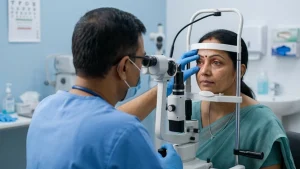
Diagnosis of symblepharon usually at the start is a detailed eye exam.
In the evaluation which may take some time the ophthalmologist looks at:
- Extent of conjunctival adhesion
- Ocular surface health
- Corneal involvement
- Eyelid movement
- Tear film stability
- Underlying inflammatory conditions
In some reports it is recommended that in certain cases we perform additional imaging and evaluation of the ocular surface to determine the extent of the symblepharon which in turn guides treatment planning.
Advanced Treatment Options for Symblepharon
Treatment is based on the cause, severity, and which tissues are affected.
Lubrication and Medical Management
For which is classified as mild symblepharon the use of eye drops which are lubricating in nature and anti-inflammatory medications may help to improve comfort and reduce ongoing inflammation.
Managing the Underlying Disease
If symblepharon is related to an autoimmune disease then treatment of that base condition is a priority.
Surgical Treatment
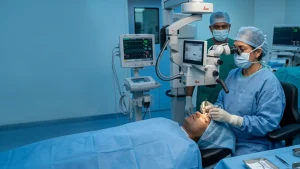
Moder in to severe symblepharon may need to be treated surgically.
Surgery may involve:
- Release of scar tissue
- Reconstruction of the conjunctival surface
- Amniotic membrane transplantation
- Conjunctival grafting
- Ocular surface rehabilitation
The aim is to restore normal anatomy, to improve comfort, and to prevent symblepharon recurrence.
Amniotic Membrane Transplantation
One in which advanced eye treatment for symblepharon is concerned we see the use of amniotic membrane grafts. These living tissues also do well at reducing inflammation, supporting the healing process, and in the case of scarring, do very little of that.
Ocular Surface Reconstruction
In very serious symblepharon cases we may have to perform ocular surface reconstruction in an attempt at restoration of function and preservation of vision.
Can Symblepharon Return After Surgery?
Well it may in some cases which we see in practice and that is especially so when the underlying inflammatory issue is still present.
To reduce the risk of recurrence, patients may require:
- Regular follow-up visits
- Lubrication therapy
- Anti-inflammatory medications
- Ongoing management of autoimmune diseases
- Specialized ocular surface care
Early intervention generally provides the best long-term outcomes for symblepharon patients.
When Should You See an Eye Specialist?
You should seek medical attention if you experience:
- Persistent redness
- Chronic irritation
- Restricted eye movement
- Difficulty blinking
- Recurrent eye inflammation
- Vision changes after eye injury or surgery
A prompt evaluation by a cornea specialist can help identify symblepharon before it progresses to more serious complications.
Symblepharon Eye Care at ASG Eye Hospital
At ASG Eye Hospital we provide a team of experienced ophthalmologists that diagnose and treat complex ocular surface diseases which includes symblepharon.
We present a wide range of diagnostic services, advanced eye treatments and very specialized surgical options which we tailor to each patient’s needs. Our team works to preserve vision, improve comfort and restore ocular surface health in patients who developed their condition from injury, infection, surgery, or an autoimmune disease. For patients with a symblepharon eye we develop individualized treatment plans which we design to achieve the best results.
As a top eye hospital we have access to the latest in ocular surface reconstruction technologies and we provide that care from very trained specialists.
Key Takeaways
- Symblepharon is a condition that results from scar tissue which in turn causes abnormal adhesions between the eyelid and eyeball.
- In a symblepharon eye there may be irritation, dryness, restricted movement, and vision problems.
- Causes include chemical burns, infections, autoimmune diseases, surgery, and trauma.
- Early diagnosis is key in preventing complications and in preserving vision.
- For advanced care we see that surgical reconstruction does in fact work.
- Also for moderate to severe cases a consultation with a cornea specialist is very important.
Also Read : What Is Symblepharon & How Serious Is It for Your Eyes
Frequently Asked Questions
1. What is a symblepharon?
Symblepharon is a condition which sees the inner eyelid stick to the eye’s surface as a result of conjunctival scarring.
2. Is the symblepharon eye serious?
Yes. If not treated it will cause restriction of eye movement, affect how tears are distributed, damage the cornea and in turn impair vision.
3. What causes a symblepharon eye?
A symblepharon eye may present after chemical burns, trauma, severe infections, autoimmune disorders, or from previous eye surgery.
4. Can symblepharon eye be cured?
In many cases of symblepharon medical therapy and surgery bring about successful results although in the long term continuous follow up may be needed.
5. Is surgery always required for a symblepharon?
Not always. In mild cases of the condition treatment may include the use of medications and lubricants. In more advanced cases surgical intervention is put forth.
6. Which specialist treats symblepharon?
Cornea specialist or ocular surface specialist are the typical health professionals that will be involved in the diagnosis and treatment of symblepharon.
7. Can symblepharon affect vision permanently?
If the case is very severe and leads to corneal scarring or great damage to the ocular surface permanent vision loss may result without timely treatment.
References
- National Center for Biotechnology Information (NCBI) – Symblepharon and Ocular Surface Reconstruction
https://www.ncbi.nlm.nih.gov/books/NBK572075/ - National Eye Institute (NEI) – Eye Health Information
https://www.nei.nih.gov