ASG Eye Hospital

Understanding Glaucoma Treatment and Its Impact

Glaucoma is a progressive eye disease that damages the optic nerve, which is in charge of sending visual data to the brain. Elevated intraocular pressure (IOP) within the eye is the main cause of this injury. It’s important to remember that glaucoma can develop despite normal or low IOP. The disorder is the main cause of blindness in people over 60 since it can result in irreversible vision loss.


Recognizing the Symptoms of Glaucoma

Glaucoma symptoms vary depending on the type of glaucoma. Open-angle glaucoma. The most common type of glaucoma is open-angle glaucoma, which frequently shows only a gradual loss of vision. Regular eye exams with an ophthalmologist are essential to detect and treat glaucoma in its early stages due to this quiet progression.

In contrast, acute-angle closure glaucoma, also known as narrow-angle glaucoma, is a medical emergency. If you experience severe pain in the forehead or eye, nausea, vomiting, sudden vision disturbances, eye redness, blind spots, halos around lights, blurred vision, or peripheral vision loss, seek immediate medical attention. Glaucoma surgery may be recommended following diagnosis for urgent treatment in such cases.


Types of Glaucoma

Understanding the various types of glaucoma is essential:

  1. Open-Angle (Chronic) Glaucoma: This common form often progresses without noticeable symptoms until irreversible vision loss occurs.
  2. Angle-Closure (Acute) Glaucoma: Characterized by sudden, severe pressure increase, causing symptoms like pain, nausea, and blurred vision, requiring immediate medical attention.
  3. Congenital Glaucoma: Typically genetic, this type affects children and may cause cloudy eyes, excessive tearing, and light sensitivity.
  4. Secondary Glaucoma: Often a result of eye injury or other eye conditions, such as tumors or cataracts.
  5. Normal-Tension Glaucoma: Uncommonly, optic nerve damage occurs without elevated eye pressure.


Identifying Those at Risk

Age (particularly over 60), certain eye disorders, ethnicity (more prevalent in people of Asian origin), family history, and underlying medical issues including heart disease, diabetes, or high blood pressure are some variables that raise the risk of getting glaucoma.


Exploring Glaucoma Surgery

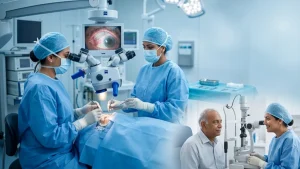
Glaucoma surgery plays a pivotal role in preventing further vision loss. The procedure aims to reduce intraocular pressure and stabilize vision. It typically involves creating a new drainage pathway for eye fluid or implanting a shunt to facilitate fluid drainage. While glaucoma surgery is generally safe and minimally painful, the specific approach and expected outcomes can vary based on the chosen procedure and individual patient circumstances.


Types of Glaucoma Surgery

Several types of glaucoma surgery exist:

  1. Trabeculectomy: This procedure involves creating a small surgical incision to enhance fluid drainage and lower intraocular pressure.
  2. Shunts or Implants: Surgical insertion of shunts or implants can replace damaged drainage mechanisms, reducing eye pressure.
  3. Glaucoma Valve Treatment: This advanced technique effectively lowers intraocular pressure and ensures proper aqueous outflow, making it a preferred option in challenging glaucoma cases.
  4. Glaucoma Laser Surgery: This minimally invasive procedure involves numbing the eye with drops, using a laser to facilitate fluid drainage, and usually allows for a quick return to daily activities.


Recovery After Glaucoma Surgery

After surgery, you can have temporary blurriness as well as discomfort, redness, tears, swelling, and the feeling that something is in your eye. During the first stage of healing, it’s typical to wear an eye shield or bandage. Although healing times can vary, a full recovery usually takes around a month.

Follow-up appointments with your eye doctor are essential for monitoring healing, adjusting medications, and ensuring a successful recovery. If you notice redness, swelling, increased pain, discharge, visual disturbances, or decreasing vision after surgery, contact your doctor promptly to address potential complications.


Precautions and Risks

To safeguard your eyes and reduce the risk of infection, avoid strenuous activities, eye rubbing, and certain activities like swimming and using hot tubs during the early recovery period. Additionally, depending on the sort of surgery you had, take any additional precautions your eye doctor advised.

While glaucoma surgery is generally safe, it carries some risks, including temporary vision disturbances, bleeding, infection, low eye pressure (hypotony), scarring, and accelerated cataract formation. These risks are manageable, and your doctor will provide guidance and care as needed.


At ASG Eye Hospitals, we’re dedicated to providing top-notch eye care solutions to people from all walks of life. Our glaucoma surgery procedures incorporate state-of-the-art equipment and the expertise of highly experienced doctors, ensuring the best possible outcomes for our patients.

Overview

Job Title: Consultant Ophthalmologist

Location: Pan India
Job Category: Medical Healthcare

Work Employment:  Full time

What you work:

  • Diagnose and treat patients with a focus on Ophthalmologist.
  • Collaborate with senior doctors and multidisciplinary teams.
  • Ensure patient-centric care and follow clinical protocols.
  • Contribute to research, training, or hospital initiatives (if applicable).

Mandatory skills:

  • Relevant medical degree / certification.
  • Strong knowledge of ophthalmology practices / healthcare protocols.
  • Excellent communication and patient-handling skills.
  • Ability to work in fast-paced healthcare environments.

Preferred Qualifications:

  • Experience: 3 to 6 years of experience
  • Prior experience in eye care / multi-speciality hospitals.
  • Fellowship or advanced training in Ophthalmologist.
  • Familiarity with advanced diagnostic tools and surgical techniques.
  • Passion for innovation, patient care, and continuous learning.

Apply For This Positions

This will close in 0 seconds

Overview

Job Title: Optometrist

Location: Amritsar, Punjab 

Job Category: Optometry

Work Employment:  Full time

What you work:

  • Conduct comprehensive eye examinations and vision assessments for patients of all ages.
  • Prescribe and fit spectacles, contact lenses, and low-vision aids.
  • Perform diagnostic tests including refraction, tonometry, perimetry, and OCT imaging.
  • Support consultant ophthalmologists in pre-operative and post-operative patient workups.
  • Counsel patients on eye care, lens hygiene, and follow-up schedules.
  • Maintain accurate clinical records and adhere to hospital protocols.

Mandatory skills:

  • Bachelor’s or Master’s degree in Optometry (B.Optom / M.Optom) from a recognised institution.
  • Valid registration with the relevant state or national optometry council.
  • Proficiency in refraction, slit-lamp examination, and contact lens fitting.
  • Working knowledge of autorefractors, tonometers, fundus cameras, and OCT equipment.
  • Strong communication skills in English, Hindi, and Punjabi.
  • Ability to manage high patient volumes in a fast-paced clinical setting.

Preferred Qualifications:

  • Experience: 1 to 5 years of clinical optometry experience.
  • Prior experience in an eye care or multi-speciality hospital in Punjab.
  • Exposure to paediatric optometry, binocular vision, or low-vision rehabilitation.
  • Familiarity with advanced diagnostic imaging and dry-eye management.
  • Passion for patient care, community eye-health camps, and continuous learning.

Apply For This Positions

This will close in 0 seconds

Overview

Job Title: Optical In-charge 

Location: Panjim, Goa / Mumbai-Worli (Lower Parel) 

Job Category: Optical

Work Employment:  Full time

What you work:

  • Manage day-to-day operations of the optical outlet, including sales, dispensing, and inventory.
  • Guide customers on frame selection, lens options, and coatings based on their prescription and lifestyle.
  • Take accurate frame measurements and ensure precise fitting, adjustments, and after-sales service.
  • Drive optical sales targets and monitor daily, weekly, and monthly business performance.
  • Maintain optimum stock levels, coordinate with vendors, and control shrinkage through periodic audits.
  • Supervise and train optical staff on product knowledge, dispensing standards, and customer service.
  • Coordinate with optometrists and consultants to ensure smooth prescription-to-delivery flow.
  • Ensure visual merchandising, display hygiene, and adherence to brand and hospital standards.

Mandatory skills:

  • Diploma or Bachelor’s degree in Optometry (D.Optom / B.Optom) or equivalent optical dispensing qualification.
  • Minimum 3 years of experience in optical supervisory or in-charge role.
  • Sound knowledge of lens types, coatings, frame materials, and dispensing principles.
  • Hands-on experience with edging, fitting, and basic optical workshop equipment.
  • Proven ability to achieve sales targets and manage inventory and billing systems.
  • Strong communication and interpersonal skills in English, Hindi, and Konkani or Marathi.
  • Working knowledge of POS / retail software and MS Office.

Preferred Qualifications:

  • Experience: 3 to 7 years in optical retail or an eye care hospital optical division.
  • Prior experience managing an optical outlet in Goa or the western region.
  • Exposure to premium and progressive lens brands and specialty eyewear.
  • Familiarity with contact lens dispensing and after-care support.
  • Team leadership, customer relationship management, and continuous learning mindset.

Apply For This Positions

This will close in 0 seconds

Overview

Job Title: Optometrist

Location: Pan India 


Job Category: Optometry

Work Employment:  Full time

What you work:

  • Conduct comprehensive eye examinations and vision assessments for patients of all ages.
  • Prescribe and fit spectacles, contact lenses, and low-vision aids.
  • Perform diagnostic tests including refraction, tonometry, perimetry, and OCT imaging.
  • Support consultant ophthalmologists in pre-operative and post-operative patient workups.
  • Counsel patients on eye care, lens hygiene, and follow-up schedules.
  • Maintain accurate clinical records and adhere to hospital protocols.

Mandatory skills:

  • Diploma / Bachelor’s or Master’s degree in Optometry (D.Optom / B.Optom / M.Optom) from a recognised institution.
  • Valid registration with the relevant state or national optometry council.
  • Proficiency in refraction, slit-lamp examination, and contact lens fitting.
  • Working knowledge of autorefractors, tonometers, fundus cameras, and OCT equipment.
  • Ability to manage high patient volumes in a fast-paced clinical setting.

Preferred Qualifications:

  • Experience: 1 to 5 years of clinical optometry experience.
  • Exposure to paediatric optometry, binocular vision, or low-vision rehabilitation.
  • Passion for patient care, community eye-health camps, and continuous learning.

Apply For This Positions

This will close in 20 seconds