ASG Eye Hospital

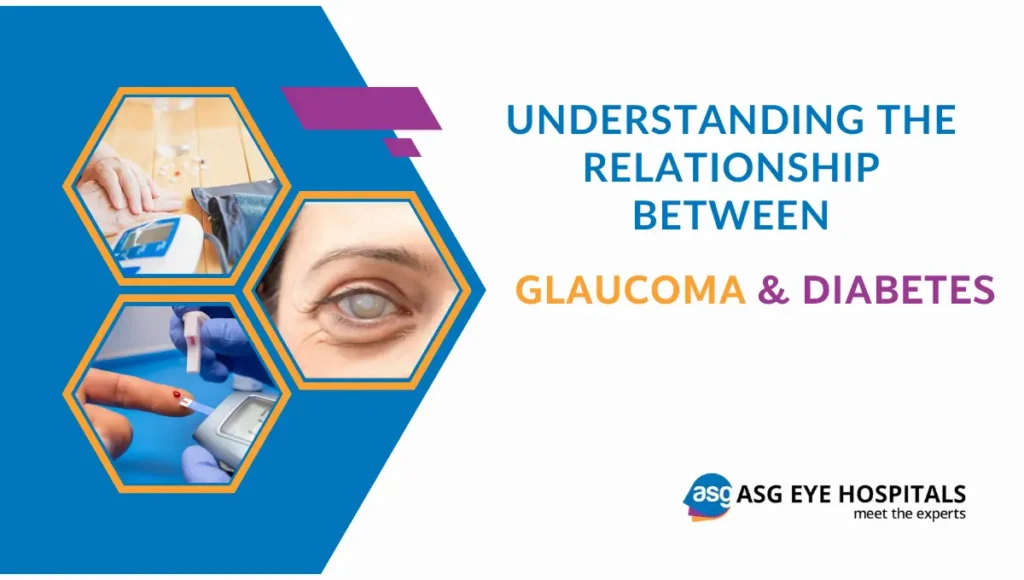
Understanding the Relationship Between Glaucoma and Diabetes: Essential Information

In the field of ocular (eye) health, two widespread conditions are glaucoma and diabetes. Although these diseases affect different parts of the eye and have different mechanisms, there’s a complex relationship between them. In this blog, we will understand How glaucoma and diabetes intersect and how important it is for complete eye care and disease management. Let’s begin by understanding these two eye conditions individually before delving into their relationship.


What is Glaucoma?

Glaucoma is a group of eye disorders that cause damage to the optic nerve, often linked to elevated intraocular pressure (IOP). This damage can lead to vision loss and blindness if left untreated. Glaucoma typically develops slowly and painlessly. It is also called “the silent thief of sight.” One of the major risk factors for glaucoma is increased intraocular pressure, which can be caused by factors like damaged drainage of aqueous humor (clear liquid inside the front part of the eyes) from the eye.


What is Diabetes?

Diabetes, on the other hand, is a metabolic disorder characterized by high blood sugar levels resulting from the body’s inability to produce or effectively use insulin. Diabetes can damage various organs and systems in the body, including the eyes. One of the most common ocular complications of diabetes is Diabetic Retinopathy, which affects the blood vessels in the retina, the light-sensitive tissue at the back of the eye. Diabetic retinopathy can lead to vision damage and blindness if left untreated.


What is the Difference Between Diabetic Retinopathy and Glaucoma

While both diabetic retinopathy and glaucoma affect vision and are linked to diabetes, they are distinct conditions with different underlying mechanisms and expressions.


Diabetic retinopathy primarily affects the blood vessels in the retina. In the early stages, it may cause no symptoms or only mild vision problems. As the condition progresses, it can lead to vision loss, including blindness, due to complications like macular edema (swelling in the macula, the central part of the retina) or proliferative retinopathy (abnormal growth of blood vessels on the retina).


Glaucoma, on the other hand, primarily affects the optic nerve and is often associated with increased intraocular pressure. It typically progresses slowly over time and can lead to peripheral vision loss, eventually advancing to central vision loss if untreated. Unlike diabetic retinopathy, glaucoma usually does not cause noticeable symptoms until vision loss is significant.


Explore the Connection Between Glaucoma and Diabetes

While glaucoma and diabetic retinopathy are different conditions, there is evidence to suggest a relationship between glaucoma and diabetes. Research indicates that individuals with diabetes may have an increased risk of developing glaucoma compared to those without diabetes. The exact mechanisms underlying this association are not fully understood, but several factors may contribute:

  • Vascular Dysfunction: Both glaucoma and diabetic retinopathy involve abnormalities in the blood vessels of the eye. Dysfunction of these vessels can compromise blood flow to the optic nerve in glaucoma and to the retina in diabetic retinopathy.
  • Inflammation: Chronic inflammation is implicated in the pathogenesis of both glaucoma and diabetes. Inflammatory processes may contribute to optic nerve damage in glaucoma and retinal damage in diabetic retinopathy.
  • Shared Risk Factors: Diabetes and glaucoma share common risk factors such as age, hypertension, and genetic predisposition. Additionally, some studies suggest that increased blood sugar levels may directly contribute to the development or progression of glaucoma.
  • Medication Effects: Certain medications used to manage diabetes, such as corticosteroids, can increase intraocular pressure and potentially worsen glaucoma.


In conclusion, while glaucoma and diabetic retinopathy are different eye conditions, they share a complex relationship, especially in individuals with diabetes. Understanding this relationship is important for early detection, timely intervention, and complete management of both conditions.


Regular eye exams, blood sugar monitoring, and collaboration between ophthalmologists and endocrinologists are essential for preserving vision and overall health in individuals with diabetes. 


By staying informed and proactive, we can work towards better outcomes and a brighter future for those affected by these sight-threatening conditions.
Overview

Job Title: Consultant Ophthalmologist

Location: Pan India
Job Category: Medical Healthcare

Work Employment:  Full time

What you work:

  • Diagnose and treat patients with a focus on Ophthalmologist.
  • Collaborate with senior doctors and multidisciplinary teams.
  • Ensure patient-centric care and follow clinical protocols.
  • Contribute to research, training, or hospital initiatives (if applicable).

Mandatory skills:

  • Relevant medical degree / certification.
  • Strong knowledge of ophthalmology practices / healthcare protocols.
  • Excellent communication and patient-handling skills.
  • Ability to work in fast-paced healthcare environments.

Preferred Qualifications:

  • Experience: 3 to 6 years of experience
  • Prior experience in eye care / multi-speciality hospitals.
  • Fellowship or advanced training in Ophthalmologist.
  • Familiarity with advanced diagnostic tools and surgical techniques.
  • Passion for innovation, patient care, and continuous learning.

Apply For This Positions

This will close in 0 seconds

Overview

Job Title: Optometrist

Location: Amritsar, Punjab 

Job Category: Optometry

Work Employment:  Full time

What you work:

  • Conduct comprehensive eye examinations and vision assessments for patients of all ages.
  • Prescribe and fit spectacles, contact lenses, and low-vision aids.
  • Perform diagnostic tests including refraction, tonometry, perimetry, and OCT imaging.
  • Support consultant ophthalmologists in pre-operative and post-operative patient workups.
  • Counsel patients on eye care, lens hygiene, and follow-up schedules.
  • Maintain accurate clinical records and adhere to hospital protocols.

Mandatory skills:

  • Bachelor’s or Master’s degree in Optometry (B.Optom / M.Optom) from a recognised institution.
  • Valid registration with the relevant state or national optometry council.
  • Proficiency in refraction, slit-lamp examination, and contact lens fitting.
  • Working knowledge of autorefractors, tonometers, fundus cameras, and OCT equipment.
  • Strong communication skills in English, Hindi, and Punjabi.
  • Ability to manage high patient volumes in a fast-paced clinical setting.

Preferred Qualifications:

  • Experience: 1 to 5 years of clinical optometry experience.
  • Prior experience in an eye care or multi-speciality hospital in Punjab.
  • Exposure to paediatric optometry, binocular vision, or low-vision rehabilitation.
  • Familiarity with advanced diagnostic imaging and dry-eye management.
  • Passion for patient care, community eye-health camps, and continuous learning.

Apply For This Positions

This will close in 0 seconds

Overview

Job Title: Optical In-charge 

Location: Panjim, Goa / Mumbai-Worli (Lower Parel) 

Job Category: Optical

Work Employment:  Full time

What you work:

  • Manage day-to-day operations of the optical outlet, including sales, dispensing, and inventory.
  • Guide customers on frame selection, lens options, and coatings based on their prescription and lifestyle.
  • Take accurate frame measurements and ensure precise fitting, adjustments, and after-sales service.
  • Drive optical sales targets and monitor daily, weekly, and monthly business performance.
  • Maintain optimum stock levels, coordinate with vendors, and control shrinkage through periodic audits.
  • Supervise and train optical staff on product knowledge, dispensing standards, and customer service.
  • Coordinate with optometrists and consultants to ensure smooth prescription-to-delivery flow.
  • Ensure visual merchandising, display hygiene, and adherence to brand and hospital standards.

Mandatory skills:

  • Diploma or Bachelor’s degree in Optometry (D.Optom / B.Optom) or equivalent optical dispensing qualification.
  • Minimum 3 years of experience in optical supervisory or in-charge role.
  • Sound knowledge of lens types, coatings, frame materials, and dispensing principles.
  • Hands-on experience with edging, fitting, and basic optical workshop equipment.
  • Proven ability to achieve sales targets and manage inventory and billing systems.
  • Strong communication and interpersonal skills in English, Hindi, and Konkani or Marathi.
  • Working knowledge of POS / retail software and MS Office.

Preferred Qualifications:

  • Experience: 3 to 7 years in optical retail or an eye care hospital optical division.
  • Prior experience managing an optical outlet in Goa or the western region.
  • Exposure to premium and progressive lens brands and specialty eyewear.
  • Familiarity with contact lens dispensing and after-care support.
  • Team leadership, customer relationship management, and continuous learning mindset.

Apply For This Positions

This will close in 0 seconds

Overview

Job Title: Optometrist

Location: Pan India 


Job Category: Optometry

Work Employment:  Full time

What you work:

  • Conduct comprehensive eye examinations and vision assessments for patients of all ages.
  • Prescribe and fit spectacles, contact lenses, and low-vision aids.
  • Perform diagnostic tests including refraction, tonometry, perimetry, and OCT imaging.
  • Support consultant ophthalmologists in pre-operative and post-operative patient workups.
  • Counsel patients on eye care, lens hygiene, and follow-up schedules.
  • Maintain accurate clinical records and adhere to hospital protocols.

Mandatory skills:

  • Diploma / Bachelor’s or Master’s degree in Optometry (D.Optom / B.Optom / M.Optom) from a recognised institution.
  • Valid registration with the relevant state or national optometry council.
  • Proficiency in refraction, slit-lamp examination, and contact lens fitting.
  • Working knowledge of autorefractors, tonometers, fundus cameras, and OCT equipment.
  • Ability to manage high patient volumes in a fast-paced clinical setting.

Preferred Qualifications:

  • Experience: 1 to 5 years of clinical optometry experience.
  • Exposure to paediatric optometry, binocular vision, or low-vision rehabilitation.
  • Passion for patient care, community eye-health camps, and continuous learning.

Apply For This Positions

This will close in 20 seconds