Redness, watering, itching, swelling, or sticky discharge. Many think it is just “red eye” and reaching for any eye drop in the home which can’t always be the best idea. The right Eye Infection Treatment based on what the cause is, which part of the eye is affected, and if vision is impaired. At ASG Eye Care we have a large number of patients in which delay in care was due to the early signs being written off as harmless.
Not all eye infections are the same. In terms of treatment we first have to determine the cause. Some are mild which may go away with proper hygiene, lubricating drops, or just in time. But some may need a prescription of antibiotic, antiviral or antifungal medicines. Also there are certain eye infections which if left untreated can cause vision issues. By knowing what the most common patterns of eye infections are, what causes them, and which symptoms to look out for at the early Eye Infection Symptoms can help patients seek care at the right time.
What Is an Eye Infection?
An eye infection is a result of bacteria, viruses, fungi, or parasites which have affected the eye or the nearby tissue. We see that infection may be in the conjunctiva, eyelids, cornea, tear gland, or in the deeper tissues of the eye. That is to say that Eye Infection Treatment is not the same for each patient. An ophthalmologist will first determine the site of the infection, its degree, also past history of contact lens use, history of injury, and also any preexisting medical conditions like diabetes or low immunity.
Many do not present with red eyes as infected. Also redness may be a result of allergy, dry eye, injury, glaucoma, and inflammation. Use of the wrong medication which in particular includes the use of steroid drops without medical advice may in fact mask symptoms and at the same time aggravate some infections. For Eye Infection Treatment the best start is a proper diagnosis.
Common Types of Eye Infections
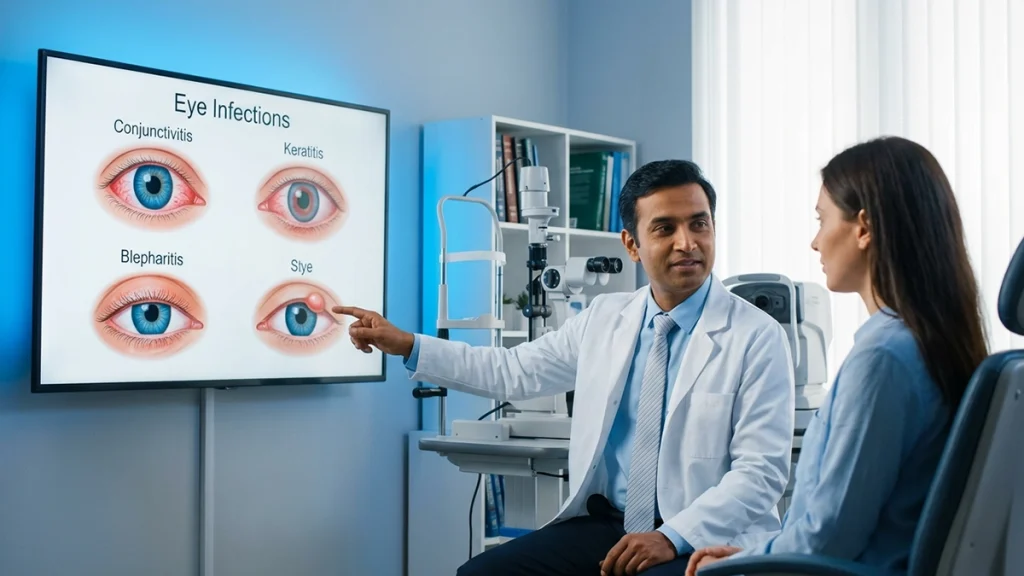
The most common types of eye infections are conjunctivitis, stye, blepharitis, keratitis, dacryocystitis, and also we see rare deeper infections like endophthalmitis. Each of these affect different parts of the eye and also present varying degrees of risk. Some infections are very contagious, while others are a result of blocked glands, contact lens wear, trauma, or a weakened immune system.
| Type of infection | Area affected | Common signs | Usual care approach |
| Conjunctivitis | White part of the eye and inner eyelid | Redness, watering, itching, discharge | Hygiene, lubricants, and medicines when needed |
| Stye | Eyelid oil gland | Painful eyelid lump and swelling | Warm compresses, lid care, and medication if required |
| Blepharitis | Eyelid margins | Crusting, burning, irritation | Lid hygiene, warm compresses, drops or ointment |
| Keratitis | Cornea | Pain, light sensitivity, blurred vision | Urgent specialist care and antimicrobial drops |
| Dacryocystitis | Tear sac | Swelling near inner eye corner, pain, discharge | Antibiotics and tear drainage evaluation |
| Endophthalmitis | Inside the eye | Severe pain, redness, sudden vision drop | Emergency eye hospital treatment |
Among which eye infections conjunctivitis is a very common type that also has a tendency to pass between people with close contact. Keratitis is a less common issue but is more severe in nature as the cornea which is the clear surface of the eye plays a key role in good vision. This is the reason why similar symptoms may require very different treatments.
Eye Infection Causes: Why Do Eye Infections Happen?
The main Eye Infection Causes include poor hand hygiene, bacterial exposure, viral illness, use of contaminated towels, improper contact lens wear, eye injury, blocked oil glands, shared make up, and reduced immunity. In school children may get infections from close contact, adults may develop them from wearing contact lenses, work related exposure, or from going untreated eyelid issues.
Many Eye Infection Causes are preventable. Don’t share your towels, eye make up, kajal, contact lenses, or eye drops. Also don’t touch the infected eye and then the other one. Wash your hands very often and clean your spectacles regularly. If you wear contact lenses do not ever use tap water to rinse them, sleep in them without a doctor’s advice or use them while swimming.
Health issues also play into it which in turn may change the urgency of Eye Infection Treatment. Diabetes, long term steroid use, past eye surgery, and weak immunity can increase your risk of infection or slow healing. In these cases Eye Infection Treatment should not be delayed because infection may progress faster.
Eye Infection Symptoms You Should Not Ignore
Common Eye Infection Symptoms are red eyes, teary eyes, itchy eyes, burning sensation, swelling, sticky discharge, crusty eyelashes, foreign body sensation, pain, light sensitivity, and blurred vision. Mild irritation may go away with at home care but pain, vision change, or light sensitivity should always be brought to a doctor’s attention.
| Symptom pattern | What it may suggest | When to seek care |
| Watery red eye with cold-like illness | Viral conjunctivitis | If it worsens or spreads |
| Thick yellow or green discharge | Bacterial conjunctivitis | Visit an eye doctor for proper drops |
| Severe pain with light sensitivity | Possible corneal infection | Same-day eye examination |
| Eyelid lump with tenderness | Stye or infected gland | If swelling increases |
| Sudden drop in vision | Serious infection or inflammation | Emergency care |
| Red eye after contact lens use | Contact lens-related keratitis risk | Urgent specialist review |
These warning signs help determine what is the urgency of care for the patient. If you see redness from an injury, chemical exposure, or contact lens use, see an ophthalmologist right away for Eye Infection Treatment.
Conjunctivitis: A Common Eye Infection
Conjunctivitis is a very common type of eye infection. It causes redness and irritation in the thin layer which covers the white part of the eye, and also that which lines the eyelids. In the case of viral conjunctivitis you will notice a watery discharge and it may also present along with symptoms like that of a cold. Bacterial conjunctivitis has a thicker discharge, also which may appear to be crusted, in particular upon waking. Also at times allergy related redness may look the same but it is not always a case of infection.
Because the cause varies, Eye Infection Treatment for conjunctivitis does also. In viral cases we may see improvement with cold compresses, artificial tears, and better hygiene. Bacteria may require antibiotic drops in bacterial cases. For allergic cases we use allergy control which may not include antibiotics at all. That is also a reason why self-medication is best avoided.
Stye, Blepharitis, and Eyelid Infections
Some infections start in the eyelids. A stye is a usually painful swelling which results from infection or blockage of an eyelid gland. Blepharitis is inflammation of the eyelash area which may cause repeated crusting, burning, irritation, and redness. These issues may return if lid hygiene is poor or if the patient has oily skin, dandruff or rosacea.
Warm compresses and lid cleaning are at times the first course of action. Should pain, swelling, or discharge get worse medical attention may be required. Eye Infection Treatment for eyelid issues may include use of antibiotics, anti-viral medications in ointment form or eye drops and in some cases also oral medicine.
Keratitis: When an Eye Infection Becomes Serious
Keratitis is a very serious type of Eye Infections which affects the cornea. The cornea is the clear outer layer of the eye, also an infected cornea may cause scarring which is a result of delayed treatment. Also at higher risk are contact lens wearers which includes those that wear lenses while sleeping, do not clean them properly, or which use unsafe water for solution.
The warning signs of an eye infection include pain, redness, watering, light sensitivity, blurred vision, and a feeling that something is caught in the eye. These Eye Infection Symptoms require urgent attention. Eye Infection Treatment for keratitis may involve strong antibiotic, antiviral, or antifungal drops which are to be determined by the cause. At times the doctor may take a sample before beginning specific treatment.
How Eye Infection Treatment Is Planned
A safe Eye Infection Treatment Protocol which starts with an exam. The ophthalmologist will check vision, eyelids, conjunctiva, cornea, pupils, and also does eye pressure check as indicated. Also the doctor will go over contact lens use, recent fevers, red eye exposure, injury, past surgeries and what medications you are on at present.
For slight infections care may include lubricating drops, cold compresses, warm compresses, hygiene advice, and follow up. Bacterial infections may require antibiotic drops or ointments. Viral infections usually see support care which may also include antiviral medicine for some eye diseases. Fungal and parasitic infections require specialized treatment and close follow up. The aim of Eye Infection Treatment is to clear the infection, protect vision and to prevent recurrence.
What Not to Do During an Eye Infection
Stay away from old prescriptions, out of date drops, or another person’s medicine. Don’t use steroid eye drops without a prescription from an ophthalmologist. Steroids may do damage in some infections and may worsen corneal ulcers. Also don’t put in your contacts until your doctor says it is safe.
If you are in the midst of an eye infection do not use eye make up, rub your eye out of the routine, share towels or use the same drop bottle between eyes without your doctors’ okay. Do these easy tips to aid in Eye Infection Treatment and at the same time drop the risk that it will spread to or affect a second eye.
Prevention: How to Reduce the Risk
Prevention of eye infections is through control of what we know to be common Eye Infection Causes. Before you touch your eyes, wash your hands. At night remove your make up. Replace your eye make up products regularly. Clean your contact lenses only with the solutions that are recommended. Do not swim within them. At the first sign of allergy treatment, delayed attention may cause you to rub which in turn irritates the eye surface and increases your risk.
Good health in general supports eye recovery. Diabetics should maintain good blood sugar levels, and people with recurrent infections should get evaluation of their eyelids and tear drainage. Reducing Eye Infection Causes is often easier than treating a severe infection later.
Eye Infection Care at ASG Eye Care
At ASG Eye Care we evaluate what Types of Eye Infections a patient has based on the affected area, severity, patient history, and vision risk. We do not treat every red eye in the same way because each infection is a different case. In the case of conjunctivitis, eyelid infection, corneal infection, or infection after injury, the focus of Eye Infection Treatment is timely diagnosis, safe medicine, and vision protection.
Patients are also instructed on hygiene, contact lens safety, follow up visits, and warning signs. If you have Eye Infection Symptoms like pain, blurred vision, swelling, thick discharge, or light sensitivity it is best to go to an eye specialist hospital instead of waiting.
Key Takeaway
There are various types of eye infections and each requires the proper diagnosis. Redness, discharge, itching, and watering may be minor issues but pain, light sensitivity, or blurred vision may point to something more serious. The right Eye Infection Treatment depends on identifying the cause early, and timely Eye Infection Treatment can prevent avoidable complications. Recognizing Eye Infection Causes and Eye Infection Symptoms helps patients protect their eyes and prevent complications.
Frequently Asked Questions
1. What are common eye infections?
Common eye issues present as conjunctivitis, stye, blepharitis, keratitis, dacryocystitis, and also more severe deep infections like endophthalmitis. Some are mild which go away on their own, while others require prompt care.
2. What early warning signs should I notice?
Early Eye Infection Symptoms may include redness, watering, itching, burning, sensation, swelling, sticky discharge, and crusty eyelashes. Pain, blurred vision, or light sensitivity is a reason to seek medical care right away.
3. What are the main Eye Infection Causes?
The primary Eye Infection Causes are from bacteria, viruses, fungi, poor hygiene, contact lens misuse, injury, blocked eyelid glands, contaminated cosmetics, and reduced immunity.
4. What is the best treatment for an eye infection?
The best approach to Eye Infection Treatment is based on the cause. For bacterial infections we see in use of antibiotic drops, viral infections usually do well with support care, and the corneal ones which we have a little more at hand.
5. Can an eye infection affect vision?
Yes. Some Types of Eye Infections, keratitis and internal eye infections may cause vision problems with delay in care. Seek urgent medical attention for pain, light sensitivity, or vision loss.
6. Can I use old eye drops for an eye infection?
No. Old stock is out of date, infected, or improper. The wrong type of drop may aggravate Eye Infection Symptoms and put off proper Eye Infection Treatment.
7. Are eye infections contagious?
Some infections in particular viral and bacterial conjunctivitis may be passed from one person to another. Hand washing, use of separate towels, and avoidance of eye rub are methods which may reduce spread.
8. When should I visit ASG Eye Care for an eye infection?
You are to take a visit to ASG Eye Care if you have symptoms of Eye Infection Symptoms which include pain, blurred vision, swelling, light sensitivity, thick discharge, contact lens related redness, or what does not improve.