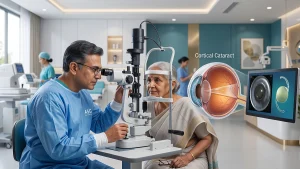

Cataracts are the most common eye issue as we age. At first many ignore symptoms like cloudy vision, glare, or trouble reading which present slowly. But if left untreated cataracts will over time affect daily life, independence, and in large scale, eye health. A cataract is a lens of the eye which has become clouded. As this lens becomes cloudy light does not pass clearly to the retina which in turn causes blurred or dull vision.
Many people think of cataracts as harmless which they tend to develop slowly. At first they may not present an emergency but left untreated cataracts do progress over time which in the end may cause a great deal of vision loss. The bright side is that cataracts are treatable and a visit to the ophthalmologist for timely evaluation may prevent that which is otherwise avoidable visual difficulty.
What Are Cataracts?
A cataract is the result of the eye’s natural lens proteins breaking down and clumping which in turn makes the lens become cloudy. In a healthy eye the lens’ role is to focus light sharply on the retina. With cataract development light focus is impaired which in turn causes dim, hazy or foggy vision. At first these early cataract symptoms may be mild but as the cataract grows in size they become more noticeable.
Most cataracts are a result of aging, also they may present in diabetics, those with history of eye injury, long term steroid use, smokers, people with high UV exposure, or after previous eye surgery. If untreated cataracts are allowed to progress for years, the lens may become harder, denser, and more difficult to manage surgically.
Common Cataract Symptoms You Should Not Ignore
The most common cataract symptoms include blurred vision, color which has faded, headlight glare, trouble reading in low light, and frequent changes in your glasses prescription. Also some patients report seeing double in one eye or halos around lights. These cataract symptoms often develop slowly which causes many people to not notice how much of their vision they have lost.
As untreated cataracts become more advanced the person may have trouble with driving, reading, cooking, identifying faces, or walking safely. At this stage vision loss begins to impact independence and quality of life.
| Stage of Cataract | Common Changes in Vision | Possible Impact on Daily Life |
| Early cataract | Mild blur, glare, slightly dull colours | Reading and night driving may become uncomfortable |
| Moderate cataract | Noticeable cloudy vision, frequent glasses changes | Work, driving, and screen use become difficult |
| Advanced cataract | Dense clouding, poor clarity, reduced contrast | Higher risk of falls, dependency, and major vision loss |
| Mature cataract | Lens becomes very cloudy or white | Increased risk of cataract complications and urgent treatment need |
What Happens If Cataracts Are Left Untreated?
If you do not treat cataracts they will usually get worse. Untreated cataracts do not disappear on their own, and there are no proven eye drops that can reverse them once formed. In the early stage better lighting or new glasses may help. However, as untreated cataracts worsen, the temporary solutions do not improve vision enough.
Over time, untreated cataracts may cause the lens to become thick and hard. Also this can raise the chance of cataract complications which include inflammation, high eye pressure, and issues during surgery. Also in some cases very advanced cataracts may present which in turn can block the doctor ‘s view of the retina which in turn makes it difficult to detect other eye problems like diabetic retinopathy, glaucoma or retinal disease.
The biggest concern with untreated cataracts is progressive vision loss. This usually does not happen suddenly but may get bad enough to really impact almost all daily activities.
Cataract Complications That May Develop
At the proper time most cataracts may be treated safely. But delay in treatment does report to an increase in cataract complications. Very mature cataracts may swell, release lens protein, or cause intraocular inflammation. These cataract complications in turn may cause pain, redness, high eye pressure, and acute vision loss.
Another issue is that untreated cataracts may cause greater surgical complexity. Harder lenses may require greater energy use during the procedure which in some cases may slow recovery. That is why ophthalmologists typically advise patients against waiting until cataracts fully develop.
| Possible Issue | How It Happens | Why Timely Care Matters |
| Severe vision loss | The cloudy lens blocks light from reaching the retina clearly | Early surgery can restore clearer vision in most cases |
| Lens-induced inflammation | A mature cataract may irritate internal eye tissues | Reduces risk of painful cataract complications |
| Raised eye pressure | A swollen lens may affect fluid movement inside the eye | Helps protect the optic nerve and prevent further damage |
| Difficult surgery | A dense lens may be harder to remove | Timely treatment can make surgery smoother and recovery easier |
Can Untreated Cataracts Cause Blindness?
Yes, untreated cataracts can cause severe vision loss and may lead to blindness if ignored for a long time. But what we see is that cataract related blindness is usually reversible with the help of surgery which is put into play at an early stage; also at the base that the retina and the optic nerve are in good health. This is as opposed to permanent blindness which is a result of damage to the retina or the optic nerve.
That which is true is that delay in treatment is not safe. Untreated cataracts may also present a mask for other diseases which cause permanent vision loss. For instance if the cataract is to blame for a poor retinal exam we may not see that the patient also has diabetic eye disease or glaucoma. This is so true that regular eye exams are a must, also for senior citizens and diabetics.
When Should You See an Eye Doctor?
You should see an ophthalmologist if cataract symptoms are affecting your daily life. At night you may have trouble seeing to drive, you may need a brighter light to read, colors may appear faded, you may experience glare, or you may find that you are having to change your glasses often which are all indicators. If these cataract symptoms continue to progress, delaying care may increase the chance of cataract complications.
An ophthalmologist may evaluate the cataract, check the retina and optic nerve, and determine if surgery is required. Not all cataracts require immediate surgery, but if left untreated cataracts should be monitored at regular intervals which in turn will allow for a treatment plan to be put in place before severe vision loss takes place.
How Are Cataracts Treated?
Cataract surgery is the only proven cure for which vision is greatly impaired. In the operating theater we remove the clouded lens and in its place put in an artificial intraocular lens. Today we see that most cases are managed quickly, safely, also done as a day case.
For early untreated cataracts, doctors may suggest stronger glasses, brighter lighting, anti-glare lenses, or regular monitoring. But when cataract symptoms begin to affect reading, driving, work or safety we will push for the surgery. Treating cataracts at the right time helps reduce cataract complications and improves the chances of a smooth recovery.
Cataract Care at ASG Eye Care
At ASG Eye Care we present to you that we evaluate patients with untreated cataracts with a full eye exam. The doctor determines the stage of the cataract, vision level, eye pressure, retina health, and the state of eye health which in turn determines if the patient is a candidate for cataract surgery.
ASG Eye Hospital is dedicated to early diagnosis and patient education which in turn leads to better management of cataracts. We aim to not only treat the cataract symptoms but also to reduce the risk of cataract complications and to prevent vision loss which is preventable. We guide our patients on the optimal time for surgery, lens options available, recovery process, and post op care.
Key Takeaway
Untreated cataracts at first may appear to be of no great concern, but they do progress over time to cause great difficulty in daily living. Also if left for too long untreated cataracts can cause serious vision loss, more advanced cataract complications, and more in depth surgical procedures. By recognizing cataract symptoms in the early stage and seeking out an eye specialist at that time we may be able to preserve vision and in turn improve quality of life.
Frequently Asked Questions
1. What happens if cataracts are not treated?
If left untreated, vision will also usually become more blurry. Untreated cataracts also make issues like reading and which tasks of daily living difficult. In severe cases they may cause great vision loss and a higher risk for cataract complications.
2. Can untreated cataracts cause blindness?
Yes when left untreated cataracts may cause very poor eyesight which in some cases is what we term as “blindness”. In many cases that is.
3. What are the early cataract symptoms?
Early cataract symptoms include foggy vision, glare, colors that appear washed out, difficulty with night time vision, and frequent changes in your glasses prescription. If these cataract symptoms are interfering with your routine, an eye exam is recommended.
4. Are cataract complications dangerous?
Some cataract complications are serious which is especially true if the cataract allows it to become very advanced. This may include inflammation, high eye pressure, pain, and more issues with the surgery. Timely treatment reduces the risk of these cataract complications.
5. When should cataract surgery be done?
Cataract surgery is recommended when cataract symptoms affect daily activities which include reading, driving, work, or safe walking. It is better not to wait until untreated cataracts cause advanced vision loss.