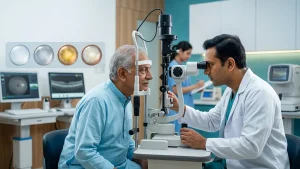
Many people delay getting cataracts treated for years, often because the vision changes happen so gradually. By the time patients realize how much their vision has deteriorated, they’ve often been living with significant impairment for months or even years. The good news is that cataract eye surgery has advanced considerably, with success rates now exceeding 95% and recovery times shorter than most people expect.
Understanding the Cataract Surgery Procedure: What to Expect?
A cataract operation isn’t nearly as scary as it sounds. Your natural lens clouds up over time (that’s the cataract), and the surgeon swaps it out for an artificial one. The whole process takes maybe 30-40 minutes per eye.
The procedure typically involves numbing the eye with drops, without the need for injections. A very small incision is made, usually just a few millimetres, through which ultrasound is used to break up the cloudy lens. The fragments are removed, and an artificial lens is then implanted in its place.
Most people who’ve been through cataract eye surgery report feeling some pressure but zero pain. You’re awake the whole time, which seems weird, but apparently, you don’t see what’s happening because of the way they position things.
The artificial lens is permanent. Once it’s in, you’re done. No maintenance required.
Cataract Lens Options: Types, Features, and Price Comparison
This part gets interesting because your choices directly impact both the outcome and the cataract lens price you’ll pay.
Basic monofocal lenses do one job: distance vision. They work great for that. You’ll still grab reading glasses for books or your phone, but for daily activities like driving or watching TV, they’re perfectly fine. These come standard with most cataract surgery cost quotes.
Premium options include multifocal lenses (near and far), toric lenses (if you have astigmatism), and extended depth of focus lenses (good for computer work). Each type solves different problems.
Cataract Surgery Cost in India: Comprehensive Price Breakdown
Let’s talk money because that’s usually question number one. What does cataract surgery cost in India these days?
There’s no single answer. Geography plays a part; Mumbai and Delhi typically run higher than smaller cities, though not always. A surgeon’s experience level affects pricing. Hospital reputation matters too.
Generally bundles pre-op testing, the surgery itself, basic lenses, medications, and a few follow-up appointments. Premium lens packages? Those climb to ₹50,000-₹1,00,000 per eye depending on lens type and location.
The price of the cataract lens alone varies widely. Basic Indian-made lenses start around ₹5,000. High-end imported lenses can hit ₹60,000 or more. That’s a twelve-fold difference, which is why you need to ask what’s actually included in any quote you get.
Some hospitals in Bangalore and other metros offer all-inclusive packages. While others charge everything separately, make sure you’re comparing apples to apples.
Factors That Influence Cataract Surgery Cost
Beyond lens choice, several factors influence your total cataract surgery cost.
Equipment matters. Phacoemulsification machines (that’s the ultrasound device) range from basic to cutting-edge. Fancier machines sometimes mean higher fees, though a skilled surgeon with well-maintained older equipment often delivers identical results to someone with the newest gear.
Your insurance might cover the basic cataract operation but exclude premium lenses. Or they cap coverage at a certain amount. Always verify before booking.
Pre-existing conditions complicate things slightly. If you’re diabetic or have glaucoma, you might need extra tests. The cataract surgery cost in India for complex cases typically runs 15-25% higher than standard procedures.
Understanding the Value: Is Cataract Surgery Worth the Investment?
Many patients report a clear improvement after cataract surgery. Colours appear more vibrant, contrast is restored, night driving becomes easier, and reading comfort improves with the appropriate lens choice. These are not minor changes—they can significantly enhance everyday visual quality and overall quality of life.
The upfront number feels big, sure. But weigh that against independence, safety, and quality of life. When you frame it that way, the decision becomes clearer.
Making a Smart Choice
It helps to speak with more than one surgeon. Ask them, plainly, what kind of difference you’ll actually notice between a ₹25,000 lens and a ₹55,000 one. In some cases, paying more makes sense. In others, it really doesn’t. What matters is how the lens fits your daily life, not just its price tag.
A lot of eye hospitals now offer EMI options through medical finance partners. Some plans even come with zero interest for 6 to 12 months. If budget is holding you back, it’s worth bringing this up during your consultation.
Try not to choose a hospital only because it’s the cheapest. Lower prices can sometimes mean older equipment or a very high patient load. At the same time, a higher bill doesn’t automatically mean better care. Look up reviews, talk to people who’ve had surgery there, and check the surgeon’s experience before deciding.
One last thing: timing matters. Cataracts don’t reverse themselves. They only worsen. Waiting until you’re struggling with basic tasks just makes life harder than it needs to be. Modern cataract eye surgery is remarkably safe and effective. With proper research and realistic budgeting, it’s achievable for most people. And the results genuinely do transform daily life.
ASG Eye Hospital offers Cataract services across multiple cities in India, including Jaipur, Jodhpur, Ahmedabad, Udaipur, Indore,, and other locations.
Frequently Asked Questions (FAQs)
1. How soon will I see clearly after cataract surgery?
Most people notice a difference within a couple of days. Vision keeps improving over the next few weeks as the eye settles.
2. Does cataract surgery hurt?
No. The eye is numbed with drops. You might feel some pressure, but pain isn’t something patients usually complain about.
3. Can cataracts come back after surgery?
No, once the cloudy lens is removed, cataracts don’t return. Some people may need a quick laser treatment later, which is common and simple.
4. How quickly can I get back to my routine?
Basic activities can be done the next day. Doctors usually ask you to avoid heavy work, swimming, and rubbing the eye for a short while.
5. Is cataract surgery safe at an older age?
Yes. Age isn’t a problem. Many patients have surgery well into their 70s and 80s without issues.