ASG Eye Hospital

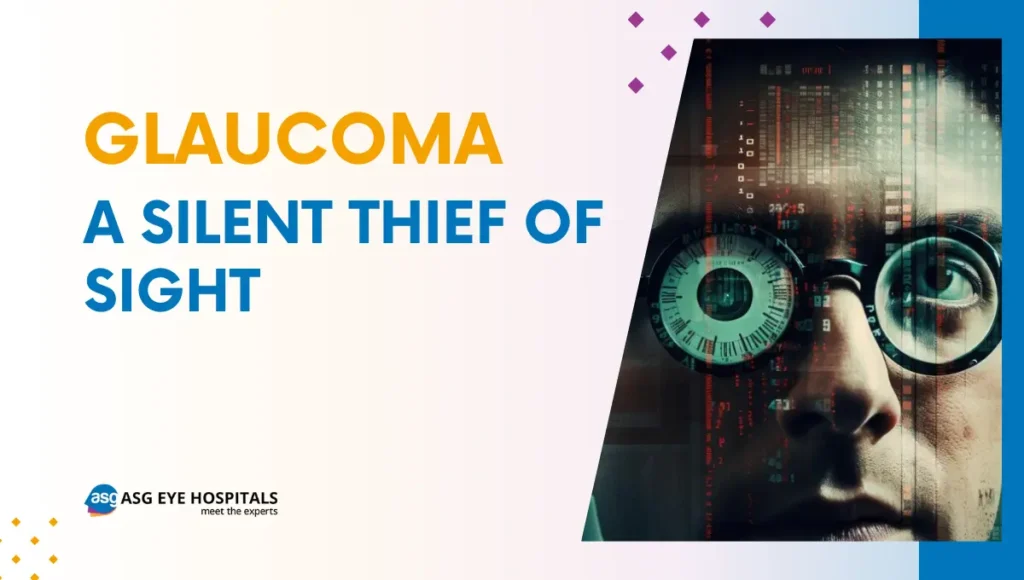
Glaucoma: A Silent Thief of Sight

What is Glaucoma?

Glaucoma is an eye condition, also called “a silent thief of sight that affects the optic nerve (a bundle of about one million individual nerve fibers) of the eye and leads to blindness and vision loss if left untreated. The optic nerve transfers visual information from the eye to the brain. Glaucoma is associated with increased intraocular pressure (IOP) within the eye, but it can also occur with normal or even lower-than-normal eye pressure.


What are the types of Glaucoma?

There are various types of glaucoma, but two main categories are Angle-Closure Glaucoma and Open-Angle Glaucoma. Let’s explore some common types of glaucoma:

Open-Angle Glaucoma : Primary open-angle glaucoma is the most popular form of glaucoma. It happens due to the increased IOP inside the eyes that involves the overproduction of fluid within the eye and reduced outflow of fluid from the eye.

The symptoms of this type of glaucoma appear after many years because it is very slow in progress.

Angle-Closure Glaucoma : This type of glaucoma is associated with the sudden and gradual closure of the drainage angle in the eye. The drainage angle is the area where the cornea and iris meet, and it is responsible for allowing the fluid (aqueous humor) in the eye to drain properly. When this angle becomes blocked, the fluid cannot flow out of the eye efficiently, leading to a rapid increase in intraocular pressure.

Normal-Tension Glaucoma : This type of glaucoma is also called low-tension glaucoma, where optic nerve damage and vision loss occur despite intraocular pressure (IOP) consistently measuring within the normal range. In typical glaucoma cases, elevated intraocular pressure is a primary risk factor for optic nerve damage, but in normal-tension glaucoma, the optic nerve is still affected even when the pressure is considered normal.

Secondary Glaucoma : Secondary glaucoma is when elevated intraocular pressure and optic nerve damage result from another underlying eye condition or systemic health issue. Secondary glaucoma can be associated with various factors, including eye trauma, certain medications (such as steroids), inflammation (uveitis), tumors, and vascular disorders.

Congenital Glaucoma : congenital glaucoma is a rare type of glaucoma that occurs in infants and young children. It is present at birth or develops shortly afterward. Usually, congenital glaucoma is an abnormal development of the eye’s drainage system (trabecular meshwork). The impaired drainage leads to increased intraocular pressure, potentially causing damage to the optic nerve and vision loss.

Pigmentary Glaucoma : Pigmentary glaucoma occurs when pigment granules from the iris (colored part of the eye) disperse and accumulate in the eye’s drainage system, affecting the flow of aqueous humor. This dispersion of pigment is often associated with the rubbing or movement of the iris against the lens. Over time, the pigment can clog the drainage channels, leading to increased intraocular pressure.


What are the Symptoms of Glaucoma?

Glaucoma commonly develops slowly and does not cause noticeable symptoms in early stage. As the disease progresses, people may experience symptoms associated with increased IOP and optic nerve damage.

Some Common Glaucoma Symptoms are:

  • Tunnel vision
  • Gradual loss of side or peripheral vision
  • Blurry vision
  • Colored rings or halos around the lights
  • Headache and eye pain
  • Nausea and vomiting
  • Red eye
  • Patchy Blind spots


How is glaucoma diagnosed?

Your eye doctor will check your medical history, conduct a complete eye examination, and perform some tests that include:

  • Tonometry- measure intraocular pressure
  • Dilated eye exam – test optic nerve damage
  • Visual field test- check vision loss areas
  • Pachymetry- measure the thickness of the cornea
  • Gonioscopy- inspect the angle of drainage


Glaucoma Medications

Generally, glaucoma is controlled with eye drops. The use of eye drops every day, lowers the pressure of the eye.

Some do this by lowering the aqueous fluid amount that is produced by the eyes and others lower the pressure by facilitating improved fluid management vis the drainage angle.

The medication for glaucoma helps you keep your vision but some eye drops cause side effects like dry mouth, itching sensation, altered energy level, eyelash growth, changes in eye color, and red eyes.


Glaucoma Treatments

Laser Therapy

  • Selective Laser Trabeculoplasty (SLT): This laser procedure is used to improve drainage by targeting the trabecular meshwork. SLT is often considered for open-angle glaucoma.
  • Laser Peripheral Iridotomy (LPI): LPI is used for angle-closure glaucoma to create a small hole in the iris, allowing fluid to flow more freely and reducing pressure.

Glaucoma Surgery

  • Trabeculectomy: This surgical procedure creates a new drainage channel to lower intraocular pressure. It involves creating a small flap in the sclera (white part of the eye) to allow fluid to drain.
  • Minimally Invasive Glaucoma Surgery (MIGS): MIGS procedures are less invasive than traditional surgeries and are aimed at improving drainage. 
  • Glaucoma Drainage Implants: Glaucoma drainage implants are small prosthetic devices that are placed to help drain excess fluid and reduce intraocular pressure.


It’s important to note that early detection of glaucoma disease through regular eye exams is crucial for managing and treating glaucoma effectively, as the condition often progresses without noticeable symptoms in its early stages. Treatment may involve medications, laser therapy, or surgery, depending on the type and severity of glaucoma.

Overview

Job Title: Consultant Ophthalmologist

Location: Pan India
Job Category: Medical Healthcare

Work Employment:  Full time

What you work:

  • Diagnose and treat patients with a focus on Ophthalmologist.
  • Collaborate with senior doctors and multidisciplinary teams.
  • Ensure patient-centric care and follow clinical protocols.
  • Contribute to research, training, or hospital initiatives (if applicable).

Mandatory skills:

  • Relevant medical degree / certification.
  • Strong knowledge of ophthalmology practices / healthcare protocols.
  • Excellent communication and patient-handling skills.
  • Ability to work in fast-paced healthcare environments.

Preferred Qualifications:

  • Experience: 3 to 6 years of experience
  • Prior experience in eye care / multi-speciality hospitals.
  • Fellowship or advanced training in Ophthalmologist.
  • Familiarity with advanced diagnostic tools and surgical techniques.
  • Passion for innovation, patient care, and continuous learning.

Apply For This Positions

This will close in 0 seconds

Overview

Job Title: Optometrist

Location: Amritsar, Punjab 

Job Category: Optometry

Work Employment:  Full time

What you work:

  • Conduct comprehensive eye examinations and vision assessments for patients of all ages.
  • Prescribe and fit spectacles, contact lenses, and low-vision aids.
  • Perform diagnostic tests including refraction, tonometry, perimetry, and OCT imaging.
  • Support consultant ophthalmologists in pre-operative and post-operative patient workups.
  • Counsel patients on eye care, lens hygiene, and follow-up schedules.
  • Maintain accurate clinical records and adhere to hospital protocols.

Mandatory skills:

  • Bachelor’s or Master’s degree in Optometry (B.Optom / M.Optom) from a recognised institution.
  • Valid registration with the relevant state or national optometry council.
  • Proficiency in refraction, slit-lamp examination, and contact lens fitting.
  • Working knowledge of autorefractors, tonometers, fundus cameras, and OCT equipment.
  • Strong communication skills in English, Hindi, and Punjabi.
  • Ability to manage high patient volumes in a fast-paced clinical setting.

Preferred Qualifications:

  • Experience: 1 to 5 years of clinical optometry experience.
  • Prior experience in an eye care or multi-speciality hospital in Punjab.
  • Exposure to paediatric optometry, binocular vision, or low-vision rehabilitation.
  • Familiarity with advanced diagnostic imaging and dry-eye management.
  • Passion for patient care, community eye-health camps, and continuous learning.

Apply For This Positions

This will close in 0 seconds

Overview

Job Title: Optical In-charge 

Location: Panjim, Goa / Mumbai-Worli (Lower Parel) 

Job Category: Optical

Work Employment:  Full time

What you work:

  • Manage day-to-day operations of the optical outlet, including sales, dispensing, and inventory.
  • Guide customers on frame selection, lens options, and coatings based on their prescription and lifestyle.
  • Take accurate frame measurements and ensure precise fitting, adjustments, and after-sales service.
  • Drive optical sales targets and monitor daily, weekly, and monthly business performance.
  • Maintain optimum stock levels, coordinate with vendors, and control shrinkage through periodic audits.
  • Supervise and train optical staff on product knowledge, dispensing standards, and customer service.
  • Coordinate with optometrists and consultants to ensure smooth prescription-to-delivery flow.
  • Ensure visual merchandising, display hygiene, and adherence to brand and hospital standards.

Mandatory skills:

  • Diploma or Bachelor’s degree in Optometry (D.Optom / B.Optom) or equivalent optical dispensing qualification.
  • Minimum 3 years of experience in optical supervisory or in-charge role.
  • Sound knowledge of lens types, coatings, frame materials, and dispensing principles.
  • Hands-on experience with edging, fitting, and basic optical workshop equipment.
  • Proven ability to achieve sales targets and manage inventory and billing systems.
  • Strong communication and interpersonal skills in English, Hindi, and Konkani or Marathi.
  • Working knowledge of POS / retail software and MS Office.

Preferred Qualifications:

  • Experience: 3 to 7 years in optical retail or an eye care hospital optical division.
  • Prior experience managing an optical outlet in Goa or the western region.
  • Exposure to premium and progressive lens brands and specialty eyewear.
  • Familiarity with contact lens dispensing and after-care support.
  • Team leadership, customer relationship management, and continuous learning mindset.

Apply For This Positions

This will close in 0 seconds

Overview

Job Title: Optometrist

Location: Pan India 


Job Category: Optometry

Work Employment:  Full time

What you work:

  • Conduct comprehensive eye examinations and vision assessments for patients of all ages.
  • Prescribe and fit spectacles, contact lenses, and low-vision aids.
  • Perform diagnostic tests including refraction, tonometry, perimetry, and OCT imaging.
  • Support consultant ophthalmologists in pre-operative and post-operative patient workups.
  • Counsel patients on eye care, lens hygiene, and follow-up schedules.
  • Maintain accurate clinical records and adhere to hospital protocols.

Mandatory skills:

  • Diploma / Bachelor’s or Master’s degree in Optometry (D.Optom / B.Optom / M.Optom) from a recognised institution.
  • Valid registration with the relevant state or national optometry council.
  • Proficiency in refraction, slit-lamp examination, and contact lens fitting.
  • Working knowledge of autorefractors, tonometers, fundus cameras, and OCT equipment.
  • Ability to manage high patient volumes in a fast-paced clinical setting.

Preferred Qualifications:

  • Experience: 1 to 5 years of clinical optometry experience.
  • Exposure to paediatric optometry, binocular vision, or low-vision rehabilitation.
  • Passion for patient care, community eye-health camps, and continuous learning.

Apply For This Positions

This will close in 20 seconds