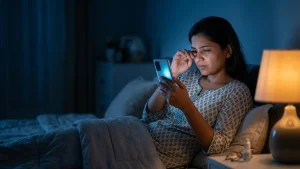
Using a mobile phone late at night has become a part of daily life for millions of people. Whether it is scrolling social media, watching videos, chatting, gaming, or working, prolonged screen use at night can affect your eye comfort and sleep quality. If your eyes feel tired, dry, blurry, or uncomfortable after using your phone in bed, you may be experiencing digital eye strain.
Many people ignore these symptoms in the beginning. However, continuous night-time mobile use can increase eye fatigue and discomfort over time. Eye doctors now commonly see patients complaining about headaches, dry eyes, burning sensation, blurry vision, and difficulty focusing after excessive screen use.
Quick Answer: Why Do Eyes Feel Tired After Using Mobile at Night?
Using a mobile phone at night can reduce blinking, increase eye muscle strain, and expose your eyes to bright screen glare. This may lead to dry eyes, blurry vision, headaches, eye fatigue, and digital eye strain symptoms.
Why Mobile Use at Night Causes Eye Strain
Modern smartphones require your eyes to focus continuously at a close distance. When this happens for long periods without breaks, the eye muscles become tired.
At the same time, most people blink less while looking at screens. Normally, humans blink around 15–20 times per minute, but screen use can reduce blinking significantly. Reduced blinking causes the tear film to evaporate faster, resulting in dryness and irritation.
Using bright mobile screens in dark environments also increases glare and visual stress. Many users unknowingly keep their screen brightness too high at night, making the eyes work harder.
Poor posture during late-night mobile use can also contribute to neck pain, shoulder pain, and headaches.
Common Symptoms of Digital Eye Strain
If you regularly use your mobile phone at night, you may notice these symptoms:
- Tired or heavy eyes
- Burning sensation
- Dry eyes
- Headaches
- Blurry vision
- Watery eyes
- Eye redness
- Difficulty focusing
- Sensitivity to light
- Neck and shoulder pain
- Trouble sleeping
These symptoms are commonly associated with digital eye strain or computer vision syndrome.
Mobile Eye Problems and Their Symptoms
| Mobile Eye Problem | Common Symptoms |
|---|---|
| Digital Eye Strain | Tired eyes, headaches |
| Dry Eyes | Burning, irritation |
| Blue Light Exposure | Sleep disturbance |
| Excess Screen Time | Blurry vision |
| Poor Brightness Settings | Eye discomfort |
Does Blue Light Harm Your Eyes?
Blue light from mobile screens has become a widely discussed topic. Current research does not clearly prove that smartphone blue light permanently damages the eyes. However, excessive screen exposure at night can increase eye fatigue and affect sleep quality.
Blue light exposure during late-night screen usage may suppress melatonin production, making it harder to fall asleep. Poor sleep quality can further worsen eye tiredness and headaches the next day.
This is one reason many people wake up with tired or irritated eyes after using mobile phones late at night.
Does Eye Comfort Mode Really Help?
Most smartphones now include features such as Eye Comfort Mode, Night Shift, or Blue Light Filter. These settings reduce cooler blue tones and make the screen appear warmer.
Eye Comfort Mode may help improve visual comfort and reduce glare in dark environments. However, it cannot completely prevent digital eye strain if your screen time remains excessive.
The best results usually come from combining Eye Comfort Mode with healthy screen habits such as taking breaks, blinking more often, and reducing night-time mobile usage.
How to Reduce Eye Strain From Mobile Use
Follow the 20-20-20 Rule
Every 20 minutes, look at something 20 feet away for at least 20 seconds. This simple habit helps relax the eye muscles.
Reduce Screen Brightness
Avoid using extremely bright screens in dark rooms. Adjust brightness according to surrounding light.
Blink More Often
Consciously blinking helps keep the eyes lubricated and reduces dryness caused by prolonged screen exposure.
Keep Proper Distance
Hold your mobile phone at least 16–18 inches away from your eyes whenever possible.
Limit Mobile Use Before Sleep
Reducing screen time before bedtime can improve both eye comfort and sleep quality.
Use Artificial Tears if Needed
Lubricating eye drops may help people experiencing dryness from prolonged mobile or laptop usage.
Enable Eye Comfort Mode
Night mode or blue light filters may improve comfort during late-night screen usage.
When Should You Visit an Eye Doctor?
Occasional eye tiredness is common, but persistent symptoms should not be ignored.
You should consult an eye specialist if you experience:
- Frequent headaches
- Continuous blurry vision
- Severe dry eyes
- Double vision
- Eye pain
- Difficulty focusing
- Increased sensitivity to light
If your symptoms continue despite reducing screen time, consider visiting an eye doctor near me or scheduling an eye checkup near me for a detailed evaluation. Persistent dryness, blurry vision, or headaches may require treatment from a trusted eye hospital near me.
An eye examination can help identify whether your symptoms are caused by digital eye strain, dry eyes, refractive error, or another underlying eye condition.
FAQs
Can mobile phones permanently damage your eyes?
Excessive screen time mainly causes temporary digital eye strain, dryness, and discomfort. However, poor long-term screen habits can increase eye fatigue and affect visual comfort.
Does dark mode reduce eye strain?
Dark mode may improve viewing comfort in low-light environments, but taking regular breaks and reducing screen time are more important.
Is Eye Comfort Mode useful at night?
Yes. Eye Comfort Mode may reduce glare and improve screen comfort during night-time mobile use.
Why do my eyes become blurry after using mobile phones?
Continuous close focus and reduced blinking can temporarily affect focusing ability and tear stability, causing blurry vision.
Final Thoughts
Using your mobile phone for long hours at night can lead to tired eyes, dryness, headaches, blurry vision, and digital eye strain symptoms. While features like Eye Comfort Mode and blue light filters may improve comfort, healthy screen habits remain the most effective way to protect your eyes.
Taking regular breaks, blinking more often, reducing excessive night-time screen exposure, and scheduling routine eye checkups can help maintain better eye comfort in today’s digital lifestyle.
If your symptoms continue regularly, visiting a trusted eye hospital near me or consulting an experienced eye doctor near me can help identify the exact cause and provide appropriate treatment.