ASG Eye Hospital

Keratoconus: Understand Corneal Health

Know the symptoms, causes, and vision risks of keratoconus.

20 
Years

200+
Hospitals

700+
Eye Specialists

3
Crore+ Eyes

What is Keratoconus?

Keratoconus is a progressive eye condition in which the cornea the clear front surface of the eye  becomes thin and bulges outward into a cone-like shape.

This irregular corneal shape causes blurred and distorted vision, making daily activities such as reading, driving, and screen use difficult. Early diagnosis and timely treatment can help slow disease progression and preserve vision quality. 

Keratoconus Treatment

Keratoconus: Causes, Symptoms & Advanced Treatment

Symptoms of Keratoconus

Patients with keratoconus may experience:

  • Blurred or distorted vision

  • Frequent changes in glasses number

  • Increased sensitivity to light and glare

  • Difficulty seeing at night

  • Eye strain and headaches

  • Double vision in one eye

  • Sudden worsening of eyesight

  • Difficulty wearing contact lenses comfortably

If these symptoms continue to worsen, a detailed corneal evaluation is recommended. 

Causes and Risk Factors of Keratoconus

The exact cause of keratoconus is not fully understood, but several factors may increase the risk:

  • Genetic or family history

  • Excessive eye rubbing

  • Chronic eye allergies

  • Weak corneal collagen structure

  • Long-term contact lens irritation

  • Connective tissue disorders

Keratoconus commonly develops during teenage years or early adulthood and may gradually progress over time. 

Stages of Keratoconus

Early Stage Keratoconus

Mild corneal thinning and slight vision distortion can often be managed with glasses or soft contact lenses.

Moderate Keratoconus

Vision becomes more irregular and patients may require specialized rigid gas permeable (RGP) or scleral lenses.

Advanced Keratoconus

Significant corneal thinning and scarring may occur, requiring surgical intervention such as corneal implants or corneal transplant surgery. 

Diagnosis of Keratoconus

At ASG Eye Hospital, advanced corneal imaging technologies help detect keratoconus at an early stage.

Corneal Topography

This advanced diagnostic test maps the surface curvature of the cornea and identifies irregular corneal patterns associated with keratoconus. 

Pachymetry

Pachymetry measures corneal thickness and helps assess disease progression.

Slit Lamp Examination

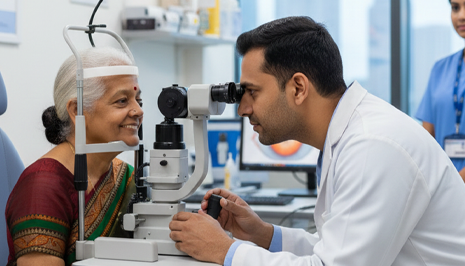
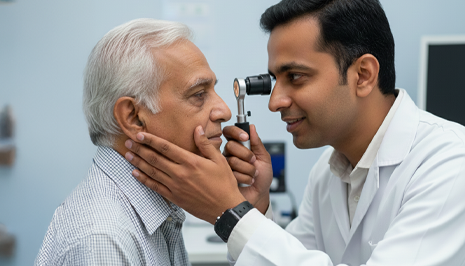
Specialists examine the cornea under magnification to detect thinning, scarring, and structural abnormalities. 

Keratoconus Treatment Options

Treatment depends on the severity and progression of the condition.

Glasses and Soft Contact Lenses

In the early stages, prescription glasses or soft contact lenses may improve visual clarity. 

Rigid Gas Permeable (RGP) Lenses

RGP lenses provide a smoother optical surface and improve vision in patients with irregular corneal shape. 

Scleral Lenses

Scleral lenses are large-diameter specialty lenses designed for advanced keratoconus patients who cannot tolerate regular lenses. 

Corneal Cross-Linking (C3R/CXL)

Corneal Cross-Linking is one of the most effective treatments for keratoconus. The procedure uses riboflavin (Vitamin B2) eye drops and ultraviolet light to strengthen corneal fibers and stop further progression of the disease. 

Intacs (Corneal Ring Implants)

Intacs are tiny ring segments inserted into the cornea to improve corneal shape and vision quality in selected cases. 

Corneal Transplant Surgery

In severe or advanced keratoconus cases with corneal scarring, corneal transplant surgery may be recommended to restore vision. 

Recovery After Keratoconus Treatment

Recovery depends on the treatment method:

  • Corneal Cross-Linking: Initial recovery in 3–7 days

  • Intacs Surgery: Approximately 1–2 weeks

  • Corneal Transplant: Several weeks to months for complete healing

Regular follow-up visits are important for monitoring corneal stability and vision improvement. 

Advanced Technology for Keratoconus Care at ASG Eye Hospital

ASG Eye Hospital uses advanced diagnostic and treatment technologies for accurate keratoconus management:

  • Corneal Topography

  • Pachymetry

  • Slit Lamp Imaging

  • UV-Based Corneal Cross-Linking Systems

  • Advanced Specialty Contact Lens Fitting

  • Corneal Transplant Techniques

Why Choose ASG Eye Hospital for Keratoconus Treatment?

  • Experienced cornea specialists

  • Early diagnosis with advanced imaging technology

  • Customized treatment plans

  • Expertise in Corneal Cross-Linking and transplant procedures

  • Advanced specialty contact lens support

  • Network of 180+ eye hospitals across India

Book Your Appointment

Submit Your Request

Get a Call from Our Team

Meet Your Specialist

Begin Your Eye Care Journey

Please wait...

Self Booking
Get A Call Back

Vision for All.
Not Just for Some

ASG is growing its network with 200 Vision Centres, delivering affordable eye care to over 4 million people.

Or

Clear Answers for Better Vision

Is keratoconus curable?

Keratoconus cannot be completely cured, but modern treatments can effectively slow or stop disease progression and improve vision quality. 

The best treatment depends on the stage of the condition. Corneal Cross-Linking is commonly recommended to stop progression in early to moderate stages. 

If left untreated, severe keratoconus can significantly affect vision and quality of life, but early treatment can help preserve eyesight.

Most keratoconus procedures are minimally invasive and performed under local anesthesia, causing minimal discomfort.

LASIK is generally not recommended for keratoconus patients because the cornea is already thin and weak.

The procedure usually takes around 30 to 60 minutes and is performed as a day-care treatment. 

Every Angle of Vision.
Every Kind of Care.

Overview

Job Title: Consultant Ophthalmologist

Location: Pan India
Job Category: Medical Healthcare

Work Employment:  Full time

What you work:

  • Diagnose and treat patients with a focus on Ophthalmologist.
  • Collaborate with senior doctors and multidisciplinary teams.
  • Ensure patient-centric care and follow clinical protocols.
  • Contribute to research, training, or hospital initiatives (if applicable).

Mandatory skills:

  • Relevant medical degree / certification.
  • Strong knowledge of ophthalmology practices / healthcare protocols.
  • Excellent communication and patient-handling skills.
  • Ability to work in fast-paced healthcare environments.

Preferred Qualifications:

  • Experience: 3 to 6 years of experience
  • Prior experience in eye care / multi-speciality hospitals.
  • Fellowship or advanced training in Ophthalmologist.
  • Familiarity with advanced diagnostic tools and surgical techniques.
  • Passion for innovation, patient care, and continuous learning.

Apply For This Positions

This will close in 0 seconds

Overview

Job Title: Optometrist

Location: Amritsar, Punjab 

Job Category: Optometry

Work Employment:  Full time

What you work:

  • Conduct comprehensive eye examinations and vision assessments for patients of all ages.
  • Prescribe and fit spectacles, contact lenses, and low-vision aids.
  • Perform diagnostic tests including refraction, tonometry, perimetry, and OCT imaging.
  • Support consultant ophthalmologists in pre-operative and post-operative patient workups.
  • Counsel patients on eye care, lens hygiene, and follow-up schedules.
  • Maintain accurate clinical records and adhere to hospital protocols.

Mandatory skills:

  • Bachelor’s or Master’s degree in Optometry (B.Optom / M.Optom) from a recognised institution.
  • Valid registration with the relevant state or national optometry council.
  • Proficiency in refraction, slit-lamp examination, and contact lens fitting.
  • Working knowledge of autorefractors, tonometers, fundus cameras, and OCT equipment.
  • Strong communication skills in English, Hindi, and Punjabi.
  • Ability to manage high patient volumes in a fast-paced clinical setting.

Preferred Qualifications:

  • Experience: 1 to 5 years of clinical optometry experience.
  • Prior experience in an eye care or multi-speciality hospital in Punjab.
  • Exposure to paediatric optometry, binocular vision, or low-vision rehabilitation.
  • Familiarity with advanced diagnostic imaging and dry-eye management.
  • Passion for patient care, community eye-health camps, and continuous learning.

Apply For This Positions

This will close in 0 seconds

Overview

Job Title: Optical In-charge 

Location: Panjim, Goa / Mumbai-Worli (Lower Parel) 

Job Category: Optical

Work Employment:  Full time

What you work:

  • Manage day-to-day operations of the optical outlet, including sales, dispensing, and inventory.
  • Guide customers on frame selection, lens options, and coatings based on their prescription and lifestyle.
  • Take accurate frame measurements and ensure precise fitting, adjustments, and after-sales service.
  • Drive optical sales targets and monitor daily, weekly, and monthly business performance.
  • Maintain optimum stock levels, coordinate with vendors, and control shrinkage through periodic audits.
  • Supervise and train optical staff on product knowledge, dispensing standards, and customer service.
  • Coordinate with optometrists and consultants to ensure smooth prescription-to-delivery flow.
  • Ensure visual merchandising, display hygiene, and adherence to brand and hospital standards.

Mandatory skills:

  • Diploma or Bachelor’s degree in Optometry (D.Optom / B.Optom) or equivalent optical dispensing qualification.
  • Minimum 3 years of experience in optical supervisory or in-charge role.
  • Sound knowledge of lens types, coatings, frame materials, and dispensing principles.
  • Hands-on experience with edging, fitting, and basic optical workshop equipment.
  • Proven ability to achieve sales targets and manage inventory and billing systems.
  • Strong communication and interpersonal skills in English, Hindi, and Konkani or Marathi.
  • Working knowledge of POS / retail software and MS Office.

Preferred Qualifications:

  • Experience: 3 to 7 years in optical retail or an eye care hospital optical division.
  • Prior experience managing an optical outlet in Goa or the western region.
  • Exposure to premium and progressive lens brands and specialty eyewear.
  • Familiarity with contact lens dispensing and after-care support.
  • Team leadership, customer relationship management, and continuous learning mindset.

Apply For This Positions

This will close in 0 seconds

Overview

Job Title: Optometrist

Location: Pan India 


Job Category: Optometry

Work Employment:  Full time

What you work:

  • Conduct comprehensive eye examinations and vision assessments for patients of all ages.
  • Prescribe and fit spectacles, contact lenses, and low-vision aids.
  • Perform diagnostic tests including refraction, tonometry, perimetry, and OCT imaging.
  • Support consultant ophthalmologists in pre-operative and post-operative patient workups.
  • Counsel patients on eye care, lens hygiene, and follow-up schedules.
  • Maintain accurate clinical records and adhere to hospital protocols.

Mandatory skills:

  • Diploma / Bachelor’s or Master’s degree in Optometry (D.Optom / B.Optom / M.Optom) from a recognised institution.
  • Valid registration with the relevant state or national optometry council.
  • Proficiency in refraction, slit-lamp examination, and contact lens fitting.
  • Working knowledge of autorefractors, tonometers, fundus cameras, and OCT equipment.
  • Ability to manage high patient volumes in a fast-paced clinical setting.

Preferred Qualifications:

  • Experience: 1 to 5 years of clinical optometry experience.
  • Exposure to paediatric optometry, binocular vision, or low-vision rehabilitation.
  • Passion for patient care, community eye-health camps, and continuous learning.

Apply For This Positions

This will close in 20 seconds