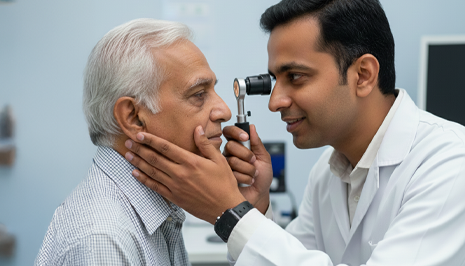
Scleritis – Symptoms, Causes & Treatment at ASG Eye Hospital
Scleritis is a serious inflammatory eye condition that affects the sclera — the white outer protective layer of the eye. Unlike mild eye redness or irritation, scleritis can cause severe eye pain, redness, light sensitivity, and blurred vision. The condition is often associated with autoimmune diseases and may lead to permanent eye damage or vision loss if not treated promptly. Early diagnosis and specialized treatment are extremely important to control inflammation and protect vision. At ASG Eye Hospital, experienced ophthalmologists and inflammatory eye disease specialists provide advanced diagnosis and personalized treatment for scleritis using modern imaging and comprehensive eye care technologies.
Types of Scleritis
Anterior Scleritis
Anterior scleritis affects the front portion of the sclera and is the most common type.
Diffuse Anterior Scleritis
This causes widespread redness and inflammation across the sclera and is generally the most treatable form.
Nodular Scleritis
Characterized by painful inflammatory nodules or bumps on the sclera.
Necrotizing Scleritis
A severe and vision-threatening form that can destroy scleral tissue and lead to serious complications.
Posterior Scleritis
Posterior scleritis affects the back portion of the sclera and may be harder to diagnose because visible redness can be minimal while pain and vision problems persist.
Symptoms of Scleritis
Common symptoms include:
- Severe deep eye pain
- Persistent eye redness
- Pain worsening with eye movement
- Blurred vision
- Sensitivity to light (photophobia)
- Excessive tearing
- Eye tenderness
- Headache or facial pain
- Swelling of the sclera
- Reduced vision
The pain is often intense enough to disturb sleep and may radiate to the jaw, forehead, or face.
Causes of Scleritis
Many cases of scleritis are associated with autoimmune or inflammatory diseases.
Autoimmune Diseases Linked to Scleritis
- Rheumatoid arthritis
- Lupus
- Ankylosing spondylitis
- Inflammatory bowel disease
- Sjögren’s syndrome
- Vasculitis
- Scleroderma
- Sarcoidosis
Rheumatoid arthritis is one of the most commonly associated autoimmune conditions.
Infections
Although less common, bacterial, fungal, viral, or parasitic infections may occasionally cause scleritis.
Eye Trauma or Surgery
Previous eye injury or eye surgery may trigger scleral inflammation.
Idiopathic Causes
In some patients, no specific cause can be identified.
Risk Factors for Scleritis
Factors increasing risk include:
- Autoimmune disease
- Female gender
- Middle age
- Smoking
- Previous inflammatory eye disease
- Eye surgery or trauma
- Connective tissue disorders
- Systemic infections
Smoking may contribute to difficult-to-control inflammatory eye disease.
Complications of Untreated Scleritis
Without proper treatment, scleritis may lead to serious complications such as:
Diagnosis of Scleritis
At ASG Eye Hospital, specialists perform comprehensive evaluations to diagnose scleritis and identify associated systemic conditions. Diagnostic tests may include:
- Comprehensive eye examination
- Slit lamp examination
- Retinal evaluation
- Eye pressure measurement
- Ocular ultrasound
- CT scan or imaging studies
- Blood investigations
- Autoimmune disease screening
Laboratory and systemic evaluations are important because scleritis is commonly associated with autoimmune diseases.
Treatment Options for Scleritis
Treatment depends on the severity and underlying cause of inflammation.
Anti-inflammatory Medications
Oral non-steroidal anti-inflammatory drugs (NSAIDs) are often used for mild-to-moderate scleritis.
Corticosteroids
Oral steroids, steroid eye drops, or injections may be required for severe inflammation.
Immunosuppressive Therapy
Patients with autoimmune-associated scleritis may require immunomodulatory medications for long-term disease control.
Antibiotics or Antifungal Therapy
Infectious scleritis requires targeted antimicrobial treatment.
Surgical Treatment
Severe scleral thinning or complications may occasionally require surgical repair.
Patient Experiences with Chronic Scleritis
Some patients report recurrent flare-ups, persistent pain, redness, and difficulty obtaining a clear diagnosis, especially when autoimmune testing remains negative. Online patient discussions frequently highlight the importance of consulting ophthalmologists and rheumatologists together for proper long-term management.
Community discussions also emphasize that scleritis is often misdiagnosed initially as conjunctivitis or episcleritis, delaying treatment in some cases.
When Should You Seek Immediate Medical Attention?
Seek urgent eye care if you experience:
Why Choose ASG Eye Hospital for Scleritis Treatment?