Why is Angle-Closure Glaucoma Dangerous?
Sudden and severe increase in eye pressure
Rapid optic nerve damage
Can lead to permanent blindness within hours
Requires immediate emergency treatment
Acute angle-closure glaucoma is one of the most urgent eye conditions in ophthalmology.
Types of Angle-Closure Glaucoma
1. Acute Angle-Closure Glaucoma
Sudden onset
Severe symptoms
Medical emergency
2. Chronic Angle-Closure Glaucoma
3. Intermittent Angle Closure
Temporary blockage
Symptoms come and go
Symptoms of Angle-Closure Glaucoma
Acute Symptoms
Severe eye pain
Sudden blurred vision
Redness in the eye
Halos around lights
Headache
Nausea and vomiting
Chronic Symptoms
Mild eye discomfort
Gradual vision loss
Occasional headaches
If you experience sudden symptoms, seek immediate medical care
Causes of Angle-Closure Glaucoma
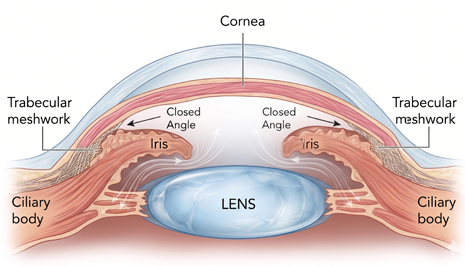
This condition occurs when the drainage angle between the iris and cornea becomes blocked, preventing fluid from exiting the eye.
Common Causes:
Risk Factors
You are at higher risk if you:
Are above 40 years
Female gender
Family history of glaucoma
Asian ethnicity
Have hyperopia (farsightedness)
Use certain medications (antihistamines, antidepressants)
When Should You See a Doctor?
Seek emergency care immediately if you have:
Early treatment can save your vision
Diagnosis of Angle-Closure Glaucoma
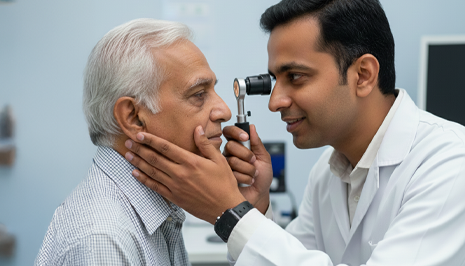
A comprehensive eye examination may include:
Tonometry – Measures eye pressure
Gonioscopy – Examines drainage angle
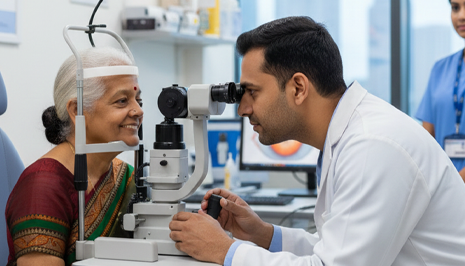
Slit-lamp examination – Internal eye structure analysis
OCT Scan – Optic nerve evaluation
Visual Field Test – Detects vision loss
Treatment Options
Angle-closure glaucoma requires immediate treatment to prevent permanent vision loss.
Medications
Laser Treatment
Surgery
Angle-Closure Glaucoma Treatment Cost in India
Estimated Cost:
Emergency treatment: ₹5,000 – ₹20,000
Laser iridotomy: ₹10,000 – ₹30,000
Surgery: ₹40,000 – ₹1,50,000
Book Emergency Eye Consultation Now
Recovery & Long-Term Management
Immediate relief after pressure control
Regular follow-ups required
Preventive treatment may be done in both eyes
Lifelong monitoring recommended
Why Choose ASG Eye Hospital?
Advanced glaucoma diagnostic technology
Emergency eye care availability
Experienced glaucoma specialists
Laser & surgical expertise
180+ hospitals across India