
ASG Eye Hospital

Laser Treatment for Diabetic Retinopathy

Diabetic retinopathy is a serious and potentially sight-threatening complication of diabetes that affects the eyes. As diabetes continues to rise globally, the incidence of diabetic retinopathy is also increasing strongly. Thankfully, advancements in medical technology have made the way for innovative treatments, and one such ray of hope is laser treatment for diabetic retinopathy. Laser treatment, and its ability to protect eyesight and improve the quality of life for those individuals who are affected by this condition.


What is Diabetic Retinopathy?


Diabetic retinopathy is a result of long-term high blood sugar levels, which can damage the blood vessels in the retina—a light-sensitive tissue at the back of the eye. This damage can lead to various complications, including swelling, leakage, and the growth of abnormal blood vessels. In the early stages, diabetic retinopathy may not exhibit noticeable symptoms, making regular eye exams crucial for early detection and intervention.


In the first stage of diabetic retinopathy, it might cause only mild vision problems or do not show any symptoms but it can lead to blindness.


Anyone who has type 1 and type 2 diabetes can be affected by diabetic retinopathy. The possibility of developing this eye condition increases with the duration of your diabetes and your level of blood sugar.


Treat Diabetic Retinopathy with Laser


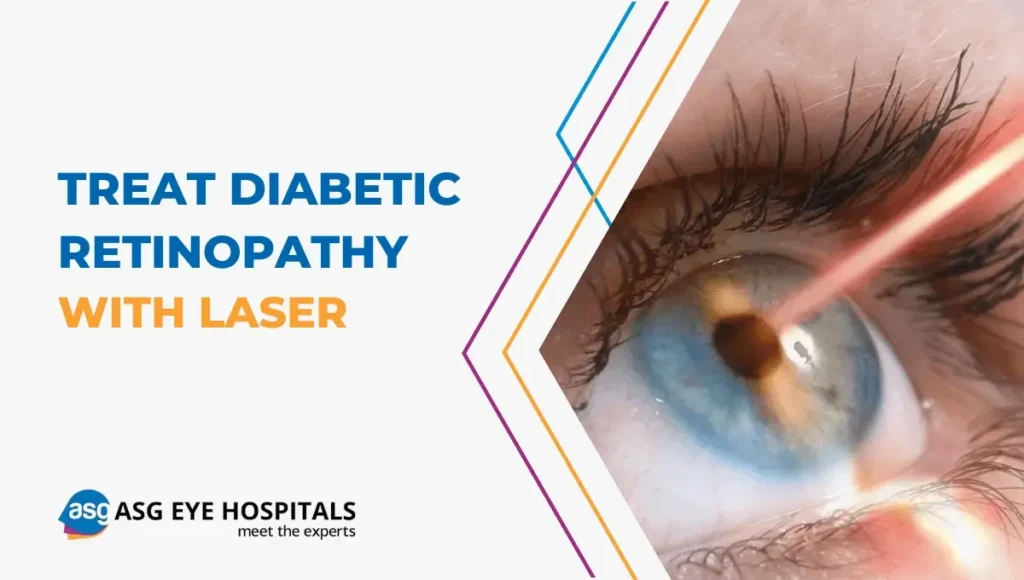
Laser treatment, also known as photocoagulation, has emerged as a key therapeutic approach for managing diabetic retinopathy. The primary goal of laser treatment is to prevent or slow down the progression of the disease by sealing off leaking blood vessels and reducing abnormal vessel growth. This procedure is often recommended by ophthalmologists based on the severity and type of diabetic retinopathy a patient is experiencing.


A beam of laser focused into your eyes to treat diabetic retinopathy can seem scary but in reality, the anticipation is often worse than the procedure itself.


Types of Laser for Diabetic Retinopathy?


  • Focal Laser Treatment
    Focal laser treatment is employed to treat macular edema, a condition where swelling occurs in the macula, the central part of the retina responsible for sharp vision. In this method, the laser is applied to specific “leaky” blood vessels to cauterize and seal them, preventing further fluid leakage and reducing macular edema.


  • Scatter Laser Treatment (Pan Retinal Photocoagulation)
    This technique is utilized to treat a broader area of the retina, particularly in cases where abnormal blood vessels are growing and causing complications. Scatter laser treatment helps to shrink abnormal blood vessels and reduce the risk of severe vision loss.


  • Vitreous Surgery with Laser Photocoagulation
    In some cases, diabetic retinopathy may progress to a point where vitreous surgery is required. Laser photocoagulation is often combined with this surgery to address complications like retinal detachment


  • Subthreshold Micropulse Laser Treatment
    The goal of this more recent strategy is to minimize damage to the surrounding tissue while still producing therapeutic effects. Subthreshold micropulse laser treatment delivers laser energy in a series of short pulses, allowing the tissue to cool between pulses. This reduces the risk of thermal damage and inflammation.


  • Photodynamic Therapy (PDT)
    PDT is occasionally used to treat certain cases of diabetic macular edema where traditional laser therapy might be less effective. A light-sensitive drug is injected into the bloodstream, and a laser is then directed at the retina. The drug is activated by the laser, targeting abnormal blood vessels and reducing leakage.


What are the Benefits of Laser Treatments?


  • Preserve Vision: By sealing off leaking blood vessels and reducing abnormal vessel growth, laser treatment aims to preserve and, in some cases, improve vision in individuals with diabetic retinopathy.


  • Prevent Severe Complications: Early intervention through laser treatment can prevent the progression of diabetic retinopathy to more advanced stages, reducing the risk of severe vision impairment or blindness.


  • Minimized Discomfort: Laser treatment is typically an outpatient procedure, offering a minimally invasive approach compared to more extensive surgical interventions. This results in less discomfort for the patient.


  • Quick Recovery: Many patients experience a relatively quick recovery following laser treatment, allowing them to resume their daily activities sooner compared to more complex surgical procedures.


Is Laser Treatment for Diabetic Retinopathy Painful?


In most cases, treatment is not painful. During treatment, you may experience a prickling sensation on your retina, usually where the nerves are located under the retina. You might experience more discomfort during treatment if you’ve had a lot of laser treatments in the past. This can be reduced by taking prescription pain relievers both before and after an appointment.


What are the Side Effects of Laser Treatment?


The first few days after laser treatment you may experience blurry vision, eye irritation, watery eyes, headache, seeing spots, eye aches, decreased vision, and dilated pupil. Call your doctor right away if you experience severe pain or worsen vision after treatment.


Challenges and Conditions to Talk About


Although laser treatment for diabetic retinopathy has many advantages, there are also drawbacks as well. The effectiveness of the treatment can vary from person to person, and several sessions might be needed. Furthermore, laser therapy treats the signs and symptoms of diabetic retinopathy but cannot cure it. Therefore, continuing diabetes care is essential for preventing new problems.


Laser treatment is a ray of hope for people who are dealing with the complexities of diabetic retinopathy. The range of treatments available to individuals with diabetes is constantly expanding in combination with the advancement of medical science. By welcoming innovation and investigating options like laser therapy, we can get closer to the day when diabetic retinopathy-related vision loss becomes rare than reality. Regular eye examinations, timely intervention, and advancements in medical technology collectively illuminate the path toward a brighter, clearer vision for individuals living with diabetes.
Overview

Job Title: Consultant Ophthalmologist

Location: Pan India
Job Category: Medical Healthcare

Work Employment:  Full time

What you work:

  • Diagnose and treat patients with a focus on Ophthalmologist.
  • Collaborate with senior doctors and multidisciplinary teams.
  • Ensure patient-centric care and follow clinical protocols.
  • Contribute to research, training, or hospital initiatives (if applicable).

Mandatory skills:

  • Relevant medical degree / certification.
  • Strong knowledge of ophthalmology practices / healthcare protocols.
  • Excellent communication and patient-handling skills.
  • Ability to work in fast-paced healthcare environments.

Preferred Qualifications:

  • Experience: 3 to 6 years of experience
  • Prior experience in eye care / multi-speciality hospitals.
  • Fellowship or advanced training in Ophthalmologist.
  • Familiarity with advanced diagnostic tools and surgical techniques.
  • Passion for innovation, patient care, and continuous learning.

Apply For This Positions

This will close in 0 seconds

Overview

Job Title: Optometrist

Location: Amritsar, Punjab 

Job Category: Optometry

Work Employment:  Full time

What you work:

  • Conduct comprehensive eye examinations and vision assessments for patients of all ages.
  • Prescribe and fit spectacles, contact lenses, and low-vision aids.
  • Perform diagnostic tests including refraction, tonometry, perimetry, and OCT imaging.
  • Support consultant ophthalmologists in pre-operative and post-operative patient workups.
  • Counsel patients on eye care, lens hygiene, and follow-up schedules.
  • Maintain accurate clinical records and adhere to hospital protocols.

Mandatory skills:

  • Bachelor’s or Master’s degree in Optometry (B.Optom / M.Optom) from a recognised institution.
  • Valid registration with the relevant state or national optometry council.
  • Proficiency in refraction, slit-lamp examination, and contact lens fitting.
  • Working knowledge of autorefractors, tonometers, fundus cameras, and OCT equipment.
  • Strong communication skills in English, Hindi, and Punjabi.
  • Ability to manage high patient volumes in a fast-paced clinical setting.

Preferred Qualifications:

  • Experience: 1 to 5 years of clinical optometry experience.
  • Prior experience in an eye care or multi-speciality hospital in Punjab.
  • Exposure to paediatric optometry, binocular vision, or low-vision rehabilitation.
  • Familiarity with advanced diagnostic imaging and dry-eye management.
  • Passion for patient care, community eye-health camps, and continuous learning.

Apply For This Positions

This will close in 0 seconds

Overview

Job Title: Optical In-charge 

Location: Panjim, Goa / Mumbai-Worli (Lower Parel) 

Job Category: Optical

Work Employment:  Full time

What you work:

  • Manage day-to-day operations of the optical outlet, including sales, dispensing, and inventory.
  • Guide customers on frame selection, lens options, and coatings based on their prescription and lifestyle.
  • Take accurate frame measurements and ensure precise fitting, adjustments, and after-sales service.
  • Drive optical sales targets and monitor daily, weekly, and monthly business performance.
  • Maintain optimum stock levels, coordinate with vendors, and control shrinkage through periodic audits.
  • Supervise and train optical staff on product knowledge, dispensing standards, and customer service.
  • Coordinate with optometrists and consultants to ensure smooth prescription-to-delivery flow.
  • Ensure visual merchandising, display hygiene, and adherence to brand and hospital standards.

Mandatory skills:

  • Diploma or Bachelor’s degree in Optometry (D.Optom / B.Optom) or equivalent optical dispensing qualification.
  • Minimum 3 years of experience in optical supervisory or in-charge role.
  • Sound knowledge of lens types, coatings, frame materials, and dispensing principles.
  • Hands-on experience with edging, fitting, and basic optical workshop equipment.
  • Proven ability to achieve sales targets and manage inventory and billing systems.
  • Strong communication and interpersonal skills in English, Hindi, and Konkani or Marathi.
  • Working knowledge of POS / retail software and MS Office.

Preferred Qualifications:

  • Experience: 3 to 7 years in optical retail or an eye care hospital optical division.
  • Prior experience managing an optical outlet in Goa or the western region.
  • Exposure to premium and progressive lens brands and specialty eyewear.
  • Familiarity with contact lens dispensing and after-care support.
  • Team leadership, customer relationship management, and continuous learning mindset.

Apply For This Positions

This will close in 0 seconds

Overview

Job Title: Optometrist

Location: Pan India 


Job Category: Optometry

Work Employment:  Full time

What you work:

  • Conduct comprehensive eye examinations and vision assessments for patients of all ages.
  • Prescribe and fit spectacles, contact lenses, and low-vision aids.
  • Perform diagnostic tests including refraction, tonometry, perimetry, and OCT imaging.
  • Support consultant ophthalmologists in pre-operative and post-operative patient workups.
  • Counsel patients on eye care, lens hygiene, and follow-up schedules.
  • Maintain accurate clinical records and adhere to hospital protocols.

Mandatory skills:

  • Diploma / Bachelor’s or Master’s degree in Optometry (D.Optom / B.Optom / M.Optom) from a recognised institution.
  • Valid registration with the relevant state or national optometry council.
  • Proficiency in refraction, slit-lamp examination, and contact lens fitting.
  • Working knowledge of autorefractors, tonometers, fundus cameras, and OCT equipment.
  • Ability to manage high patient volumes in a fast-paced clinical setting.

Preferred Qualifications:

  • Experience: 1 to 5 years of clinical optometry experience.
  • Exposure to paediatric optometry, binocular vision, or low-vision rehabilitation.
  • Passion for patient care, community eye-health camps, and continuous learning.

Apply For This Positions

This will close in 20 seconds