How Do Photochromic Lenses Work?
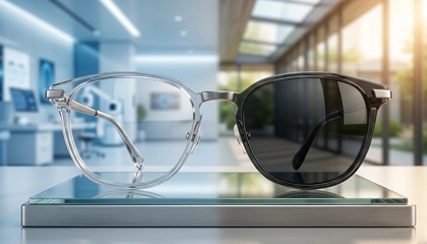
Photochromic lenses contain special UV-reactive molecules that respond to sunlight exposure.
In Bright Sunlight:
- Lenses darken automatically
- Glare reduces
- Outdoor vision becomes more comfortable
Indoors or Low UV Conditions:
- Lenses gradually become clear again
- Normal indoor vision remains comfortable
Modern photochromic lens technologies are designed for:
- Faster darkening outdoors
- Quick fading indoors
- Better optical clarity
- Improved color consistency
Benefits of Photochromic Lenses
Automatic Light Adjustment
Photochromic lenses automatically adapt to changing light conditions, making daily life more convenient.
Best For:
- Daily commuters
- Office professionals
- Students
- Frequent travelers
UV Protection
These lenses help block harmful UV rays that may contribute to long-term eye damage.
UV protection may help reduce risk of:
- Cataracts
- UV-related eye strain
- Sunlight discomfort
Reduced Glare & Eye Strain
Photochromic lenses help minimize discomfort caused by:
- Bright sunlight
- Outdoor glare
- Reflective roads
- Harsh daylight exposure
Helpful for:
- Driving
- Outdoor activities
- Sensitive eyes
- Digital users
One Pair for Indoor & Outdoor Use
Photochromic lenses work like:
- Regular spectacles indoors
- Sunglasses outdoors
This reduces the need for carrying multiple glasses.
Quick Comparison Table
| Feature | Photochromic Lenses | Regular Sunglasses |
|---|
| Adjust to sunlight | Yes | No |
| Indoor use | Yes | Limited |
| UV protection | Yes | Yes |
| Vision correction available | Yes | Yes |
| Daily convenience | High | Moderate |
Who Should Use Photochromic Lenses?
Photochromic lenses are useful for:
- Outdoor professionals
- Drivers
- Students
- Children
- Senior adults
- Office workers
- People with light sensitivity
They are especially beneficial for individuals exposed to sunlight during daily commuting.
Photochromic Lenses for Digital Lifestyle
Modern lifestyles involve constant switching between screens and outdoor environments. Photochromic lenses help improve comfort during:
- Outdoor mobile phone use
- Office commuting
- Work-from-home transitions
- Hybrid indoor-outdoor routines
Some advanced lenses also include:
- Blue-light filtering
- Anti-reflective coating
- Scratch resistance
Are Photochromic Lenses Good for Driving?
Photochromic lenses may help reduce:
- Daytime glare
- Bright road reflections
- Sunlight discomfort
Helpful for:
- Highway driving
- Long-distance travel
- Daily commuters
However, some lenses react less inside cars because windshields block UV rays. Specialized driving photochromic lenses offer better in-car performance.
Types of Photochromic Lenses
Standard Photochromic Lenses
Designed for everyday indoor and outdoor use.
Fast-Reaction Photochromic Lenses
Offer:
- Faster darkening
- Faster indoor fading
Photochromic Blue-Light Lenses
Combine:
- UV protection
- Blue-light filtering
- Adaptive tint technology
Photochromic Progressive Lenses
Suitable for:
- Presbyopia patients
- People above 40 years
These combine multifocal vision correction with automatic sunlight adaptation.
Advanced Photochromic Lens Technologies
ASG Eye Hospital offers advanced photochromic lens solutions from globally trusted eyewear brands.
Popular technologies include:
- Transitions® Lenses
- ZEISS PhotoFusion
- Essilor Transitions Gen S
- Hoya Sensity
These advanced lenses are designed for faster responsiveness, visual comfort, and long-term UV protection.
Photochromic Lenses vs Blue-Light Lenses
Photochromic Lenses
- React to UV light
- Darken outdoors
- Reduce sunlight glare
Blue-Light Filtering Lenses
- Designed for digital screens
- Reduce blue-light exposure
- Usually remain clear indoors
Some modern lenses combine both technologies for complete indoor and outdoor eye comfort.
Are Photochromic Lenses Safe for Children?
Yes, children who spend time outdoors may benefit from:
- UV protection
- Reduced glare
- Better visual comfort
These lenses may help protect developing eyes from excessive sunlight exposure.
Limitations of Photochromic Lenses
Although highly convenient, some limitations include:
- Reduced activation inside vehicles
- Slightly slower response in cold weather
- Mild tint indoors under certain conditions
Modern lens technologies continue improving indoor clarity and activation speed.
Photochromic Lens Consultation at ASG Eye Hospital
At ASG Eye Hospital Optical Services, specialists recommend suitable photochromic lenses based on:
- Prescription power
- Outdoor exposure
- Driving habits
- Screen usage
- Lifestyle needs
- Eye sensitivity
Customized lens selection helps improve visual comfort and long-term eye protection.
Why Choose ASG Eye Hospital for Photochromic Lenses?
- Advanced lens technologies
- Customized lens recommendations
- Premium eyewear brands
- UV protection-focused solutions
- Digital lifestyle lens options
- Experienced eye care specialists
- Personalized optical care
ASG Eye Hospital provides advanced photochromic lens solutions designed for modern lifestyles, better comfort, and healthier vision.