Astigmatism Treatment: Symptoms, Causes, Surgery & Correction
Who is at Risk?
Astigmatism can occur at any age. But there are some factors that make you susceptible to developing astigmatism.
If either one of your parents has astigmatism or any other refractive error, then the likelihood of having astigmatism is high in you. Excessive computer use, reading for long periods, poor visual hygiene, and lack of eye care are some of the reasons why you can develop astigmatism.
In addition, some people get astigmatism due to injuries to the eye, eye surgery, or diseases like keratoconus that damage the cornea.
It is important that children and adolescents receive frequent eye tests as this will help avoid vision problems that can affect their studies.
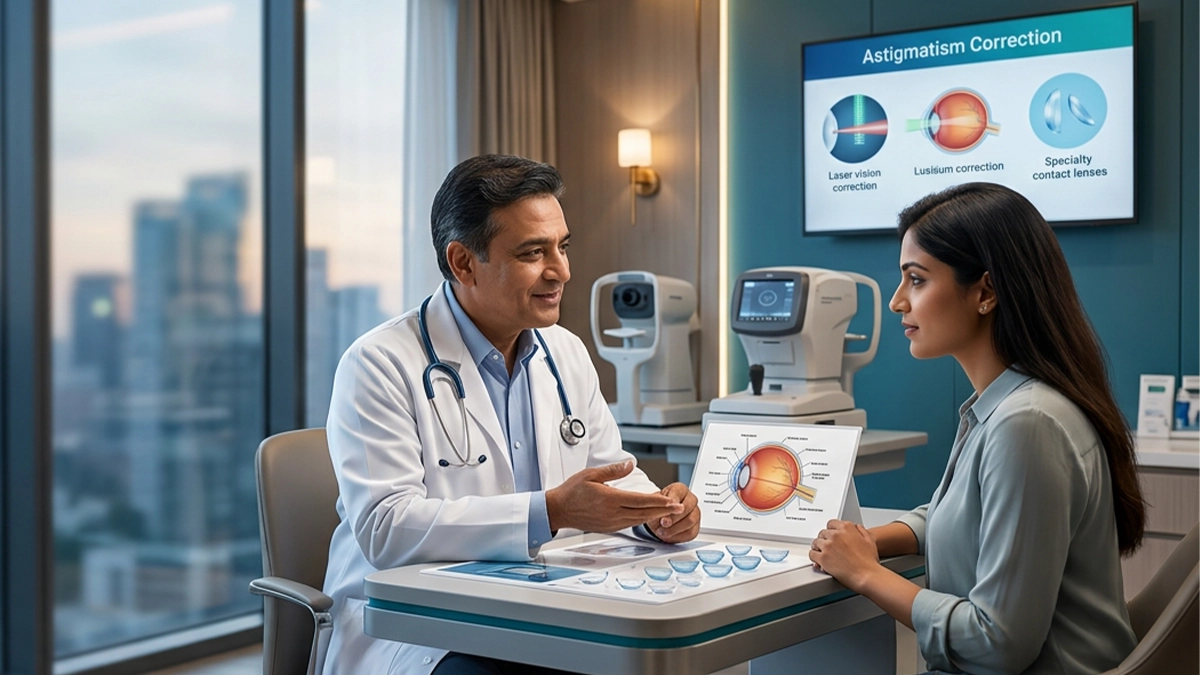
Astigmatism Treatment Options at ASG Eye Hospital
Lasik Surgery
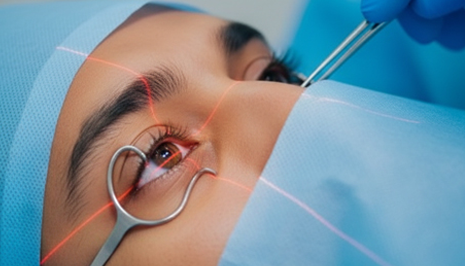
LASIK is the most common treatment method for astigmatism. In the procedure, a thin flap is made in the cornea, and then laser technology is used to reshape the corneal tissue.
The process is fast, painless, and takes just a few minutes. Patients achieve improved vision in 24 to 48 hours.
LASIK is recommended for people with stable eye power.
SMILE Surgery (Small Incision Lenticule Extraction)
SMILE surgery is a highly advanced laser procedure for the correction of astigmatism and myopia. SMILE surgery differs from conventional LASIK in that no creation of a large corneal flap is necessary.
A small segment of the cornea is extracted through an incision, resulting in a reshaping of the cornea.
Why is SMILE surgery preferred?
- Quicker recovery
- Reduced risk of dryness of the eyes
- Higher stability of the cornea
- Less postoperative discomfort
This technique is highly recommended for individuals who lead an active life or participate in sports.
PRK is a suitable vision-correcting laser procedure for patients having thin cornea or those who are unsuitable for LASIK surgery.
During PRK surgery, the first step involves removal of the top layer of cornea followed by reshaping of the cornea with the help of excimer laser.
Though the healing process is a bit longer than LASIK or SMILE surgery, PRK provides very satisfactory results when it comes to vision correction.
PRK is also one of the safe methods for correction of astigmatism.
Toric ICL (Implantable Collamer Lens)
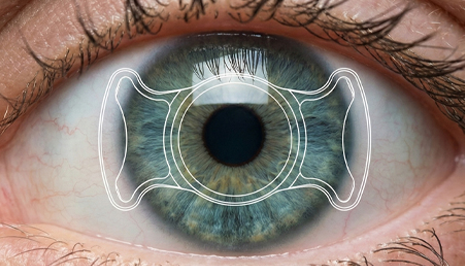
Toric ICL surgery is one of the non-laser treatments that can correct high astigmatism as well as severe refractive problems.
This surgical procedure is carried out through insertion of the customized intraocular lens inside the eye behind the iris, keeping intact the natural lens.
Toric ICL is most suitable for:
- High astigmatism cases
- Thin cornea cases
- Laser surgery unsuitable cases
- Dry eyes case
There are many benefits of Toric ICL including the point that the procedure can be reversed.
Which Astigmatism Treatment is Best for You?
Cost of Astigmatism Surgery in India
Astigmatism surgery costs in India vary based on the method involved, technology used, expertise of the surgeon, and overall condition of the eye.
Typically:
- The cost of LASIK surgery in India is between ₹20,000 to ₹80,000 per eye.
- The cost of SMILE laser surgery varies between ₹50,000 to ₹1,20,000 per eye.
- The cost of PRK surgery in India usually varies between ₹25,000 to ₹60,000 per eye.
- The cost of Toric ICL surgery can be between ₹80,000 to ₹1,50,000 per eye.
Benefits of Astigmatism Treatment Procedures
There are numerous benefits of astigmatism surgery:
- Less dependence on glasses or contacts
- Better and more defined vision
- Night vision improvements
- Enhanced ability to play sports and enjoy outdoor activities
- Enhanced comfort when using gadgets
- Persistent effect on the eyes
- Enhanced quality of life
People who had laser surgeries are likely to feel more confident and comfortable.
Astigmatism Surgery Candidate Requirements
Not everyone will be able to have a surgery performed.
In general, one should:
- Be 18 years or older
- Have a stable eye power over at least a year
- Have healthy eyes
- Not suffer from severe dry eyes and corneal disorders
A thorough eye examination must be performed before choosing the appropriate method of treatment.
Recovery Period
The duration of the recovery period depends on the procedure used.
- After LASIK, people can return to their routines within 1-2 days.
- Recovery in SMILE procedures takes the same time and does not cause much discomfort.
- People who had PRK require some weeks until full vision stabilization.
- After Toric ICL implantation, there is a quick improvement in vision.
Risks and Safety
Modern methods of correcting astigmatism are very safe if done with current technology and skilled surgeons.
Short-term effects might involve:
- Dry eyes
- Slight glare
- Sensitivity to light
- Temporary pain during recovery
Severe risks are uncommon. Accurate assessment, detailed surgical planning, and frequent checkups greatly enhance safety.
Why Choose ASG for Astigmatism Treatment
Advanced Eye Care Technology
ASG uses advanced laser platforms and diagnostic systems to provide accurate and personalized astigmatism correction treatments.
Experienced Eye Specialists
Our skilled ophthalmologists have extensive experience in performing LASIK, SMILE, PRK, and ICL procedures with high success rates.
Customization of Services
Our patients get personal treatment proposals depending on their eye state, life habits, eye thickness, and other specific features.
Trusted Eye Hospitals
Our reputation as one of the best eye hospitals is well-known.