ASG Eye Hospital

Expert Squint Eye Treatment & Surgery in India

Specialist pediatric ophthalmologists restoring clear vision and confidence — trusted by thousands of families nationwide.

20 
Years

200+
Hospitals

700+
Eye Specialists

3
Crore+ Eyes

What is Squint (Strabismus)?

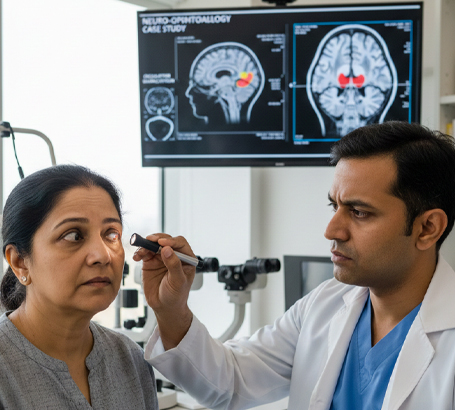
Squint- also known as strabismus (भेंगापन) is a condition where the two eyes do not align in the same direction. While one eye focuses on an object, the other eye may turn inward (esotropia), outward (exotropia), upward (hypertropia), or downward (hypotropia). This misalignment can be constant or intermittent and can affect one or both eyes.

Squint treatment restores eye alignment, improves binocular vision, and prevents long-term visual loss. Treatment varies based on the cause, severity, patient’s age, and presence of related conditions like lazy eye (Amblyopia).

Please wait...

Get A Call Back

Why Choose ASG Eye Hospital for Squint eye Treatment ?

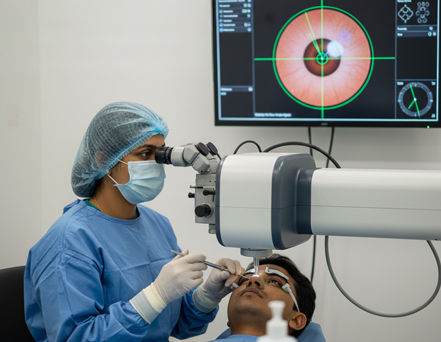
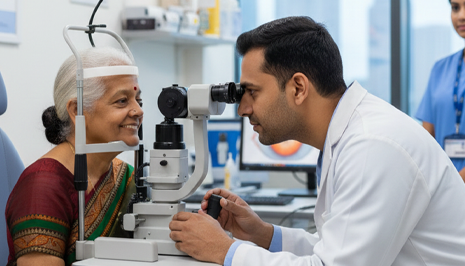
ASG Eye Hospital offers specialised pediatric and squint ophthalmology services supported by advanced diagnostic technology. Our team provides comprehensive care — from glasses and patch therapy to advanced muscle surgery — under one roof. We focus on safe treatment, precise alignment, and long-term visual improvement in a child-friendly environment.

Treatment Options for Squint Eye

Your Treatment Journey

Squint Eye Videos: Expert Guidance

Vision for All.
Not Just for Some

ASG is growing its network with 200 Vision Centres, delivering affordable eye care to over 4 million people.

Or

Squint Eye Surgery – Complete Guide, Treatment, Causes, Types & Cost of Strabismus

Squint eye, also known as strabismus, is a condition where the eyes are not properly aligned and may point in different directions. It can affect both children and adults, leading to vision problems if not treated on time.

At ASG Eye Hospital, we provide advanced squint eye treatment in India with expert diagnosis, modern technology, and experienced specialists to ensure effective correction and improved vision.

When Should You Consider Squint Eye Treatment?

Squint treatment is recommended when eye misalignment starts affecting vision or appearance. You should consult an eye specialist if you notice:

  • One eye turning inward, outward, upward, or downward
  • Double vision
  • Difficulty focusing on objects
  • Frequent eye strain or headaches
  • Head tilting while looking at objects

Early diagnosis helps in better treatment outcomes, especially in children.

Types of Squint Eye (Strabismus)

Different types of squint conditions include:

  • Esotropia – Eye turns inward
  • Exotropia – Eye turns outward
  • Hypertropia – Eye turns upward
  • Hypotropia – Eye turns downward

Clear Answers for Better Vision

What is a Squint (Strabismus)?

A squint is a condition where the eyes are misaligned and do not point in the same direction simultaneously. One eye may turn inward (Esotropia), outward (Exotropia), upward (Hypertropia), or downward (Hypotropia) while the other remains straight. At ASG, we treat this not just as a cosmetic issue, but as a functional one that affects your brain-eye coordination.

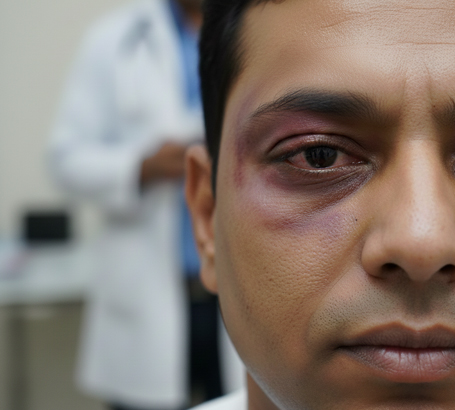
Squinting is usually caused by an imbalance in the six extraocular muscles that control eye movement. It can also be triggered by high refractive errors (like extreme farsightedness), nerve damage, or genetic factors. In adults, sudden-onset squint may be related to underlying health issues like diabetes, high blood pressure, or neurological conditions.
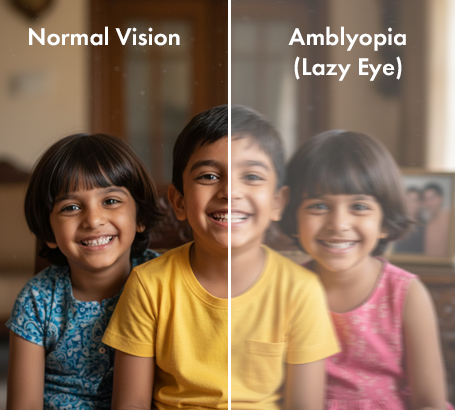
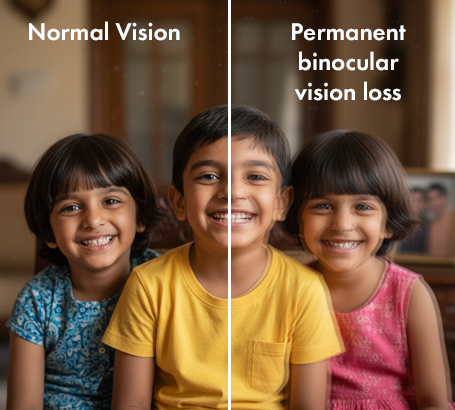
No. While the misalignment is visible, the more serious issue is the loss of Binocular Single Vision. When eyes don’t align, the brain may ignore signals from the misaligned eye, leading to Amblyopia (Lazy Eye) and a total loss of depth perception (3D vision).

A common myth is that squints cannot be treated in adults. At ASG Eye Hospital, we successfully perform squint correction surgeries for patients of all ages. While childhood treatment is ideal for developing 3D vision, adult surgery can significantly improve the field of vision, eliminate double vision, and restore facial symmetry.

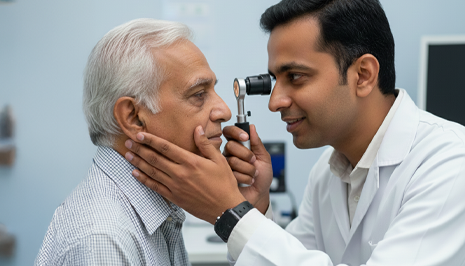
Our specialists perform a series of Orthoptic Tests to measure the exact degree of deviation. This includes:

Prism Cover Tests: To measure the angle of the squint.
Synoptophore Evaluation: To check how well the eyes work together.
Dilated Fundus Exam: To ensure the internal health of the eye isn’t the cause.

Not all squints require surgery. Depending on the type and severity, we may recommend:

Corrective Glasses: Often, correcting farsightedness can straighten the eyes.
Prism Lenses: Specialized glasses that shift the image to align vision.
Vision Therapy: Exercises to strengthen the eye muscles and improve coordination.
Patching (Occlusion Therapy): To treat a “Lazy Eye” by forcing the brain to use the weaker eye.

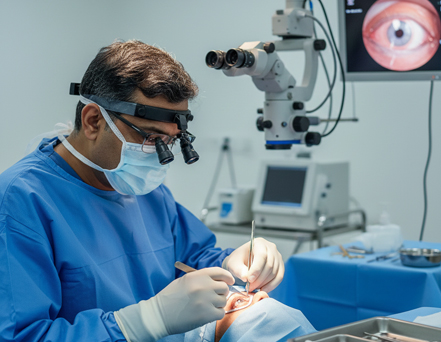
Squint surgery is a day-care procedure where the surgeon accesses the eye muscles through the conjunctiva (the clear white part). We either “weaken” a muscle by moving its attachment point back or “strengthen” it by shortening it. At ASG, we use absorbable sutures, meaning no stitches need to be removed later.

The surgery is performed under anesthesia, so it is entirely painless. Post-surgery, you may feel a “gritty” sensation for a few days, similar to having sand in the eye. Most patients return to light activities and work within 1 to 2 weeks. Redness in the eye is normal and typically fades within 3–4 weeks.

While surgery has a high success rate (80–90%), there is a small possibility of the eyes drifting again over several years, especially if the underlying vision is very weak. Regular follow-ups at ASG help us monitor muscle stability and provide timely corrective exercises if needed.

ASG houses dedicated Pediatric and Strabismus specialists who handle complex and recurrent cases. Our surgeons use advanced adjustable suture techniques in specific cases, allowing for fine-tuning of eye alignment shortly after the surgery for the most precise results possible.

Every Angle of Vision.
Every Kind of Care.

Overview

Job Title: Consultant Ophthalmologist

Location: Pan India
Job Category: Medical Healthcare

Work Employment:  Full time

What you work:

  • Diagnose and treat patients with a focus on Ophthalmologist.
  • Collaborate with senior doctors and multidisciplinary teams.
  • Ensure patient-centric care and follow clinical protocols.
  • Contribute to research, training, or hospital initiatives (if applicable).

Mandatory skills:

  • Relevant medical degree / certification.
  • Strong knowledge of ophthalmology practices / healthcare protocols.
  • Excellent communication and patient-handling skills.
  • Ability to work in fast-paced healthcare environments.

Preferred Qualifications:

  • Experience: 3 to 6 years of experience
  • Prior experience in eye care / multi-speciality hospitals.
  • Fellowship or advanced training in Ophthalmologist.
  • Familiarity with advanced diagnostic tools and surgical techniques.
  • Passion for innovation, patient care, and continuous learning.

Apply For This Positions

This will close in 0 seconds

Overview

Job Title: Optometrist

Location: Amritsar, Punjab 

Job Category: Optometry

Work Employment:  Full time

What you work:

  • Conduct comprehensive eye examinations and vision assessments for patients of all ages.
  • Prescribe and fit spectacles, contact lenses, and low-vision aids.
  • Perform diagnostic tests including refraction, tonometry, perimetry, and OCT imaging.
  • Support consultant ophthalmologists in pre-operative and post-operative patient workups.
  • Counsel patients on eye care, lens hygiene, and follow-up schedules.
  • Maintain accurate clinical records and adhere to hospital protocols.

Mandatory skills:

  • Bachelor’s or Master’s degree in Optometry (B.Optom / M.Optom) from a recognised institution.
  • Valid registration with the relevant state or national optometry council.
  • Proficiency in refraction, slit-lamp examination, and contact lens fitting.
  • Working knowledge of autorefractors, tonometers, fundus cameras, and OCT equipment.
  • Strong communication skills in English, Hindi, and Punjabi.
  • Ability to manage high patient volumes in a fast-paced clinical setting.

Preferred Qualifications:

  • Experience: 1 to 5 years of clinical optometry experience.
  • Prior experience in an eye care or multi-speciality hospital in Punjab.
  • Exposure to paediatric optometry, binocular vision, or low-vision rehabilitation.
  • Familiarity with advanced diagnostic imaging and dry-eye management.
  • Passion for patient care, community eye-health camps, and continuous learning.

Apply For This Positions

This will close in 0 seconds

Overview

Job Title: Optical In-charge 

Location: Panjim, Goa / Mumbai-Worli (Lower Parel) 

Job Category: Optical

Work Employment:  Full time

What you work:

  • Manage day-to-day operations of the optical outlet, including sales, dispensing, and inventory.
  • Guide customers on frame selection, lens options, and coatings based on their prescription and lifestyle.
  • Take accurate frame measurements and ensure precise fitting, adjustments, and after-sales service.
  • Drive optical sales targets and monitor daily, weekly, and monthly business performance.
  • Maintain optimum stock levels, coordinate with vendors, and control shrinkage through periodic audits.
  • Supervise and train optical staff on product knowledge, dispensing standards, and customer service.
  • Coordinate with optometrists and consultants to ensure smooth prescription-to-delivery flow.
  • Ensure visual merchandising, display hygiene, and adherence to brand and hospital standards.

Mandatory skills:

  • Diploma or Bachelor’s degree in Optometry (D.Optom / B.Optom) or equivalent optical dispensing qualification.
  • Minimum 3 years of experience in optical supervisory or in-charge role.
  • Sound knowledge of lens types, coatings, frame materials, and dispensing principles.
  • Hands-on experience with edging, fitting, and basic optical workshop equipment.
  • Proven ability to achieve sales targets and manage inventory and billing systems.
  • Strong communication and interpersonal skills in English, Hindi, and Konkani or Marathi.
  • Working knowledge of POS / retail software and MS Office.

Preferred Qualifications:

  • Experience: 3 to 7 years in optical retail or an eye care hospital optical division.
  • Prior experience managing an optical outlet in Goa or the western region.
  • Exposure to premium and progressive lens brands and specialty eyewear.
  • Familiarity with contact lens dispensing and after-care support.
  • Team leadership, customer relationship management, and continuous learning mindset.

Apply For This Positions

This will close in 0 seconds

Overview

Job Title: Optometrist

Location: Pan India 


Job Category: Optometry

Work Employment:  Full time

What you work:

  • Conduct comprehensive eye examinations and vision assessments for patients of all ages.
  • Prescribe and fit spectacles, contact lenses, and low-vision aids.
  • Perform diagnostic tests including refraction, tonometry, perimetry, and OCT imaging.
  • Support consultant ophthalmologists in pre-operative and post-operative patient workups.
  • Counsel patients on eye care, lens hygiene, and follow-up schedules.
  • Maintain accurate clinical records and adhere to hospital protocols.

Mandatory skills:

  • Diploma / Bachelor’s or Master’s degree in Optometry (D.Optom / B.Optom / M.Optom) from a recognised institution.
  • Valid registration with the relevant state or national optometry council.
  • Proficiency in refraction, slit-lamp examination, and contact lens fitting.
  • Working knowledge of autorefractors, tonometers, fundus cameras, and OCT equipment.
  • Ability to manage high patient volumes in a fast-paced clinical setting.

Preferred Qualifications:

  • Experience: 1 to 5 years of clinical optometry experience.
  • Exposure to paediatric optometry, binocular vision, or low-vision rehabilitation.
  • Passion for patient care, community eye-health camps, and continuous learning.

Apply For This Positions

This will close in 20 seconds