Cataracts happen when the eye’s natural lens gets cloudy, which makes it hard to see clearly, especially at night. As the disease gets worse, surgery is usually the only way to get vision back.
You can have cataract surgery today using either traditional ultrasound methods or laser technology.
Patients can make a smart choice about which type of laser cataract surgery is best for their eye condition if they know the pros and cons of each.
How does laser cataract surgery differ from traditional surgery?
Traditional cataract surgery, known as phacoemulsification, has been performed for decades. A surgeon creates a small incision, breaks the cloudy lens using ultrasound energy, and replaces it with an artificial intraocular lens.
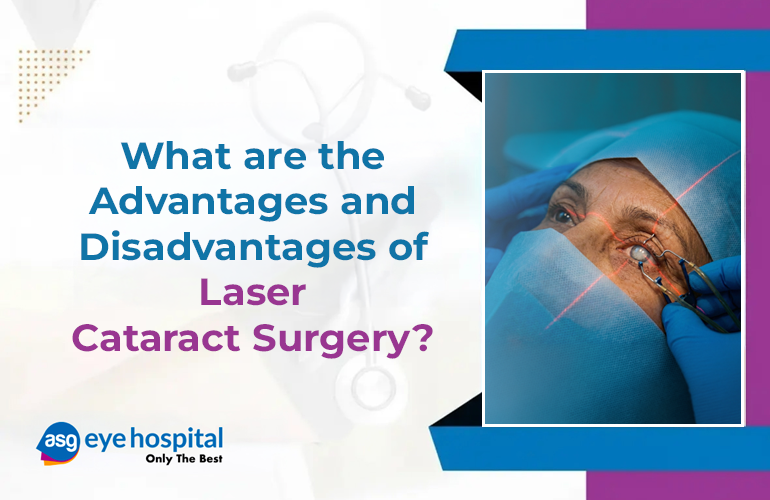
Laser-assisted cataract surgery uses a femtosecond laser for several early steps of the procedure.
These include:
- Creating the corneal incision
- Opening the lens capsule (capsulotomy)
- Softening the cataract before removal
The laser performs these steps with computer-guided precision. But the cloudy lens still needs to be removed and replaced by the surgeon. Which leads many patients to ask a very direct question. Is laser cataract surgery better than the traditional method?
The answer depends on the individual eye.
What are the main benefits of laser cataract surgery?
The benefits of laser cataract surgery often relate to precision and predictability during certain stages of the operation.
Because the femtosecond laser maps the eye before treatment, the system can create extremely accurate incisions.
Some commonly discussed advantages include:
- Very accurate capsulotomy: The laser makes a perfectly round hole in the lens capsule.
- Less ultrasound energy: The lens of the cataract is softened before it is removed.
- More accurate for high-end lenses: When putting in toric or multifocal intraocular lenses.
- Improved correction of astigmatism: Laser arcs can help with mild corneal astigmatism.
And for some patients, this level of accuracy can help them see better in the long run. But technology alone never replaces surgical judgment.
Laser Cataract Surgery Advantages and Disadvantages:
Understanding the laser cataract surgery advantages and disadvantages requires looking at both sides of the procedure.
Because while the technology offers benefits, it also has practical considerations.
Advantages
- Computer-guided corneal incisions
- Accurate lens capsule opening
- Lower ultrasound energy is used during lens removal
- Potentially improved lens positioning
Disadvantages
- Higher cost compared with traditional surgery
- Not necessary for every cataract case
- Requires specific eye anatomy to use laser systems
- Surgery still includes manual steps by the surgeon
So the discussion often shifts toward suitability rather than superiority. Not every cataract requires laser assistance.
How do the pros and cons apply in practice?
Many patients assume that laser automatically means better results. But eye specialists tend to frame the conversation differently.
The laser cataract surgery pros and cons depend heavily on the eye’s structure, cataract density, and lens choice.
For example:
- Patients choosing multifocal lenses may benefit from laser precision
- Eyes with irregular corneas might need different planning
- Very dense cataracts may still require traditional surgical judgment
Because cataracts vary widely from person to person. Most people arrive at the clinic only after vision becomes noticeably cloudy. Driving glare at night, difficulty reading WhatsApp messages, or trouble recognizing faces across the room are common complaints.
Sometimes the diagnosis happens during a routine eye exam.
Is laser cataract surgery better than traditional surgery?
The short answer: not always.
Both laser-assisted surgery and traditional phacoemulsification have high success rates when performed by experienced surgeons. And many ophthalmologists still prefer conventional surgery for certain cases.
The real question often becomes: Which technique fits this particular eye?
Pre-surgery evaluation helps answer that. Doctors usually perform tests such as:
- Optical biometry to measure eye length
- Corneal topography to map corneal shape
- Slit-lamp examination to assess cataract density
These measurements guide surgical planning.
What do patients notice after cataract surgery recovery?
Vision clarity improves fairly quickly after cataract surgery. Colours appear brighter. Glare reduces. Reading becomes easier again. But patients often mention something more subtle. They didn’t realize how dim the world had become before the cataract was removed.
Because cataracts develop slowly, many people adjust to the blur without noticing the gradual change. Until the cloudy lens is replaced.
Choosing between surgical methods usually happens after a detailed eye examination. Doctors explain the laser cataract surgery advantages and disadvantages in the context of the patient’s eye condition, cataract type, and lens preference.
ASG Eye Hospital conducts cataract evaluations and surgeries across several cities. Patients often visit ASG Eye Hospital in Delhi, ASG Eye Hospital in Mumbai, ASG Eye Hospital in Goa, and ASG Eye Hospital in Gujarat for cataract consultations and diagnostic testing.
The discussion about treatment usually starts with a simple eye exam. And from there, the best surgical plan becomes clearer.
Frequently Asked Questions
What are the laser cataract surgery advantages and disadvantages?
Laser surgery makes exact cuts and opens the lens capsule, but it may cost more and isn’t always needed for cataracts.
Is laser cataract surgery better than traditional cataract surgery?
Both methods work well. The best choice depends on the patient’s eye health, the type of cataract, and the lens that is put in the eye.
What are the main benefits of laser cataract surgery?
Some benefits are better surgical accuracy, less ultrasound energy needed to remove cataracts, and better alignment when using premium intraocular lenses.