The modern and minimally invasive LASIK eye surgery helps people improve their vision quickly and effectively. However, understanding the recovery process is important to achieve the best long-term results and avoid complications.
Recovery does not happen instantly. While vision starts improving within a day, complete healing can take several weeks. Following your doctor’s advice and knowing what to expect at each stage can make your recovery smoother and safer.
LASIK Eye Surgery Recovery Time: What to Expect
The recovery time after LASIK varies from person to person depending on eye health, corneal condition, and how well post-surgery instructions are followed.
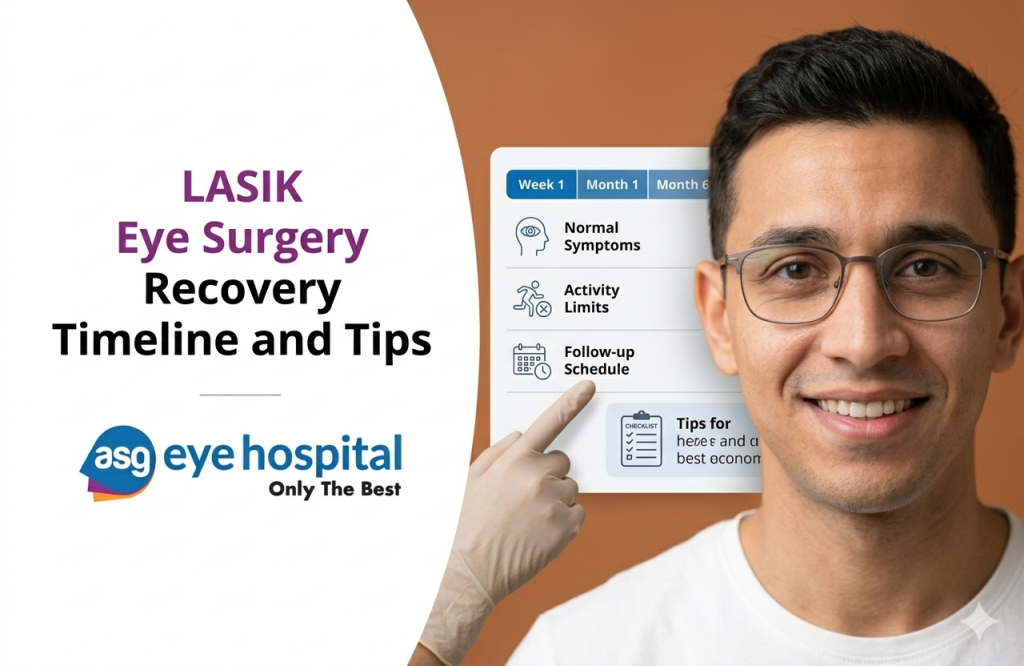
Most patients notice clearer vision within 24 hours, but full recovery happens in stages:
- Immediate Recovery (First 24 hours)
- Early Healing Phase (First Week)
- Stabilisation Phase (Weeks 2–4)
- Full Recovery (1–3 Months)
Immediate Recovery: First 24 Hours
The first day is the most crucial phase.
You may experience:
- Mild discomfort
- Watering eyes
- Light sensitivity
- Slight blurry vision
Care Tips:
- Rest your eyes and avoid screens
- Use prescribed eye drops regularly
- Wear protective eye shields while sleeping
- Avoid dust, water, and bright light exposure
Early Healing Phase: First Week
Vision starts stabilising during the first week, and most people resume daily activities within 2–3 days.
Common temporary effects:
- Dry eyes
- Glare or halos (especially at night)
- Light sensitivity
Precautions:
- Avoid swimming and heavy workouts
- Do not apply eye makeup
- Attend follow-up check-ups
Stabilisation Phase: Weeks 2 to 4
Vision becomes clearer and sharper during this period, although minor fluctuations are normal.
Care Tips:
- Limit screen time and take breaks
- Avoid dry environments like AC exposure
- Never rub your eyes
Full Recovery: One to Three Months
Complete healing usually takes 1 to 3 months.
By this stage:
- Vision stabilises fully
- Dryness reduces
- Night vision improves
Regular eye check-ups ensure everything is progressing properly.
Key Factors That Affect LASIK Recovery
1. Pre-existing Eye Conditions
Dry eyes or thin corneas can slow recovery.
2. Lifestyle and Environment
Dust, pollution, and excessive screen time can delay healing.
3. Following Doctor’s Advice
Patients who follow instructions carefully recover faster.
4. Type of Procedure
Procedures like Epi-LASIK may take longer to heal compared to standard LASIK.
Essential Tips for Faster Recovery
- Follow Medication Strictly
Use all prescribed eye drops on time. - Avoid Eye Rubbing
Even slight pressure can affect healing. - Limit Screen Time
Using screens too much can make your eyes dry and uncomfortable. Follow the 20-20-20 rule to reduce strain. - Protect Your Eyes
Wear sunglasses outdoors and eye shields while sleeping. - Maintain Hygiene
Keep hands clean and avoid touching your eyes. - Stay Hydrated
Drink enough water to prevent dryness.
Consistency in these habits directly impacts your recovery speed and results.
When to Seek Medical Attention
Contact your doctor immediately if you notice:
- Severe or increasing pain
- Sudden vision loss
- Redness with discharge
- Increasing light sensitivity
Early treatment helps prevent complications.
Why Choosing the Right Eye Hospital Matters
Choosing an experienced and trusted provider like ASG Eye Hospital plays a major role in successful LASIK outcomes.
Hospitals with advanced technology and experienced surgeons ensure:
- Better surgical precision
- Faster recovery
- Reliable post-operative care
Always prioritise quality and safety over low-cost options when selecting a LASIK provider.
Long-Term Care After LASIK
Even after recovery, maintaining eye health is important:
- Attend regular eye check-ups
- Use lubricating drops when needed
- Avoid excessive screen strain
- Follow a healthy lifestyle
LASIK results are long-lasting, but proper care ensures the best outcomes.
Conclusion
LASIK eye surgery offers quick vision correction, but recovery requires proper care and patience.
From the first 24 hours to full recovery over a few months, each stage plays an important role. By following medical advice, attending follow-ups, and maintaining eye hygiene, you can achieve clear and stable vision.
Frequently Asked Questions (FAQs)
1. How long does LASIK recovery take?
Initial vision improves within 1–2 days, while full recovery takes about 1 to 3 months.
2. Is LASIK recovery faster than Epi-LASIK?
Yes, LASIK usually heals faster than Epi-LASIK.
3. Can I use screens after LASIK?
Yes, but limit usage for a few days and avoid strain.
4. Is blurry vision normal after LASIK?
Yes, temporary blurriness is common in early recovery.
5. When can I resume normal activities?
Most daily activities can resume within 2–3 days, but avoid strenuous work for 1–2 weeks.
LASIK Surgery in Top Cities:
lasik surgery in Mumbai | lasik surgery in Navi Mumbai | lasik surgery in Delhi | lasik surgery in Pune | lasik surgery in Noida | lasik surgery in Kolkata | lasik surgery in Patna | lasik surgery in Varanasi.